


How Battery Management Systems Are Transforming the Future of Energy Storage

Traditional energy storage assemblies rely heavily on dense wiring harnesses, multi-pin connectors, and physical ribbon cables to relay diagnostic telemetry from individual cells to central controllers. These extensive physical connections introduce significant manufacturing complexity, add physical weight, and introduce mechanical points of failure caused by vehicle vibrations or thermal expansion. Wireless monitoring technologies have emerged as a ground-breaking alternative, substituting physical cabling networks with secure, short-range radio frequency communication protocols. Insights gathered from Battery Management System market research demonstrate that wireless architectures significantly streamline pack assembly, lower production expenses, and enhance structural space utilization within battery enclosures. By eliminating physical wiring harnesses, engineers can fit additional active chemical material into the same volumetric footprint, directly boosting the overall range and energy density of modern electric platforms.
Implementing wireless supervisory networks requires extraordinarily robust cyber-security frameworks and ultra-reliable data transmission standards to ensure continuous real-time execution. In heavy-duty automotive and industrial environments, electromagnetic interference from electric motors, power electronics, and structural shielding can potentially disrupt wireless signal propagation. Engineers address these communication challenges using multi-frequency mesh networking, encrypted protocol handshakes, and fault-tolerant redundant data buffers embedded directly onto individual cell sensors. Furthermore, the modular nature of wireless architectures simplifies secondary life applications, enabling second-life pack assemblers to reconfigure used battery modules without re-engineering complex wiring setups. As software algorithms continue to evolve alongside low-power wireless microcontrollers, wireless control platforms are set to become the benchmark design standard for scalable energy storage configurations globally.
Frequently Asked Questions
What are the main advantages of wireless monitoring systems over wired systems?
Wireless systems eliminate heavy wiring harnesses, reduce assembly complexity and weight, decrease potential physical points of failure, and allow higher energy density within the battery pack enclosure.
How do wireless monitoring architectures handle signal interference?
They utilize robust mesh networking protocols, frequency-hopping algorithms, encrypted communication channels, and local data caching to ensure stable telemetry transmission despite electromagnetic noise.
➤➤➤Explore MRFR’s Related Ongoing Coverage In Semiconductor Industry:
Automated Material Handling Market
Casino Management System Market
Advanced Metering Infrastructure (AMI) Market
Categories
- Artificial Intelligence (AI)
- Technology
- Business
- Education
- Science
- Lifestyle
- Healthcare
- Entertainment
- Politics
- Environment
- Travel
- Finance
- Automobile
- News
- Art
- Causes
- Crafts
- career
- Dance
- Drinks
- Film
- Fitness
- Food
- Games
- Gardening
- Health
- Home
- Literature
- Music
- Networking
- Other
- Party
- Religion
- Shopping
- Sports
- Theater
- Wellness
Read More
The Dental Implants Market is poised for remarkable growth, with projections indicating a market size reaching USD 12.49 billion by 2035. This growth trajectory highlights an impressive compound annual growth rate (CAGR) of 8.28%, fueled by increasing technological advancements and heightened consumer awareness regarding dental health. As more individuals seek solutions for tooth loss, the...

The Generative AI in Software Development Lifecycle Market Share distribution reveals a dynamic competitive landscape where established players and emerging innovators compete for dominance across various application segments and geographic regions. The Generative AI in Software Development Lifecycle Market Size was estimated at 3.652 USD Billion in 2024, with projections showing growth...
According to the latest report published by Data Bridge Market Research, the Triage B-Type Natriuretic Peptide (BNP) Testing Market The triage b-type natriuretic peptide (BNP) testing market which was USD 5 billion in 2022, is expected to reach USD 9.60 billion by 2030, at a CAGR of 8.50% during the forecast period 2023 to 2030. The large scale Triage B-Type Natriuretic Peptide (BNP)...

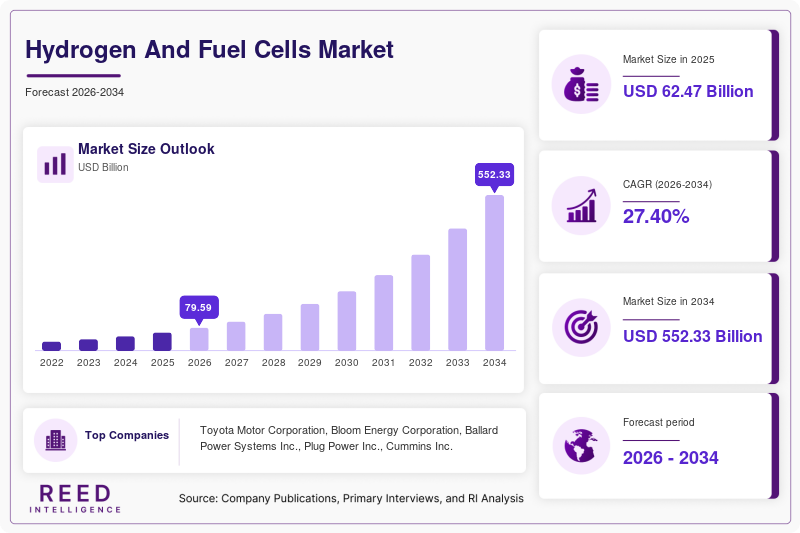
Hydrogen and Fuel Cells Market Size, Share, Demand, Growth & Forecast 2026–2034 Market Overview The Hydrogen and Fuel Cells Market is transitioning from a policy-led emerging energy segment toward a broader industrial, mobility, and distributed-power market. The market covers hydrogen production technologies, fuel cell systems, transportation, stationary power, industrial...
Structural Configurations, Adjustment Mechanisms, and Material Standards Blood sampling armchairs are categorized by their actuation systems, load capacities, and adjustability levels to accommodate diverse clinical settings and patient demographics. Designing specialized seating requires balancing patient stability, sanitization ease, and smooth operational transitions. Medical equipment in...
