


A Breakdown of the Complex and Shifting Fashion Influencer Market Share

Understanding the Fashion Influencer Market Share requires a nuanced perspective, as it cannot be attributed to a single company's dominance in the traditional sense. Instead, market share is distributed across several key dimensions: the social media platforms that host the content, the agencies and technologies that facilitate the campaigns, the tiers of influencers who command the budgets, and the geographical regions where spending is concentrated. This multi-faceted view reveals a dynamic and constantly shifting landscape where power and revenue are dispersed among various players in a deeply interconnected ecosystem. The battle for supremacy among social platforms is perhaps the most visible aspect of market share, as brands allocate their budgets to the platforms where their target audiences are most active and engaged. However, the behind-the-scenes competition between management agencies, software providers, and in-house brand teams for control over campaign execution and strategy is equally critical in defining the financial structure of the industry. Analyzing these different layers is essential to grasping who holds influence and where the money flows within this rapidly evolving global market.
The Battle of Social Platforms for Market Supremacy
The distribution of market share among social media platforms is a central and fiercely contested dynamic. For years, Instagram held the undisputed top spot, its visually-driven feed, Stories, and later, Reels, making it the natural home for fashion content. It built a comprehensive ecosystem for influencers and brands, commanding the lion's share of marketing spend. However, the meteoric rise of TikTok has significantly disrupted this dominance. TikTok's algorithm, which prioritizes content discovery and viral trends over an individual's social graph, has created a powerful new engine for fashion discovery and cultural moments. Its short-form video format has forced a shift in content strategy and has captured a massive, highly engaged Gen Z audience, leading brands to rapidly divert a significant portion of their budgets to the platform. Meanwhile, YouTube maintains a strong and stable market share for long-form content, such as detailed product reviews, styling tutorials, and "try-on hauls," which are highly effective at driving considered purchases. Pinterest also holds a valuable niche share as a powerful tool for visual discovery and shopping inspiration, often serving as the top-of-funnel starting point for a consumer's fashion journey.
The Division Between Agencies and In-House Brand Teams
Another critical dimension of market share is the split between how campaigns are managed. A substantial portion of the market is controlled by specialized influencer marketing agencies. These agencies act as intermediaries, offering brands their expertise, industry connections, and campaign management services, from influencer selection and contract negotiation to content approval and reporting. They represent a significant share of the market's value by providing a full-service, strategic solution. In parallel, there is a growing trend of brands taking their influencer marketing programs in-house. By building their own dedicated teams, brands can foster direct, long-term relationships with creators, leading to more authentic partnerships and potentially lower overhead costs compared to agency fees. This in-house share of the market is bolstered by the proliferation of self-service SaaS platforms that provide the necessary software for discovery, management, and analytics. The market is therefore divided, with large-scale, campaign-based activations often outsourced to agencies, while ongoing, relationship-based "always-on" programs are increasingly managed internally, creating a hybrid model for many companies.
Market Share by Influencer Tier and Geographical Region
The allocation of spend across different influencer tiers also reveals important market share dynamics. Historically, a large portion of budgets was concentrated on a small number of mega-influencers and celebrities, who could offer massive reach. While this segment still commands a significant share of high-value deals, there is a clear and accelerating shift in market share towards the "long tail." Brands are now distributing their spend across a larger number of micro- (10k-100k followers) and nano- (under 10k followers) influencers. This is because these smaller creators often deliver higher engagement rates, greater authenticity, and a better ROI, allowing brands to activate entire communities instead of just one individual. Geographically, market share is also unevenly distributed. North America currently holds the largest share of the global market, driven by high marketing spends and a mature creator economy. Europe follows closely, with a sophisticated market regulated by strict advertising standards. However, the most rapid shifts in market share are occurring in the Asia-Pacific (APAC) region. With its massive mobile-first population and thriving social commerce landscape, APAC is the fastest-growing market and is on a trajectory to command an increasingly larger share of global influencer marketing revenue.
Explore More Like This in Our Reports:
Categories
- Artificial Intelligence (AI)
- Technology
- Business
- Education
- Science
- Lifestyle
- Healthcare
- Entertainment
- Politics
- Environment
- Travel
- Finance
- Automobile
- News
- Art
- Causes
- Crafts
- career
- Dance
- Drinks
- Film
- Fitness
- Food
- Games
- Gardening
- Health
- Home
- Literature
- Music
- Networking
- Other
- Party
- Religion
- Shopping
- Sports
- Theater
- Wellness
Read More
The AR and VR Display Market was valued at US$ 3.32 Billion in 2025 and is projected to reach US$ 39.16 Billion by 2033, registering a CAGR of 36.13% during 2026–2033. The outlook combines expanding addressable demand with a need for disciplined execution across products, regions and channels. What is driving the market? The core growth engine is digitalization; higher data and computing...

Australia's online entertainment industry continues to develop in 2026 as technology creates new ways for people to access interactive content. Interest in the best casino bonus Australia 2026 exists alongside a broader shift toward convenient digital gaming, with users increasingly considering mobile performance, interface quality, content variety, and ease of access. Looking at these...

The Aircraft Actuator supports the operation of critical aircraft mechanisms by delivering controlled force and movement. Proper actuator selection considers factors including power requirements, stroke length, load, speed, and durability. The Aircraft Actuator market size is expected to reach US$ 36.76 Billion by 2034 from US$ 19.68 Billion in 2025. The market is anticipated to...
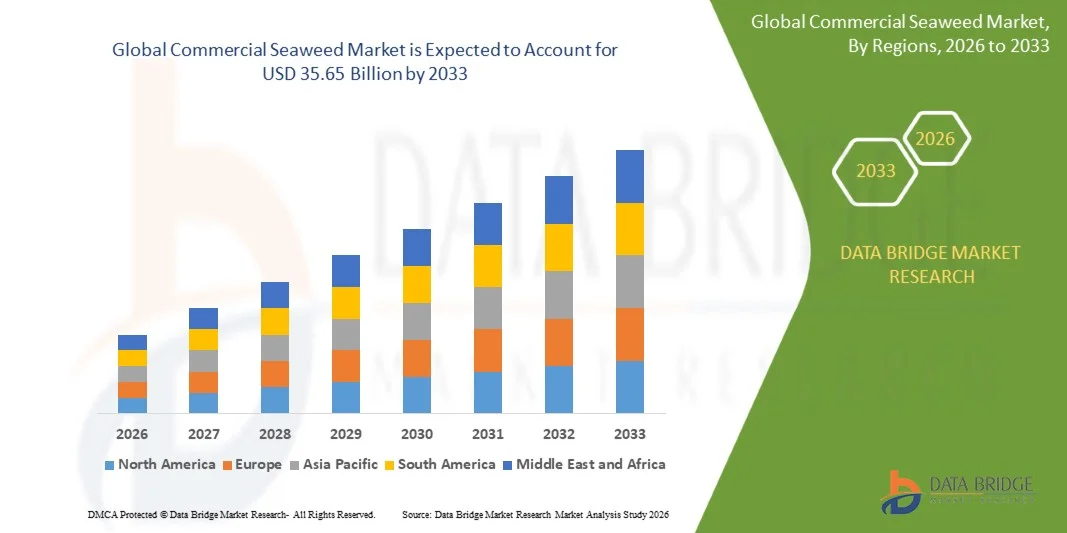
According to the latest report published by Data Bridge Market Research, the Commercial Seaweed Market CAGR Value The global commercial seaweed market size was valued at USD 20.29 billion in 2025 and is expected to reach USD 35.65 billion by 2033, at a CAGR of 7.30% during the forecast period A comprehensive Commercial Seaweed...
The Augmented Virtual Reality in Healthcare Market is expanding as healthcare organizations increasingly adopt immersive technologies for medical training, visualization, patient education, pain management, and rehabilitation. Wise Guy Reports estimates that the global market was valued at USD 4.75 billion in 2025 and is projected to reach USD 20 billion by 2035, registering a CAGR of 15.5%...
