


Comprehensive Overview of Global Innovations and Technological Shifts in Modern Commercial Printing

The global printing ecosystem is undergoing an unprecedented structural transition as analog infrastructure gives way to agile, software-driven digital production platforms. Driven by accelerating demand for short-run customization, variable data printing, and zero-inventory manufacturing models, the Digital Printing Industry is expanding rapidly across commercial, industrial, and textile sectors. Modern enterprises are increasingly abandoning legacy flexographic and offset presses in favor of continuous-feed inkjet and electrophotographic technologies. These advanced digital systems eliminate traditional prepress setup times, complex plate production, and substantial chemical washdowns, dramatically lowering operational overhead while enabling print runs of a single unit to remain economically viable. Furthermore, the rapid growth of e-commerce has mandated hyper-agile supply chains where packaging and marketing collateral must adapt dynamically to localized campaigns, personalizations, and promotional shifts. As print service providers seek higher efficiency, lower waste, and seamless software integration, digital equipment has evolved from a niche quick-turnaround alternative into the primary engine of modern commercial print production.
At the heart of this technical revolution is the evolution of piezo-electric printhead technology and specialized chemistry. Printheads manufactured with micro-electromechanical systems (MEMS) now achieve resolutions exceeding 1200 DPI at linear speeds that match traditional web-fed presses. Coupled with innovations in ultraviolet (UV)-cured, aqueous pigment, and latex inks, digital printing systems can now deposit precise droplet volumes directly onto ultra-thin flexible films, non-porous plastics, textured corrugated board, and synthetic textiles without requiring pre-treatment primers. Water-based pigment formulations are replacing volatile organic compound (VOC)-heavy solvent inks, aligning industrial operations with stringent international environmental frameworks and safety guidelines. These ink chemistry improvements ensure enhanced color consistency, higher lightfastness, and resistance to abrasion, extending the operational utility of digital equipment into heavy-duty exterior signage, automotive wraps, and industrial product decorating.
Sustainability imperatives are further accelerating the retirement of legacy equipment across North American and European print operations. Conventional offset printing inherently generates substantial substrate waste during color setup and ink-water balancing runs, alongside high energy consumption required for thermal ink drying. In contrast, digital systems require virtually zero setup makeready paper waste, using instantaneous LED-curing mechanisms that consume a fraction of the power. On-demand digital manufacturing also solves the massive systemic issue of overproduction in book publishing and direct mail marketing. Publishers can print books only after a retail sale is executed, eliminating warehouse storage fees, freight distribution overhead, and the environmental footprint of pulping unsold inventory. As corporate sustainability standards mandate verifiable reductions in scope 1 and scope 2 emissions, digital press installations represent an actionable path toward circular business models.
Looking ahead, the integration of artificial intelligence and automated prepress workflows is establishing a new paradigm for smart print factories. Automated inline color management systems leverage real-time spectral sensors to continuously monitor and adjust ink density during high-speed runs, eliminating manual calibration errors and reducing scrap rates. Artificial intelligence algorithms optimize imposition layouts and job queueing automatically, maximizing media utilization across mixed substrate runs. Moreover, internet-of-things (IoT) connectivity embedded within modern commercial digital presses enables predictive maintenance algorithms that monitor printhead nozzle health, thermal stability, and mechanical wear, preventing costly unscheduled production downtime. As these intelligent hardware and software solutions mature, digital printing will remain central to the digital transformation of global manufacturing.
Top Trending Reports :
Ultra High Definition Uhd Panel 4K Market
Electric Double Layer Capacitor Market
Categories
- Artificial Intelligence (AI)
- Technology
- Business
- Education
- Science
- Lifestyle
- Healthcare
- Entertainment
- Politics
- Environment
- Travel
- Finance
- Automobile
- News
- Art
- Causes
- Crafts
- career
- Dance
- Drinks
- Film
- Fitness
- Food
- Games
- Gardening
- Health
- Home
- Literature
- Music
- Networking
- Other
- Party
- Religion
- Shopping
- Sports
- Theater
- Wellness
Read More
Balsa Wood Market Summary The "Balsa Wood Market Share is projected to reach Compound Annual Growth Rate (CAGR) of 6% from 2025 to 2035." The market demonstrates steady growth driven by rising demand across diverse industrial and commercial applications. Growth is further supported by technological advancements, increasing adoption across end-use sectors, and favorable...

The United States Dendritic Cell Cancer Vaccine Market holds the largest share in North America, supported by a high prevalence of cancer, significant investments in precision medicine, and a well-established biopharmaceutical ecosystem. Increasing participation in clinical trials, growing adoption of personalized cancer immunotherapies, and continuous advancements in dendritic cell vaccine...
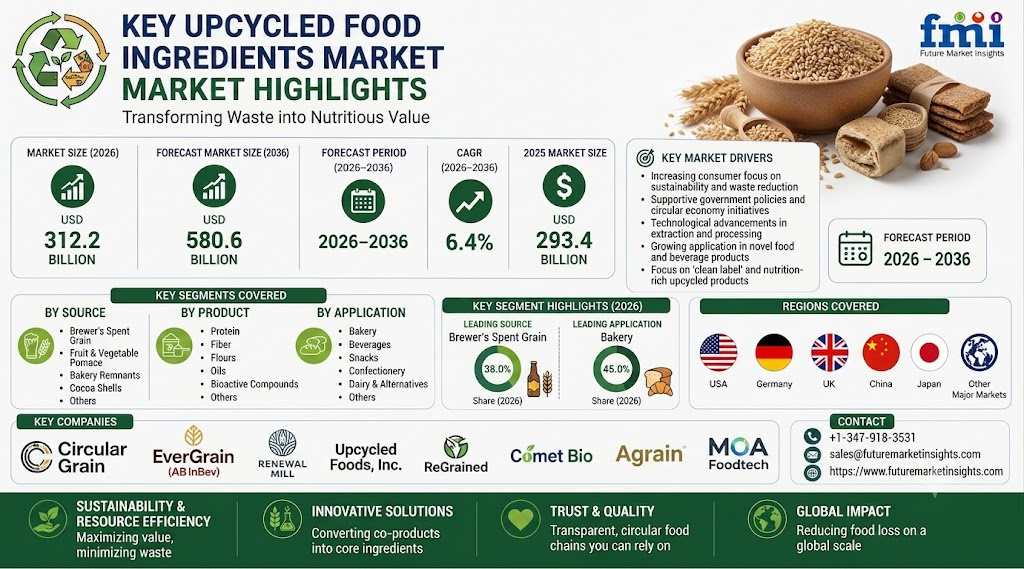
NEWARK, Del., August 3, 2026 — The global Upcycled Food Ingredients Market is projected to expand as food manufacturers increasingly recover edible side streams and convert them into commercially viable ingredients with defined nutritional, functional, and processing characteristics. According to Future Market Insights (FMI), the market is projected to grow from USD 312.2 billion in 2026...
The Shoulder Prostheses Market is witnessing steady growth as the prevalence of shoulder disorders, degenerative joint diseases, and traumatic injuries continues to increase worldwide. Shoulder prostheses are specialized orthopedic implants designed to replace damaged shoulder joints, restoring mobility, reducing pain, and improving patients' quality of life. Continuous innovation in implant...
Asia-Pacific remains the leading regional force in the Titanium Dioxide Market, supported by extensive manufacturing capacity, construction activity, automotive production, plastics processing, and expanding industrial development. The region accounted for approximately 37.4% of global revenue in 2025 and is forecast to grow at around 5.16% CAGR through 2035. China is central to the regional...
