


Real Estate Tokenization: A Look at the Future of Property Portfolio Access
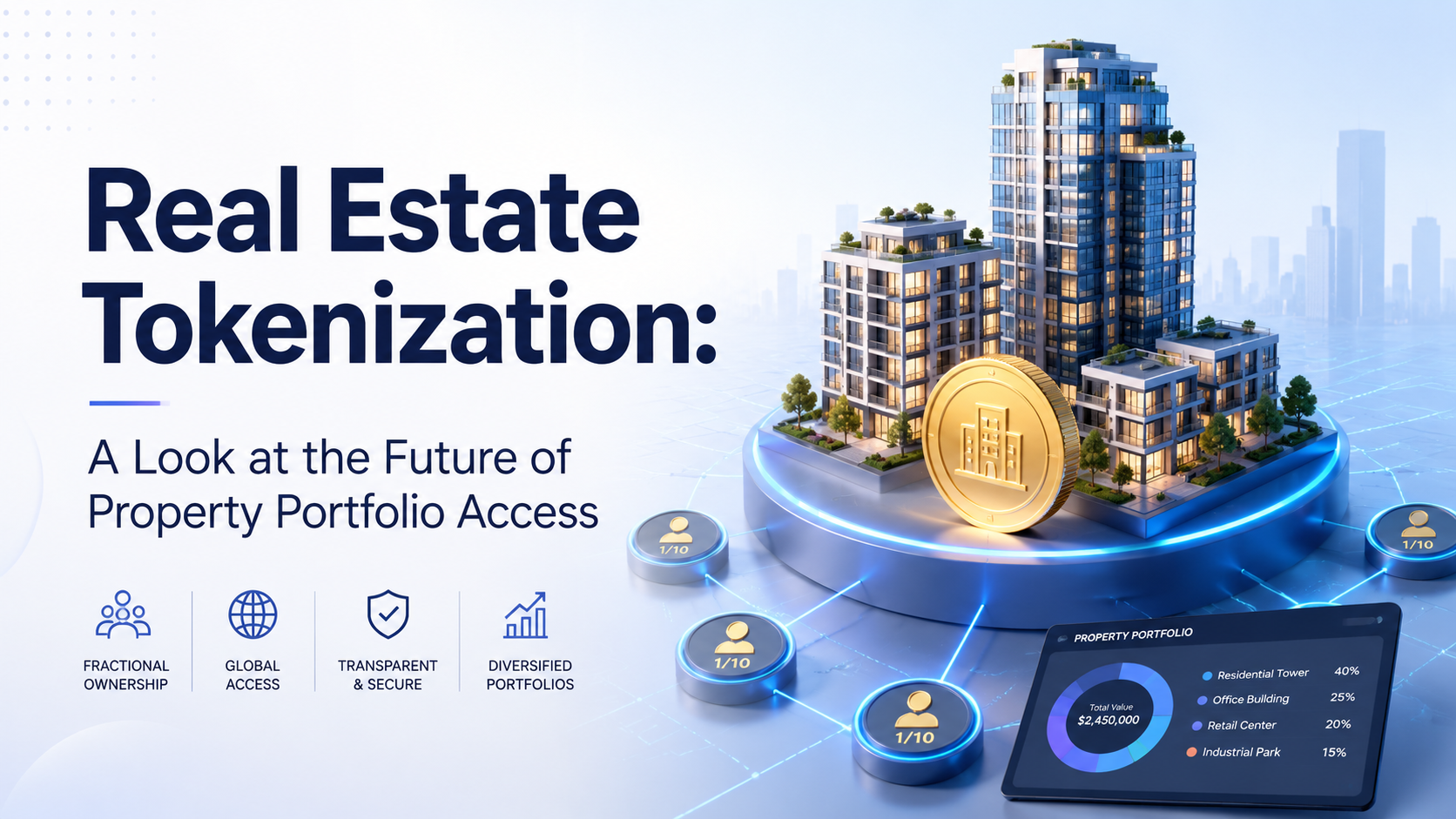
Real estate has traditionally been viewed as a valuable investment category, but access to property portfolios has often been limited by high capital requirements, lengthy transaction procedures, location restrictions, and complex ownership structures. Real estate tokenization is introducing another approach by representing ownership interests in property or property-related assets through blockchain-based digital tokens. This model can allow a larger range of investors to participate in selected real estate opportunities while giving property firms another way to structure and manage investment offerings.
As blockchain adoption continues to grow across financial markets, tokenized property is gaining attention from investors, developers, fund managers, and real estate businesses. Instead of requiring an investor to purchase an entire property, tokenization can divide an asset into smaller digital units that represent defined economic or ownership rights. This creates new possibilities for portfolio access and may change how people evaluate, purchase, hold, and trade property interests in the coming years.
What Is Real Estate Tokenization?
Real estate tokenization refers to the process of representing ownership or financial interests in real estate through blockchain-based tokens. A property can be placed within a suitable legal structure, and digital tokens can then represent claims associated with that structure. Depending on the project design and local regulations, these tokens may represent equity, revenue rights, debt interests, or another legally defined claim.
The process normally involves several stages. A property is first assessed and placed within an appropriate ownership or investment structure. Legal documentation defines what the tokens represent and what rights token holders receive. The token is then issued through blockchain infrastructure, while investor onboarding, compliance checks, payments, ownership records, and distributions are managed through connected systems.
A real estate tokenization company may provide the technology and operational components required for this process. However, tokenization is not only a technology project. Legal structuring, property valuation, investor eligibility, taxation, custody, reporting, and regulatory requirements all influence how a tokenized property offering should be designed.
Why Property Portfolio Access Is Changing
Traditional property investment often requires substantial capital. Investors may also face geographical restrictions, paperwork, intermediary costs, and lengthy settlement procedures. These conditions can make it difficult for smaller investors to gain exposure to multiple properties or real estate sectors.
Tokenization introduces fractional participation as one possible solution. A large commercial property, residential development, hotel, warehouse, or rental portfolio can potentially be divided into digital units. Rather than purchasing the whole asset, an eligible investor may purchase a smaller interest based on the structure of the offering.
This does not automatically make every property investment affordable or liquid. The practical outcome depends on the legal model, token structure, market demand, trading arrangements, and applicable regulations. Still, the concept creates an alternative route for accessing property portfolios that was difficult to achieve through conventional ownership structures.
Fractional Ownership and Wider Portfolio Participation
Fractional ownership is one of the most discussed applications of real estate tokenization. Suppose a property has a value of $10 million. Under a suitable tokenization structure, the economic interest in that property could be represented through a large number of digital units. Investors could then participate according to the number of tokens they purchase, subject to the offering rules.
This model can also apply to groups of properties. A property firm could create separate token classes for residential buildings, office assets, hotels, or industrial properties. Investors could select opportunities based on their investment objectives rather than committing all their capital to a single property.
For property owners, this approach may provide another method for raising capital. For investors, it can create access to selected property interests without requiring direct ownership of an entire building.
How Tokenized Property Portfolios May Work
A tokenized property portfolio generally combines legal ownership structures with blockchain infrastructure. The property itself does not simply become a digital asset because a token is issued. Instead, the token must have a defined relationship with the underlying property or investment structure.
A typical model may begin with property selection and due diligence. The asset is evaluated, ownership arrangements are reviewed, and an appropriate legal entity may be established. The investment rights are then documented, followed by token design and issuance.
After issuance, investors may purchase tokens through a dedicated platform. The platform can manage investor verification, payments, token balances, transaction records, portfolio information, and distributions. Depending on the structure, smart contracts may also be used for specific automated processes.
A real estate asset tokenization company may handle some or all of these technology requirements while legal firms, financial professionals, custodians, and property managers manage other parts of the operation.
The Role of Blockchain in Property Access
Blockchain provides a shared digital record for token ownership and transactions. This can reduce dependence on manually maintained ownership records and create a consistent transaction history for participants.
Smart contracts can also be used to define specific rules. For example, a contract may contain conditions related to token transfers, distribution calculations, or investor eligibility. The exact functions depend on the platform and regulatory framework.
However, blockchain does not remove the need for legal documentation. A tokenized property offering still needs a legally valid structure that connects digital ownership records with enforceable rights. This relationship between legal infrastructure and blockchain technology will remain important as the market develops.
Real Estate Tokenization Platform Development
Real estate tokenization platform development involves creating the digital environment through which property assets can be represented, issued, managed, and offered to investors. The platform may include investor registration, identity verification, wallet functions, token issuance, property listings, payment processing, portfolio tracking, reporting, and administrative controls.
A well-planned platform can support different property categories and investment models. For example, a platform may allow investors to view residential properties in one section and commercial properties in another. Property information, expected distributions, holding periods, investment conditions, and token availability can be displayed according to the relevant offering.
Security also plays an important role. Access controls, wallet protection, transaction monitoring, data security, smart contract testing, and compliance features should be considered during real estate tokenization platform development.
Choosing a Real Estate Tokenization Development Company
Businesses considering tokenization often work with a real estate tokenization development company to create the required technology infrastructure. When evaluating providers, property firms should look beyond the appearance of a platform and examine how the provider approaches blockchain architecture, smart contracts, investor management, compliance-related functionality, security, and future maintenance.
Experience with property-related use cases can also be useful. A provider familiar with tokenized assets may have a better understanding of the relationship between property information, investment structures, token issuance, and investor interactions.
A real estate tokenization platform development company may offer a complete platform or individual components depending on the project's requirements. The right choice depends on the property type, target investors, jurisdictions, business model, and expected transaction volume.
How Real Estate Token Development May Support Portfolio Growth
Real estate token development can provide property businesses with another method for structuring investment participation. Instead of marketing only entire properties, firms may create investment opportunities around individual assets, groups of properties, or specific property funds.
For investors, token-based participation may make it easier to monitor multiple property interests from a single digital account. Portfolio information can be presented through dashboards that show token holdings, property details, distributions, transaction history, and other relevant information.
The model can also support different investment strategies. An investor might hold interests in rental properties for income, commercial properties for long-term appreciation, or several asset categories to spread exposure across the property market.
Greater Access Does Not Mean Lower Risk
The future of tokenized property should not be viewed only through the benefits. Real estate remains subject to market conditions, property vacancies, interest rates, maintenance costs, economic changes, and local regulations. Tokenization does not remove these factors.
There are also technology-related considerations. Smart contract errors, wallet security problems, platform failures, and weak access controls can create risks. Regulatory treatment can differ between countries and even between different types of tokenized offerings.
Investors therefore need to understand what a token represents before purchasing it. They should review the legal documents, property information, financial terms, fees, restrictions, redemption conditions, and transfer rules associated with the offering.
The Future of Property Portfolio Access
The future may involve property investment platforms that bring together traditional real estate information and blockchain-based ownership records. Investors could potentially review several properties, compare investment terms, purchase eligible tokenized interests, and monitor portfolio performance through one digital environment.
Secondary markets may also become important. If regulations and market infrastructure support token transfers, investors could have more options for selling their interests before the underlying property is sold. However, liquidity should never be assumed simply because an asset has been tokenized. Buyers and sellers still need to exist, and market rules may restrict transfers.
Institutional participation could also influence the market. Property funds, developers, asset managers, and financial institutions may increasingly examine tokenization as a method for structuring investment products. As standards improve and regulatory frameworks become more established, the relationship between traditional property markets and digital assets may become more defined.
What Property Firms Should Consider Before Tokenization
Property firms should begin by identifying the business objective behind tokenization. The goal could involve raising capital, dividing ownership, creating new investment products, reaching international investors, or managing a portfolio through digital infrastructure.
The next stage involves evaluating the legal structure and target market. Different countries may apply different securities, property, tax, and financial regulations to tokenized offerings. These requirements should be addressed before technical development begins.
Technology planning should then cover blockchain selection, token standards, smart contract functions, investor onboarding, payment systems, custody, compliance tools, reporting, and administration. A phased development approach can help property firms test the concept before expanding into larger portfolios.
The Growing Role of Real Estate Tokenization Companies
As demand for tokenized assets develops, businesses may encounter many service providers offering blockchain and property tokenization solutions. Searches for Top real estate tokenization companies and Best real estate tokenization companies can produce a wide range of providers, but rankings alone should not determine a business decision.
Property firms should assess each provider according to technical experience, security practices, legal coordination, platform functions, previous projects, support arrangements, and the ability to work with the intended business model. A provider with extensive blockchain experience may not necessarily have experience with property investment structures, so both areas deserve attention.
The market is likely to become more specialized over time. Some companies may focus on residential properties, while others may work with commercial buildings, private funds, hotels, land, or mixed property portfolios.
Real Estate Tokenization and the Next Investment Model
Real estate tokenization is still developing, but its potential impact on property portfolio access is significant. Fractional participation, digital ownership records, online investor onboarding, and blockchain-based transaction management can create a different experience for both property firms and investors.
The future will depend on more than technology. Regulation, investor protection, market liquidity, property performance, legal structures, and user trust will all influence adoption. If these areas develop together, tokenized property could become a more familiar part of the wider real estate investment market.
Conclusion
Real estate tokenization offers a new approach to property portfolio access by combining real estate investment structures with blockchain-based digital ownership. It can support fractional participation, digital investor management, portfolio diversification, and new fundraising models for property firms, although legal, financial, regulatory, and technology considerations remain important. Businesses evaluating this model should carefully assess their property assets, target investors, jurisdictions, token structure, platform requirements, and long-term operating model before starting development. As adoption grows, real estate tokenization platform development may become increasingly relevant for companies seeking new ways to structure property investments and digital investor experiences. Blockchain App Factory provides Real estate tokenization development services for businesses looking to create platforms and solutions around tokenized property assets.
FAQs
1. What is real estate tokenization?
Real estate tokenization is the process of representing ownership or financial interests in property through blockchain-based digital tokens. The token's rights depend on the legal and investment structure behind the offering.
2. How does tokenization provide property portfolio access?
Tokenization can divide an investment interest into smaller digital units. Eligible investors may then purchase a portion of an asset or portfolio instead of purchasing an entire property.
3. Is real estate tokenization the same as buying property directly?
No. A token may represent a legal or financial interest connected to a property rather than direct ownership of the physical building. Investors should review the legal documents associated with each offering.
4. What does a real estate tokenization platform do?
A platform can support functions such as property listings, investor registration, identity verification, token issuance, payments, token balances, portfolio monitoring, transaction records, and administrative management.
5. Why do companies use real estate token development?
Real estate token development can help property businesses create digital investment products, divide investment interests, manage token holders, and provide investors with digital access to selected property opportunities.
6. What should businesses look for in a real estate tokenization development company?
Businesses should evaluate blockchain experience, smart contract development, security practices, platform features, regulatory coordination, investor management functions, maintenance support, and previous relevant projects.
7. Can tokenized real estate be traded?
It can be transferable in some structures, but transferability depends on the legal framework, platform rules, investor eligibility requirements, and availability of a secondary market. Tokenization alone does not guarantee liquidity.
8. Will real estate tokenization replace traditional property investment?
It is unlikely to replace every traditional model. Instead, tokenization may become another structure for accessing and managing certain property investments alongside conventional ownership and investment methods.
Categories
- Artificial Intelligence (AI)
- Technology
- Business
- Education
- Science
- Lifestyle
- Healthcare
- Entertainment
- Politics
- Environment
- Travel
- Finance
- Automobile
- News
- Art
- Causes
- Crafts
- career
- Dance
- Drinks
- Film
- Fitness
- Food
- Games
- Gardening
- Health
- Home
- Literature
- Music
- Networking
- Other
- Party
- Religion
- Shopping
- Sports
- Theater
- Wellness
Read More
Testing for HIV/AIDS is not based on a single laboratory method. Instead, modern medicine uses multiple types of HIV Blood Test in Dubai designed to detect infection at different stages. Each test works differently, targeting either antibodies, antigens, or viral genetic material. Understanding these differences is essential because the timing of infection, immune response, and test...

Wart removal can sometimes be uncomfortable, especially for larger or stubborn growths. While professional treatments are highly effective, understanding ways to minimize pain and support healing ensures a smoother experience. Home remedies may not adequately control discomfort, making professional guidance essential. For patients seeking safe and expert care, Wart removal in Riyadh (إزالة...

According to a new report from Intel Market Research, the global Conductive Spring market was valued at USD 1,362 million in 2025 and is projected to reach USD 2,260 million by 2034, exhibiting a robust CAGR of 7.7% during the forecast period (2025–2034). The growth is propelled by the increasing demand for high‑reliability electrical connections in the electronics, automotive, and...

The Africa Medical Devices Market is experiencing steady growth as governments, healthcare providers, and private organizations invest in strengthening healthcare infrastructure and expanding access to quality medical services. Rising demand for advanced diagnostic equipment, surgical instruments, patient monitoring systems, and home healthcare devices is transforming the medical landscape...
3D gaming consoles are advanced entertainment systems designed to deliver realistic, immersive, and high-resolution gaming experiences. They support stereoscopic 3D visuals, high frame rates, ray tracing, and advanced haptic feedback. The market includes dedicated hardware consoles as well as hybrid devices that support both physical and digital gaming libraries. The global 3D gaming console...
