


Voodoodreams Examines Retention Through Personalisation

Player churn usually isn’t about one bad title or a single weak offer. It’s flatter than that. People drift off because the whole thing starts to feel copy-pasted, and the Voodoodreams approach shows how fast a UK online gaming site can lose steam when every visit feels like a rerun.
Why retention now depends on relevance, not volume
For a long time, operators chased new sign-ups as if raw traffic would do the heavy lifting. It doesn’t. You can fill the funnel and still watch first-week engagement fall away if the lobby feels generic, the offers land at the wrong moment, or the brand behaves as though it has no memory of what a player actually uses.
That’s where personalisation earns its keep. A returning player who lives on live dealer tables shouldn’t have to dig past a row of slots banners. Someone playing on a phone after work wants quick loading, simple paths, and a sensible reminder about the session, not a pile of bland notifications. Small tweaks matter. They cut the little bits of friction that make people bail before they’ve even started.
The better operators now think about retention as a chain of cues, not one big campaign. Recent activity, device type, time of day, game category, and how someone responds to promos all tell you something useful. Handle those signals well and the journey gets cleaner, the messaging gets sharper, and support content shows up before irritation turns into a closed tab.
Personalisation tactics that matter in 2026
Data sitting in a dashboard is just noise. You’ve got to turn behaviour into something smoother without making the player feel tracked. The best work here is usually quiet, and a bit picky.
A workable approach tends to look like this:
- Group players by behaviour, not just deposit size, because session length and content preference often tell you more about retention.
- Shape the homepage and promo area around recent activity, so a blackjack regular sees the right material first.
- Send messages at natural play times, since a late-night nudge can beat a broad daytime blast.
- Use responsible play signals to ease off contact when needed, which helps avoid fatigue and builds trust.
- Test small changes, like tile order or bonus wording, before rolling them across the whole site.
Live data is only half the job. The creative still has to pull its weight. A reminder that points to a player’s favourite format can beat a generic free spins offer because it feels noticed, not sprayed into an inbox. Onboarding works the same way. If the first few sessions are too broad, the user has to do the sorting themselves. Good retention design takes that chore away.
Content depth matters too. A site that only pushes a headline offer can run out of room fast, while one that mixes games, explanation pages, tournament calendars, and clear account tools gives people more reasons to come back. The aim isn’t to cram the screen with choice. It’s to make the next move obvious.
Be careful with segmentation, though. Too many tiny audiences turn into maintenance pain and messy messaging. A tighter setup usually works better, new registrants, active regulars, lapsed users, high-frequency mobile players, and table-first visitors. Each group needs its own tone and pace. Nobody wants to feel forgotten, but nobody wants constant noise either.
The strongest retention teams track more than deposits. They look at repeat visit rate, time between sessions, game reactivation after a quiet spell, and opt-out trends on messaging. If a campaign gets quick clicks but also drives unsubscribes, it’s eating into next month’s revenue. Personalisation should make the experience feel lighter, not nosier.
What operators should do next
For brands trying to keep attention in a crowded market, the next move is to simplify the journey before piling on more campaigns. Audit the homepage. Check whether returning players see relevant content fast enough. Tighten the timing of every message that arrives after sign-up. Voodoo Dreams shows why that discipline matters, because retention improves when the site feels arranged for the player, not built around the operator’s convenience.
A sensible plan is to start with one cohort, usually returning mobile users, then adjust the experience based on actual behaviour. The catch is that this takes patience. Once the journey feels more personal, the results usually follow, and the brand stops leaning so hard on constant acquisition to cover weak repeat engagement.
Categories
- Artificial Intelligence (AI)
- Technology
- Business
- Education
- Science
- Lifestyle
- Healthcare
- Entertainment
- Politics
- Environment
- Travel
- Finance
- Automobile
- News
- Art
- Causes
- Crafts
- career
- Dance
- Drinks
- Film
- Fitness
- Food
- Games
- Gardening
- Health
- Home
- Literature
- Music
- Networking
- Other
- Party
- Religion
- Shopping
- Sports
- Theater
- Wellness
Read More
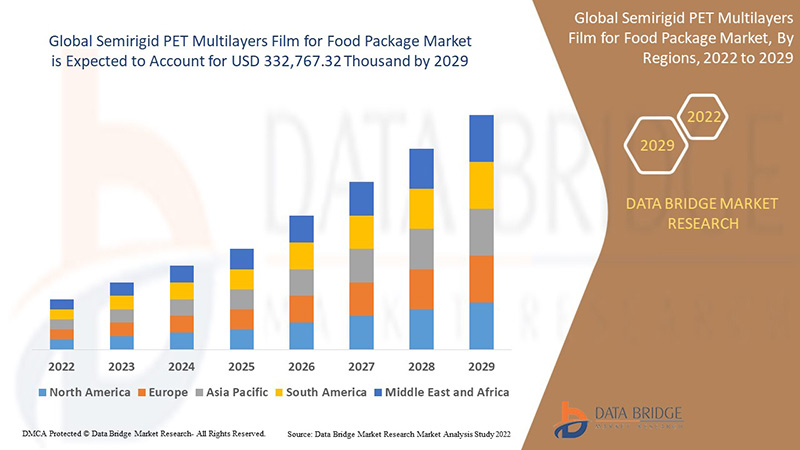
According to the latest report published by Data Bridge Market Research, the Semirigid PET Multilayers Film for Food Package Market The global semirigid PET multilayers film for food package market is expected to reach the value of USD 332,767.32 thousand by 2029, at a CAGR of 4.1% during the forecast period. A top notch Semirigid PET Multilayers Film for Food Package Market report...
Many people exploring intimate wellness solutions often ask how long the benefits can realistically last. O-Shot and G-Shot Treatment In Dubai has become an increasingly popular option for individuals seeking non-surgical rejuvenation, enhanced comfort, and improved confidence. While every person responds differently, the longevity of results depends on several factors, including overall...

The Microphysiological System Market was valued at approximately USD 1.0 billion in 2025 and is projected to reach USD 2.5 billion by 2035, expanding at a CAGR of approximately 9.3% from 2026 to 2035. Increasing demand for advanced drug testing, growing interest in reducing animal testing, and advances in organ-on-a-chip and microfluidic technologies are supporting market development. Drug...

The global Ultracapacitors Market is witnessing strong momentum as industries increasingly adopt advanced energy storage technologies that deliver rapid charging, high power density, and exceptional durability. Ultracapacitors, also known as supercapacitors, are becoming an essential component in electric vehicles (EVs), renewable energy systems, industrial automation, and consumer...
Benzoic Acid Demand Is Becoming More Diversified Across the US Economy According to Market Research Future®, the US Benzoic Acid Market was valued at $111.07 million in 2024 and is projected to reach $114.69 million in 2025 and $158.07 million by 2035, expanding at a CAGR of 3.26% during 2025–2035. The market is being influenced by demand for food preservation, expanding industrial...
