Why Digital Transformation Is Becoming Central to the Port Services Market

The Market Shift Everyone Should Be Watching at Global Ports
The most important change in the Port Services Industry may be happening away from the ship itself. Ports are increasingly being judged by how effectively they connect maritime cargo with inland transportation, digital information and dependable service networks. Valued at USD 98.60 billion in 2024, the market reached USD 101.68 billion in 2025 and is forecast to reach USD 138.25 billion by 2035 at a 3.12% CAGR. That trajectory points to a gradual expansion, but the operational changes underneath it are more consequential than the headline numbers suggest.
The Real Product Is Reliability
A port does not create value simply by providing a berth. Its value depends on how reliably cargo moves through the facility.
A vessel arriving late, an unavailable crane, insufficient yard space or a breakdown in inland transportation can disrupt several stages of the supply chain. These disruptions can become expensive because schedules are interconnected. A delay at one terminal can affect trucking, warehousing, manufacturing and distribution.
This is why advisory, engineering, operations and maintenance services matter alongside traditional cargo handling. Port operators increasingly need specialized expertise to keep complex assets available and cargo moving.
The commercial priority is therefore shifting from capacity alone toward predictable capacity.
New Demand Is Coming From More Connected Supply Chains
Global supply chains have become more interconnected across regions. Manufacturers source components from multiple countries, retailers depend on international distribution and consumers expect increasingly reliable product availability.
Ports sit at the center of these flows. As trade networks become more complex, cargo owners require greater visibility into where goods are and when they will arrive.
This creates demand for service models that connect terminal operations with broader logistics information. A port that can provide accurate operational visibility can help shipping companies, freight operators and cargo owners make better decisions further downstream.
That makes information itself a growing part of port infrastructure.
Digital Transformation Is Changing Port Economics
Technology has traditionally been associated with cranes, scanners and terminal equipment. Its role is now broader.
Digital systems can coordinate vessel schedules, yard activity, maintenance information and equipment availability. These capabilities can help operators identify inefficiencies that are difficult to see through manual processes.
Automation can also change the economics of repetitive activities. Where appropriate, automated equipment can support consistent operations and reduce dependence on manual intervention for certain tasks.
However, technology does not automatically create efficiency. Poorly integrated software, outdated infrastructure and cybersecurity vulnerabilities can create new operational risks.
Successful digital transformation therefore depends on integration rather than simply purchasing new systems.
Infrastructure Modernization Has a Broader Meaning
Modernization is often interpreted as building larger terminals. That is only one part of the equation.
Existing ports can also improve productivity through better yard layouts, equipment upgrades, maintenance systems, digital controls and stronger connections with inland transport.
Engineering services have an important role here because port infrastructure must withstand continuous heavy-duty use. Maintenance is similarly critical. A port cannot benefit from advanced equipment if that equipment is unavailable when cargo volumes are highest.
This creates a recurring opportunity for companies that can provide lifecycle support rather than one-time infrastructure work.
Sustainability Is Becoming Part of the Business Case
Environmental pressure is changing how ports evaluate investments. Energy consumption, emissions and resource efficiency increasingly influence infrastructure decisions.
A port operator may therefore look beyond the initial price of a machine or system. Energy use, maintenance requirements, operating life and environmental performance can affect the total cost of ownership.
Digital tools can support this transition by improving equipment utilization and reducing unnecessary movements. More efficient operations can have both environmental and economic benefits.
Yet sustainability also creates a cost challenge. Retrofitting established terminals can require substantial capital, and environmental improvements must be balanced against throughput requirements.
Why Sea and Inland Ports Are Complementary
Sea ports remain essential gateways for international cargo, but inland ports can extend their reach.
An inland facility can provide storage, cargo consolidation and intermodal transfers closer to manufacturing or consumption centers. This can help distribute pressure away from crowded coastal terminals.
The relationship between the two models is therefore becoming increasingly important. Efficient maritime logistics depends partly on what happens after containers leave the waterfront.
Future port strategies are likely to place greater emphasis on these connections because congestion cannot always be solved by expanding the terminal itself.
Regional Competition Will Depend on Connectivity
Different regions face different port-service priorities.
Asia-Pacific benefits from extensive manufacturing activity and major maritime trade flows. Its ports are therefore closely connected to industrial supply chains and export activity.
European markets face strong pressure to improve efficiency and environmental performance while maintaining their role in international commerce. North American facilities must manage links between ports and extensive inland distribution systems.
Meanwhile, Middle Eastern ports can benefit from their strategic location between major markets and trade corridors. Investments in logistics infrastructure can strengthen their role as transshipment and distribution hubs.
The regional winners will not necessarily be the ports with the largest physical footprint. Connectivity and operational reliability can matter just as much.
Competition Is Moving Beyond Traditional Shipping
Major companies including A.P. Moller - Maersk, Mediterranean Shipping Company, CMA CGM, Hapag-Lloyd, Evergreen Marine Corporation, and COSCO Shipping operate within a maritime environment where customers increasingly expect coordinated logistics.
Their presence illustrates a wider competitive trend: shipping, terminal operations and logistics are becoming more closely connected.
This does not mean every company needs to control every stage of the supply chain. It does mean service providers need to understand how their performance affects the next stage.
A port service that reduces vessel delays but creates inland congestion has only solved part of the problem.
Where New Opportunities Are Taking Shape
The most attractive opportunities are likely to emerge around digital port management, infrastructure modernization and integrated logistics.
Data platforms can improve visibility across complex operations. Predictive maintenance can help protect asset availability. Automation can improve consistency in suitable terminal environments. Sustainable equipment and energy systems can reduce the environmental burden of port operations.
Another opportunity lies in developing stronger links between sea and inland ports. Better coordination can improve cargo flow without requiring every bottleneck to be solved through additional coastal construction.
What Could Slow the Market
Port modernization is capital intensive. Large infrastructure projects can face long approval processes, complex stakeholder requirements and uncertain returns.
Technology introduces its own challenges. Legacy systems may not communicate easily with newer platforms, while greater connectivity increases cybersecurity exposure.
Trade volatility is another risk. Ports depend on international cargo flows, which can change because of economic cycles, geopolitical tensions, supply-chain disruptions or shifts in manufacturing geography.
These factors make flexibility increasingly valuable. Infrastructure designed only for one trade pattern may become less competitive if cargo routes change.
The Next Decade Will Reward Coordination
By 2035, port competitiveness is likely to depend increasingly on the ability to coordinate physical infrastructure, digital information and inland logistics.
The market's projected value of USD 138.25 billion provides a useful measure of expansion, but the deeper story concerns the quality of that growth. Ports are becoming strategic coordination points where maritime transportation, infrastructure engineering, technology and supply-chain management converge.
The next generation of successful port operations will therefore be defined less by size alone and more by how reliably they turn complex cargo movements into predictable supply chains.
Another Trending Topics
Plastic Free Packs Market | Plastic Lid Market | Plastic Recycling Equipment Market
Categories
- Artificial Intelligence (AI)
- Technology
- Business
- Education
- Science
- Lifestyle
- Healthcare
- Entertainment
- Politics
- Environment
- Travel
- Finance
- Automobile
- News
- Art
- Causes
- Crafts
- career
- Dance
- Drinks
- Film
- Fitness
- Food
- Games
- Gardening
- Health
- Home
- Literature
- Music
- Networking
- Other
- Party
- Religion
- Shopping
- Sports
- Theater
- Wellness
Read More
The US organic sugar market is becoming an increasingly relevant part of the broader natural and organic food landscape. Consumer interest in ingredient transparency, responsible sourcing, and recognizable food ingredients is influencing how sugar products are selected, produced, packaged, and distributed. Organic sugar is increasingly viewed within the context of wider changes taking place...

The global Diabetes Management Apps Market is experiencing steady growth as digital health solutions become essential in chronic disease management. With rising diabetes prevalence and increasing smartphone penetration, mobile applications are transforming how patients monitor and manage their condition in real time. Market Overview According to insights from M2Square Consultancy...
The CBD Tincture Market is entering a period of strong expansion as consumer interest in wellness products, natural ingredients, and alternative health-oriented solutions continues to increase. According to WiseGuyReports, the market was valued at approximately USD 2.26 billion in 2025 and is projected to reach USD 6.5 billion by 2035, representing a compound annual growth rate of 11.1%. The...
According to the latest report published by Data Bridge Market Research, the Polyurethane Dispersion Market With a full devotion and commitment, the best feasible service and recommendations are given to the clients via this Polyurethane Dispersion Market research report that can be trusted confidently. The report is prepared by considering client’s...
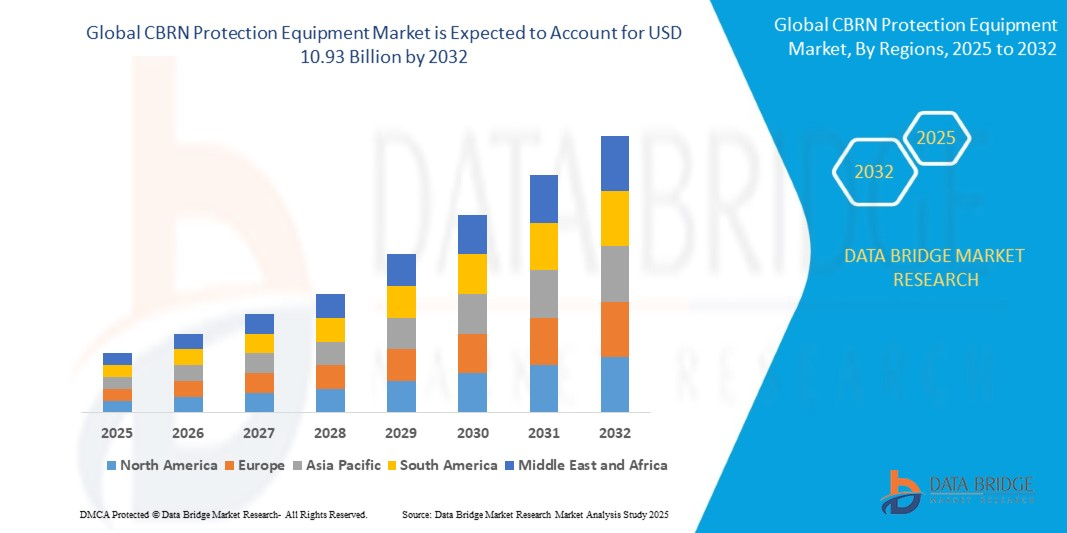
According to the latest report published by Data Bridge Market Research, the CBRN Protection Equipment Market CAGR Value The global CBRN protection equipment market size was valued at USD 7.69 billion in 2024 and is expected to reach USD 10.93 billion by 2032, at a CAGR of 4.50% during the forecast period The data, information, statistics,...