


WhatsApp AI Bots: Turning Conversations into Conversions
Most businesses aren't losing customers because of a bad product. They're losing them in the gap between a question asked and an answer received.
A customer messages on WhatsApp at 9pm on a Sunday asking about a product. Nobody responds until Monday morning. By then they've already bought from someone else — not because the competitor had a better product, but because they replied first. In markets where response time is a buying signal, silence is a sales problem.
WhatsApp AI Bots close that gap. Not by replacing the sales team — by making sure no conversation waits when the team isn't there.
According to Statista, WhatsApp has over 2.7 billion active users globally, with business messaging on the platform growing at over 40% annually. The businesses capturing Conversational Commerce in 2026 aren't the ones with the biggest advertising budgets. They're the ones whose WhatsApp presence actually responds, qualifies, and converts — around the clock, without anyone manually managing every thread.
Automating Customer Interactions
The WhatsApp inbox of most small and mid-sized businesses is a mess. Enquiries from three days ago sitting unread. The same question about delivery times answered manually twelve times this week. A pricing query that went cold because someone meant to reply and forgot. A follow-up that never happened because the customer's message got buried under everything else.
None of this is intentional. It's just what happens when customer communication scales faster than the team handling it.
WhatsApp Automation changes the structure of the problem. Routine enquiries — product availability, pricing, shipping timelines, order status, appointment confirmations — get answered instantly by the bot, correctly, every time, regardless of whether it's a Tuesday at noon or a Saturday at midnight. The customer gets an answer. The team doesn't spend another morning clearing a backlog of messages they could have automated.
Lead qualification is where WhatsApp AI Bots deliver the clearest commercial value. Instead of every inbound message landing in a queue and waiting for someone to assess whether it's worth pursuing, the bot asks the qualifying questions — budget, timeline, specific requirement, location — and segments the response accordingly. A high-intent prospect gets an immediate personalised follow-up and a booking link. A price-shopper gets pricing information and a comparison guide. An existing customer gets routed to their account handler. The team focuses on the conversations most likely to close rather than sorting through everything manually.
Appointment booking and confirmation workflows remove an entire category of back-and-forth that takes longer than it should. A customer interested in a service sends a message, the bot presents available slots, the customer picks one, the confirmation goes out automatically with a reminder the day before. The booking is done in ninety seconds. Without automation, that exchange takes three messages, two hours, and someone on the team whose time cost more than the exchange was worth.
Order updates and post-purchase communication are the WhatsApp Automation use case most businesses implement last and should implement first. A customer who bought something and receives a WhatsApp message when it ships, when it's out for delivery, and when it's delivered has a fundamentally different experience from one who has to log into a tracking portal and refresh it repeatedly. That experience difference shows up directly in repeat purchase rates and review scores.
WhatsApp AI Strategies That Drive Sales
The businesses seeing the strongest commercial results from WhatsApp AI aren't just automating the conversations they were already having. They're using the channel to initiate ones they weren't having at all.
Abandoned cart recovery through WhatsApp consistently outperforms email for the same use case. Open rates on WhatsApp messages sit above 90% — versus 20 to 25% for email. A customer who left without buying getting a personalised WhatsApp message referencing the specific product they viewed, with a direct link back to checkout, converts at rates that make every email marketer uncomfortable about their channel comparison assumptions.
Re-engagement campaigns on WhatsApp reach customers where they already spend significant daily time — not in an inbox they check occasionally and bulk-delete on Fridays. A customer who bought three months ago and hasn't returned gets a message with a relevant offer based on their purchase history. The conversion rate on a well-timed, relevant WhatsApp message from a brand they've already bought from is meaningfully higher than the equivalent email — because the channel signals immediacy and the personalisation signals the business remembers them.
Conversational Commerce flows built on WhatsApp AI take the channel from support and recovery into full purchase journeys. A customer who can browse a product catalogue, ask questions, get recommendations, and complete a purchase — all within a WhatsApp conversation — has had a fundamentally different buying experience from one who was redirected to a website for every step. For markets where WhatsApp is the primary communication tool — across South Asia, Southeast Asia, Latin America, and large parts of Africa and the Middle East — keeping the entire purchase inside the conversation is not a novelty. It's the expectation.
FutureProfilez builds WhatsApp AI chatbots and conversational automation solutions for businesses across industries — lead qualification bots, order management flows, re-engagement campaigns, and full Conversational Commerce implementations built around how customers in specific markets actually communicate. Their customer support automation work connects WhatsApp automation to CRM, inventory, and booking systems so the bot isn't operating in isolation — it's connected to the business data that makes every response accurate and every handoff to a human seamless. Over 15 years across 30+ countries, the pattern is consistent: businesses that meet customers in the channels they already use convert more than ones waiting for customers to come to them.
FAQs
Q1. How quickly can a WhatsApp AI bot be set up for a small business?
A focused implementation — qualifying questions, FAQ responses, booking integration, and handoff to a human for complex queries — typically takes two to four weeks depending on how much custom conversation design is required. Businesses that know exactly what conversations they want to automate move faster than ones trying to scope it during the build. Starting with one high-volume use case and expanding is almost always faster than trying to automate every conversation simultaneously.
Q2. Will customers find it frustrating to interact with a bot instead of a human?
Customers find it frustrating to wait. A bot that answers correctly and quickly is preferable to a human who responds the next morning — for the categories of question where correctness and speed matter more than empathy and nuance. The businesses that get this right are clear about what the bot handles and make the escalation to a human easy and obvious when the conversation requires it. The ones that try to hide the bot or prevent escalation are the ones whose customers feel frustrated.
Q3. How does a WhatsApp AI bot handle questions it doesn't know the answer to?
A well-built bot has a defined scope and a clean escalation path outside it. When a question falls outside the bot's knowledge or capability, it acknowledges it clearly and routes the customer to a human or captures the query for follow-up — rather than attempting an answer it can't give accurately. Bots that guess rather than escalate erode trust faster than bots that transparently hand off. The escalation design is as important as the conversation design.
Q4. Can WhatsApp bots handle multiple languages for international customers?
Yes — WhatsApp AI bots can detect the language a customer is using and respond in kind, provided the conversation flows have been built and tested for the relevant languages rather than relying on on-the-fly machine translation for critical commercial interactions. For businesses serving customers across multiple language markets, the multilingual layer needs deliberate design rather than a translation plugin bolted on afterward.
Q5. Is WhatsApp automation worth investing in for a B2B business, or is it mainly a B2C tool?
B2B adoption of WhatsApp for business communication is stronger in some markets than others — particularly across South and Southeast Asia, the Middle East, and Latin America, where WhatsApp is often the primary professional communication channel rather than email. For B2B businesses operating in those markets, WhatsApp automation is often more effective than email sequences for lead nurturing and follow-up. For B2B businesses primarily operating in markets where email dominates professional communication, the channel is useful for customer support and order management but less central to the sales process than it is elsewhere.
Categories
- Artificial Intelligence (AI)
- Technology
- Business
- Education
- Science
- Lifestyle
- Healthcare
- Entertainment
- Politics
- Environment
- Travel
- Finance
- Automobile
- News
- Art
- Causes
- Crafts
- career
- Dance
- Drinks
- Film
- Fitness
- Food
- Games
- Gardening
- Health
- Home
- Literature
- Music
- Networking
- Other
- Party
- Religion
- Shopping
- Sports
- Theater
- Wellness
Read More
Understanding the Legal Process of Marriage in Pakistan Marriage is an important life decision, and understanding the legal requirements can help couples complete the process smoothly. In Pakistan, couples should prepare the necessary documents, confirm their eligibility, and follow the proper legal procedure before getting married. The Court Marriage in Pakistan process may be helpful...

The pile driving equipment market is the unsung hero of the construction industry, providing the essential tools to build the deep foundations that support modern infrastructure. According to Market Research Future, this market is experiencing steady growth, driven by rapid urbanization, significant infrastructure development initiatives, and the increasing demand for renewable energy...

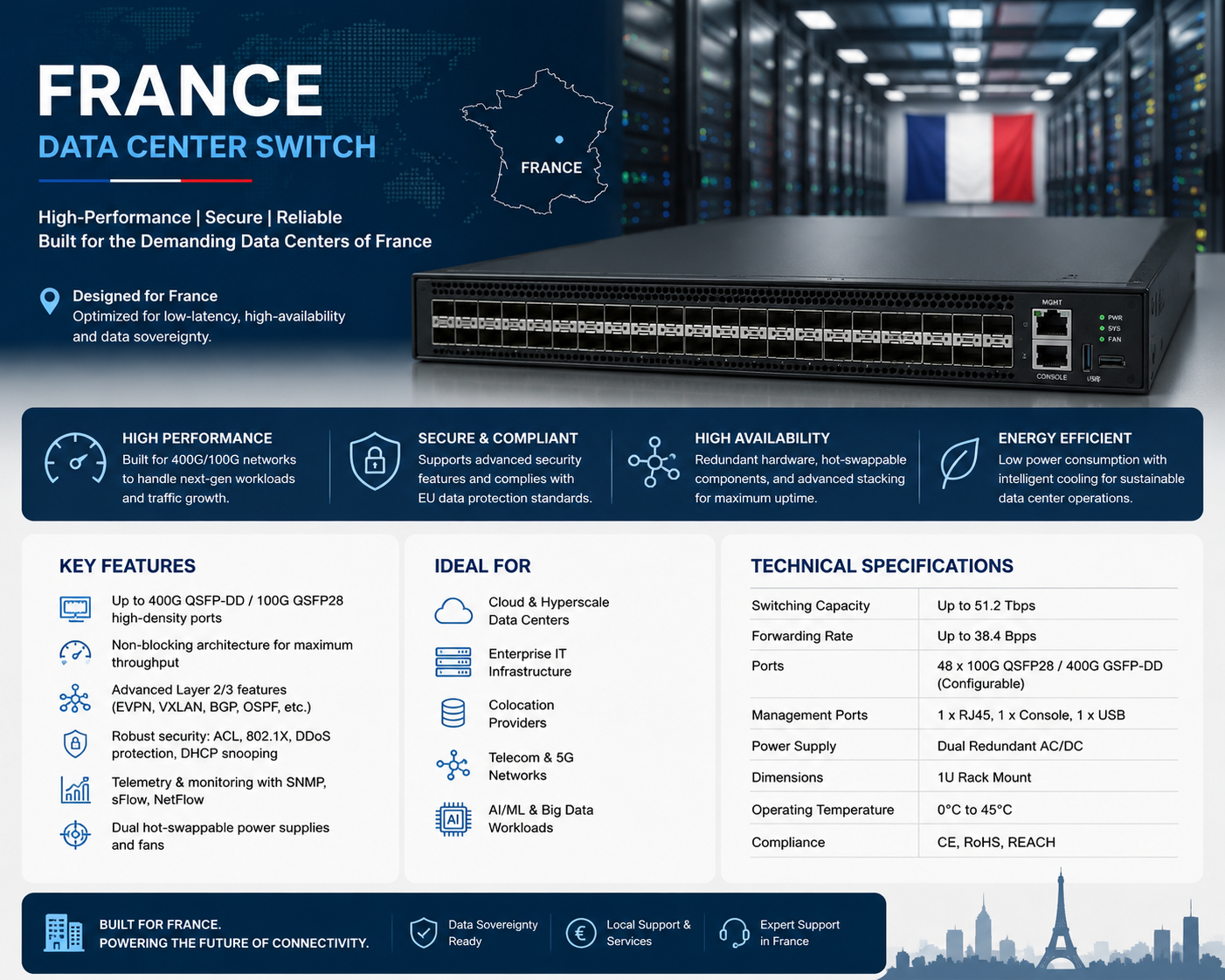
The rapid deployment of fifth-generation mobile networks and the structural expansion of edge computing nodes across major French metropolitan zones have transformed how commercial data is processed, stored, and routed. Telecom operators and independent infrastructure developers are establishing smaller, localized facilities closer to end-users to reduce latency for autonomous systems, smart...
The Medical Face Shield Market continues to play a vital role in the global healthcare industry as hospitals, clinics, diagnostic laboratories, and emergency care facilities prioritize infection prevention and occupational safety. While the surge in demand experienced during the COVID-19 pandemic has stabilized, medical face shields remain an essential component of personal protective...

The Middle East IoT implantable cardiac devices market is expanding steadily as healthcare providers increasingly adopt connected medical technologies to improve cardiovascular disease management and patient outcomes. The Middle East IoT Implantable Cardiac Devices Market size was valued at US$ 341.7 Mn in 2024 and is projected to reach US$ 946.4 Mn by 2033, growing at a CAGR of 12.0%...
