Monoflange Valves for Power Plant Steam and Feedwater Instrumentation

Thermal and combined-cycle power plants run some of the highest-pressure, highest-temperature instrument loops in industry — main steam lines on supercritical units routinely sit above 2,400 psi and 1,000°F. Tapping a pressure or differential-pressure transmitter into a line like that, without adding another leak-prone flanged joint, is exactly the problem monoflange valves were built to solve, and the single, double, or triple configuration a plant specifies usually tracks to where in the steam-water cycle the instrument sits and how disruptive an unplanned removal would be.
Matching Configuration to the Steam-Water Cycle
A single monoflange valve provides isolation for simple pressure gauges and thermowell connections on condensate, auxiliary steam, and balance-of-plant lines where a quick shutoff is all that's needed. A double monoflange valve is the standard for DP flow tran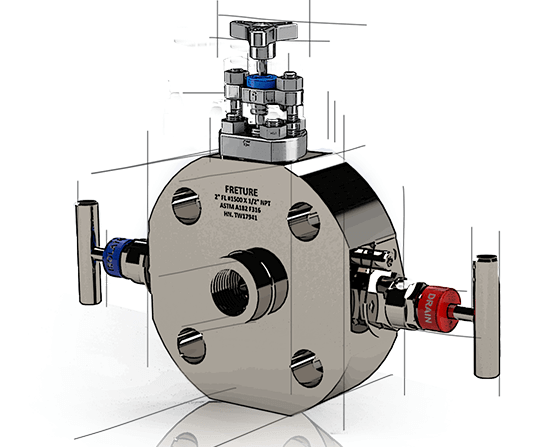 smitters across orifice plates or venturi runs on boiler feedwater and main steam flow measurement, where two block valves and an equalizer keep the transmitter's zero and span stable under high-temperature, high-pressure conditions. A triple monoflange valve adds a vent/drain path for safe transmitter removal and recalibration on superheater and reheater outlet instrumentation — control loops operators need to service without tripping the unit.
Where They Tie In Across the Plant
On a conventional or supercritical boiler, monoflange valves typically appear on economizer inlet/outlet lines, superheater and reheater headers, boiler drum level instrumentation, and feedwater heater trains. On combined-cycle units, the same configurations serve heat-recovery steam generator (HRSG) drum-level and flow instrumentation across the high-, intermediate-, and low-pressure sections, plus condensate polishing and deaerator instrumentation where water chemistry control depends on reliable flow and pressure readings. Auxiliary boiler and steam-turbine gland-sealing lines carry lower pressure ratings but still benefit from the same compact, single-body isolation, particularly where multiple small-bore instrument taps sit close together on a crowded skid.
Pressure-Temperature Class and Material Selection
Main steam and hot reheat tie-ins typically call for ASME B16.34 Class 1500 or 2500 bodies in alloy steel — A182 grade F11, F22, or F91 — rather than plain carbon steel, to hold rating at operating temperature. Flange dimensions follow ASME B16.5, and bodies are commonly supplied with extended studding or bonnet extensions so field insulation doesn't compromise stem packing. Fire-safe design to API 607 is standard where a station fire-risk assessment applies, packing is frequently graphite-based rather than PTFE given the temperature range, and shell/seat testing follows API 598 before dispatch.
Why Compact Construction Matters on a Retrofit
Boiler feedwater and steam instrumentation runs are frequently upgraded with new DP transmitters during plant life-extension work, and space around existing piping is tight. A monoflange valve's single forged body bolts directly to the process flange in place of a multi-piece manifold, cutting the number of joints that must be re-hydrotested after tie-in work — a meaningful factor when an outage window is measured in days, not weeks, and every additional joint adds inspection scope.
Testing, Documentation, and Commissioning
Power plant procurement specifications generally call for shell, seat, and backseat testing to API 598, positive material identification (PMI) on alloy-steel bodies to confirm chrome-moly grade, and hydrostatic testing to the applicable ASME B16.34 pressure class before a valve ships to site. For units under a fire-risk assessment, fire-safe test certification to API 607 is checked alongside the pressure-temperature rating, since a monoflange valve's certification package is usually reviewed against the same quality plan as the main steam and feedwater piping it ties into — not treated as a minor bought-out item.
Freture Techno supplies monoflange valves in single, double, and triple configurations in carbon and alloy steel grades suited to boiler feedwater, main steam, and reheat instrumentation duties, manufactured to ASME B16.34/B16.5 with fire-safe and NACE-compliant options for power generation specifications.
Categories
- Artificial Intelligence (AI)
- Technology
- Business
- Education
- Science
- Lifestyle
- Healthcare
- Entertainment
- Politics
- Environment
- Travel
- Finance
- Automobile
- News
- Art
- Causes
- Crafts
- career
- Dance
- Drinks
- Film
- Fitness
- Food
- Games
- Gardening
- Health
- Home
- Literature
- Music
- Networking
- Other
- Party
- Religion
- Shopping
- Sports
- Theater
- Wellness
Read More
The Healthcare Cloud Computing Market is undergoing a major transformation as hospitals, clinics, laboratories, pharmaceutical companies, and healthcare payers move from traditional IT infrastructure toward flexible cloud-based environments. Market Research Future estimates that the market will increase from USD 28.39 billion in 2024 to USD 96.85 billion by 2035, expanding at a CAGR of 11.8%...

The Vocal Fold Augmentation Market is growing as awareness of voice disorders and minimally invasive treatment options increases. WiseGuyReports estimates the market at USD 2.1 billion in 2025 and projects it to reach USD 3.5 billion by 2035, expanding at a 5.4% CAGR. Advances in biomaterials are improving the range of options available for vocal fold treatment. Injectable materials, autologous...
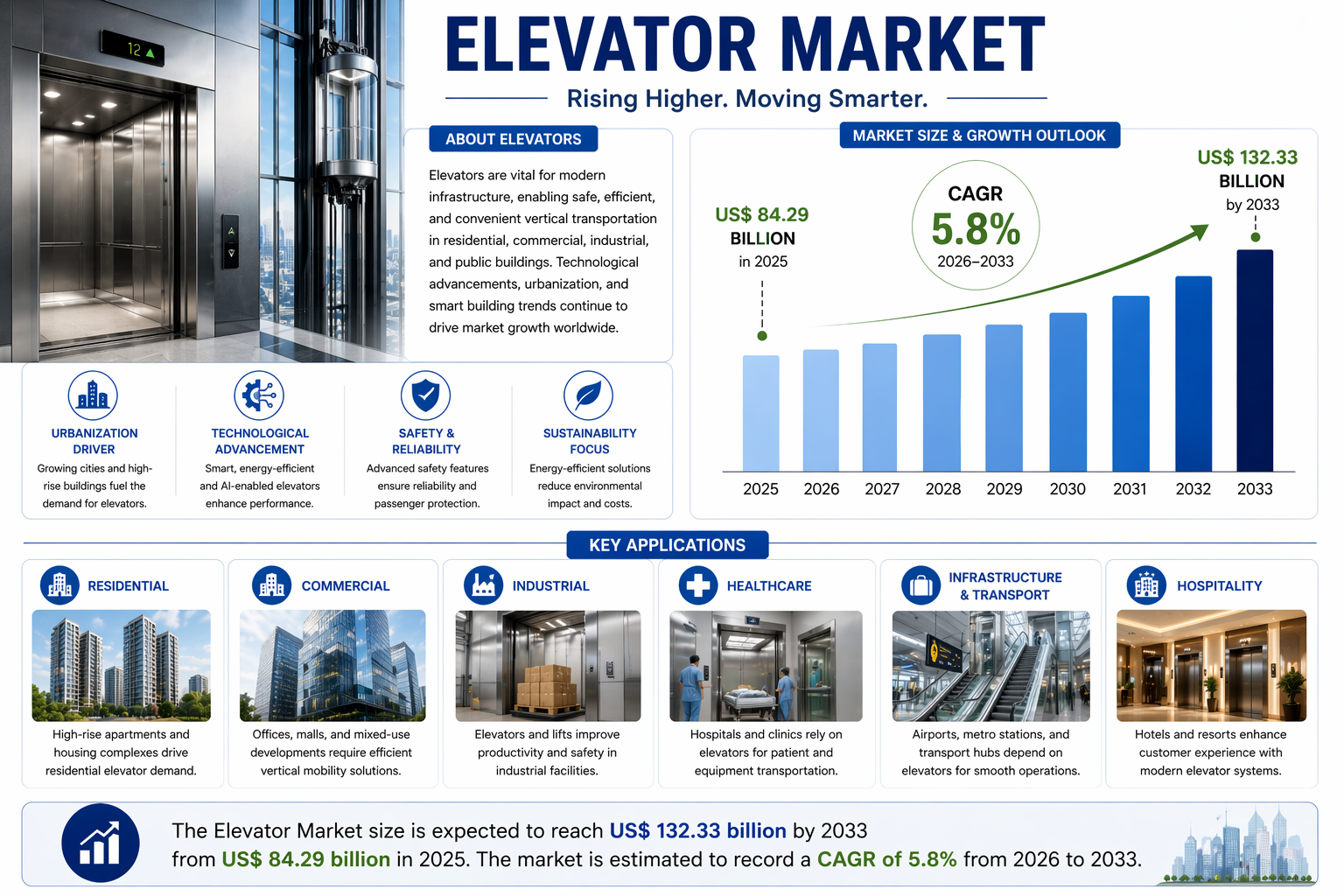
The global infrastructure landscape is undergoing a radical transformation as vertical living becomes the standard for modern urban environments. At the heart of this transformation is the elevator industry, which has evolved from a basic utility to a sophisticated, tech driven segment of the construction and real estate sectors. As cities continue to expand upward to accommodate a growing...
Comparing Antibiotic Interventions, Water Conditioners, and Probiotic Solutions Addressing infectious dropsy requires a multi-pronged therapeutic approach due to its complex etiology involving internal bacterial infection and osmotic imbalance. Treatment protocols vary based on host species, disease progression, and environmental conditions across freshwater systems. Therapeutic options are...
How SOC Service Providers in India Can Strengthen IT Security IT businesses operate complex environments that may include cloud infrastructure, business applications, employee endpoints, networks, servers, identity systems, and third-party platforms. As Indian IT organizations expand digital operations, keeping track of security events across these environments can become an ongoing operational...