


How RWA Tokenization Platform Development Can Support Private Credit From Issuance to Settlement
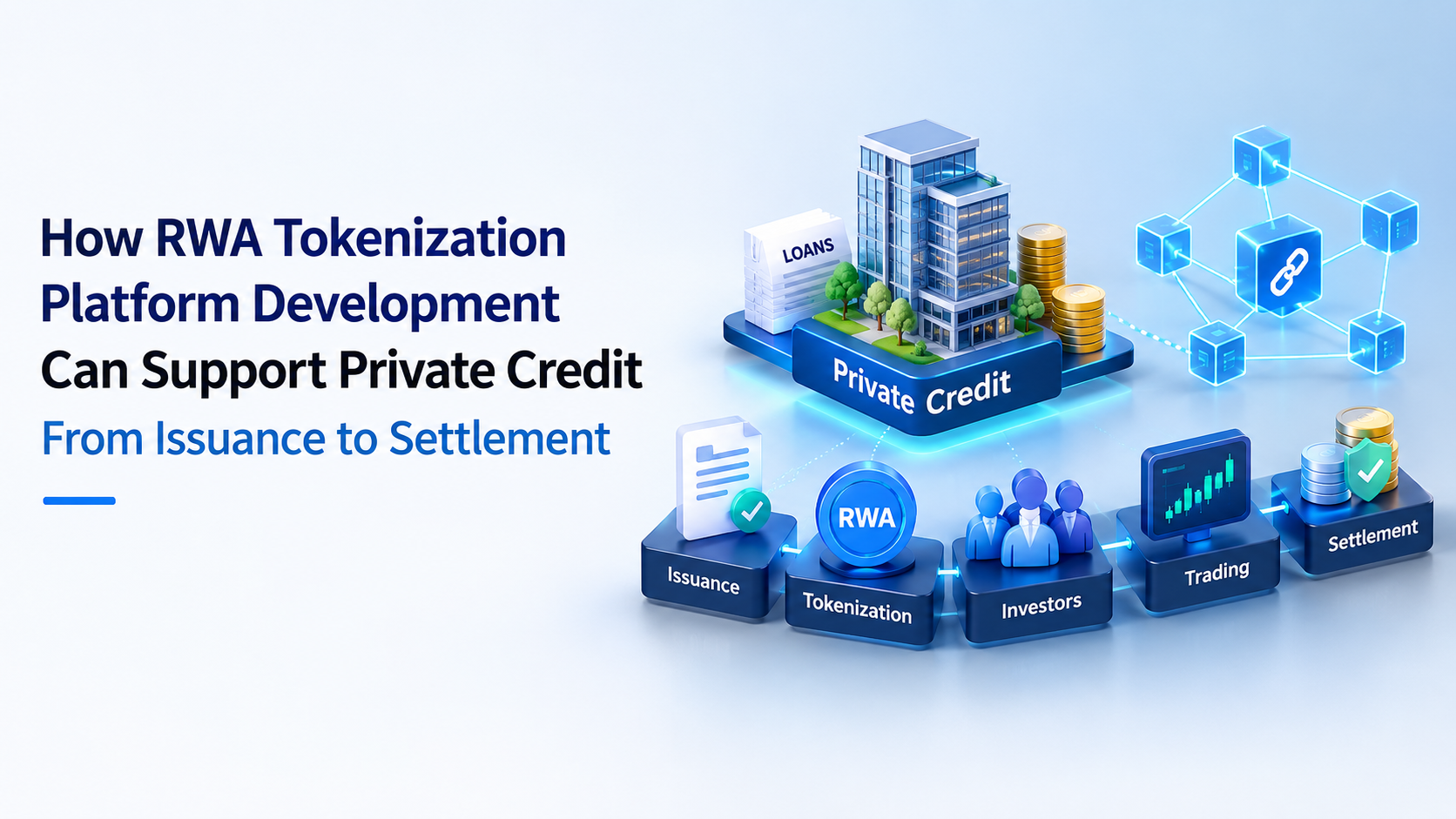
Private credit has become an important source of financing for businesses, real estate projects, infrastructure ventures, and other borrowers that may not rely on traditional bank lending. Yet, many private credit transactions still involve manual documentation, fragmented records, lengthy settlement procedures, and limited visibility across participants.
RWA tokenization introduces another approach. By representing credit agreements, loan claims, receivables, or fund interests as blockchain-based assets, financial firms can coordinate issuance, ownership records, transfers, payments, and settlement through a shared digital infrastructure. The idea is not simply to place a loan on a blockchain. A practical system needs to connect legal agreements, borrower information, investor eligibility, payment schedules, servicing activities, and blockchain records.
This is where RWA tokenization platform development can have a practical role. A properly designed platform can bring several stages of the private credit lifecycle into one environment while retaining the controls required for regulated financial activity.
Understanding Private Credit in the RWA Tokenization Model
Private credit refers to loans and other forms of debt financing provided outside conventional public debt markets. Investors may provide capital directly to businesses, real estate ventures, asset managers, or specialized lending vehicles.
In a tokenized model, the economic rights connected with these credit arrangements can be represented through digital tokens. Depending on the legal structure, a token may represent an interest in a loan, a share of a special purpose vehicle, a fund interest, or a claim linked to receivables.
RWA tokenization does not change the underlying credit agreement by itself. The legal framework remains important. The blockchain layer primarily provides a digital record for ownership, transfers, and transaction activity.
A platform can therefore connect traditional private credit documentation with blockchain-based asset records. This combination can make the lifecycle easier to monitor while giving issuers and investors a common transaction environment.
Method 1: Structuring Credit Assets Before Issuance
The first stage involves deciding what will actually be tokenized.
A private credit transaction may involve a single loan, a portfolio of loans, invoices, trade receivables, or interests in a lending fund. Each structure creates different legal and operational requirements.
A platform can provide an asset onboarding module where issuers enter information such as:
- Borrower details
- Loan amount
- Interest rate
- Maturity date
- Repayment schedule
- Collateral information
- Credit rating or internal risk score
- Jurisdiction
- Servicer information
- Investor eligibility requirements
The platform can then associate these records with the proposed digital asset.
An RWA tokenization development company can also design workflows for document submission, review, approval, and asset classification. This gives the issuer a structured process before any token issuance takes place.
Method 2: Digital Investor Onboarding and Eligibility Checks
Private credit investments are often restricted to specific investor groups. Depending on the jurisdiction and offering structure, investors may need identity verification, accreditation checks, suitability assessments, or other compliance reviews.
A tokenization platform can connect investor onboarding with these requirements.
For example, an investor may create an account and submit the required information. The platform can run identity verification and compliance checks before assigning an eligibility status. Once approved, the investor can access only those credit opportunities permitted under the applicable rules.
Wallet whitelisting can also be used. Only approved blockchain addresses may be allowed to receive or transfer a particular token.
This approach can reduce the risk of unrestricted transfers of securities or credit-related assets. It also gives the issuer a record of which investors were approved at the time of participation.
Method 3: Token Issuance for Private Credit Instruments
After the asset and investor framework has been established, the next stage is token issuance.
RWA tokenization can represent a private credit position through fungible or non-fungible token structures, depending on the transaction. A fungible structure may suit fractional interests where investors receive equivalent economic rights. A non-fungible structure may be more suitable for individually identified agreements or assets.
Smart contracts can define rules around issuance, transfers, redemption, and other activities.
For example, a private credit token may contain rules that:
- Restrict transfers to approved wallets
- Record token ownership
- Apply investment limits
- Manage issuance quantities
- Support redemption
- Restrict certain transactions based on jurisdiction
- Record relevant transaction events
An RWA tokenization company can develop these smart contract components according to the legal and operational model selected by the issuer.
Method 4: Connecting Loan Servicing With Token Records
Issuance is only one part of private credit. The loan must continue to be serviced after investors receive their positions.
Borrowers may make monthly or quarterly interest payments. Principal may be repaid at maturity or through scheduled installments. Fees, late payments, restructuring events, and other activities may also need to be recorded.
A tokenization platform can connect servicing data with the investor interface.
For instance, when a borrower makes a payment, the servicing system can record the event and update the relevant investor accounts. Depending on the structure, smart contracts can then support the distribution of interest or principal.
This can give investors a more consistent view of payment activity without requiring every participant to maintain separate records.
The system should also account for situations where payments are delayed, partially received, restructured, or disputed. Private credit rarely follows a perfectly predictable schedule, so servicing workflows need manual intervention options alongside automated functions.
Method 5: Managing Interest and Principal Distributions
Payment distribution is one area where tokenized private credit can offer practical benefits.
Suppose a loan generates monthly interest. The platform can maintain a record of token holdings and calculate the amount attributable to each investor according to the applicable agreement.
A distribution engine can consider:
- Token holdings
- Interest rates
- Payment dates
- Investor ownership
- Fees
- Withholding requirements
- Principal repayments
- Adjustments from previous periods
Once the payment has been received, the system can record the distribution and update the relevant balances.
The actual movement of money may occur through bank transfers, stablecoins, tokenized deposits, or other permitted payment rails, depending on the jurisdiction and transaction structure.
This creates a connection between the off-chain financial system and the blockchain record rather than treating blockchain as a standalone environment.
Method 6: Creating a Controlled Secondary Transfer Process
Private credit positions may not always be intended for unrestricted trading. However, some structures may permit secondary transfers among eligible investors.
RWA tokenization platform development can include a controlled transfer marketplace where investors can express interest in buying or selling eligible positions.
The platform can apply rules before a transfer is completed. These may include investor eligibility, jurisdiction, holding period, wallet approval, transfer limits, and asset-specific restrictions.
Instead of allowing every wallet to interact with the token contract, the system can use permissioned transfer logic.
This approach can make secondary activity more suitable for private market instruments where compliance requirements remain relevant after issuance.
Method 7: Connecting Valuation and Credit Data
Private credit assets require ongoing information about the borrower and the underlying loan.
A platform can connect with external data providers or internal systems to receive information related to borrower performance, collateral values, payment activity, credit assessments, or other relevant indicators.
Oracles may be used when external information needs to interact with smart contracts. For example, a loan covenant condition could depend on a verified external value.
However, external data should not automatically be treated as accurate simply because it arrives through an oracle. The platform should include data validation, source management, update records, and exception handling.
This is particularly important when token holders rely on information to assess the status of their investment.
Method 8: Supporting Compliance and Transaction Monitoring
Private credit tokenization requires more than smart contracts. Compliance controls need to exist across the entire platform.
An RWA tokenization platform development company can include modules for KYC, AML screening, wallet monitoring, transaction review, investor classification, document storage, and reporting.
Transaction monitoring can flag unusual transfers or activities that require review. Administrators can also place restrictions on wallets when required by the applicable legal process.
A permissioned token model can add another layer of control by limiting who can hold or transfer a particular asset.
The platform should maintain audit records showing relevant actions, including investor approval, token issuance, transfers, redemptions, and administrative changes.
Method 9: Linking Legal Ownership With Digital Ownership
One of the biggest considerations in tokenized private credit is the relationship between the token and the legal rights it represents.
A token does not automatically create a legally enforceable claim over an underlying loan. The legal structure needs to specify what the investor owns and what rights are attached to the digital asset.
A special purpose vehicle may hold the underlying loans, while token holders receive defined economic interests in that vehicle. In another model, tokens may represent contractual claims subject to specific legal documentation.
The platform therefore needs a document layer that connects the digital token with the relevant agreements.
This may include subscription agreements, loan agreements, offering documents, investor disclosures, servicing agreements, and transfer restrictions.
For a Real-world asset tokenization company, legal architecture and technical architecture need to be considered together from the beginning.
Method 10: Settlement Through Blockchain-Based Records
Settlement is where the complete lifecycle comes together.
In a traditional private credit transaction, different parties may maintain separate records for ownership, payments, investor information, and settlement. Reconciliation between these records can take time.
A tokenized system can use blockchain as a shared transaction record. When a permitted transfer takes place, the token ownership record changes on-chain. If the transaction also uses a compatible digital payment mechanism, delivery and payment can occur within a connected workflow.
For example:
- Buyer completes eligibility checks.
- Seller initiates the permitted transfer.
- Payment is confirmed through the selected settlement rail.
- Smart contract verifies the required conditions.
- Token ownership changes.
- Transaction records are updated.
- Both parties receive settlement confirmation.
This does not mean every private credit transaction must settle entirely on-chain. Hybrid settlement models may be more appropriate where banking infrastructure and regulatory requirements remain part of the process.
Technology Architecture for Private Credit Tokenization
A practical RWA tokenization development project usually requires several connected layers.
The user interface manages issuer, investor, administrator, and servicing activities. The application layer manages business rules, asset records, investor information, payment calculations, and reporting.
The blockchain layer manages token contracts, ownership records, transfer restrictions, and transaction history. A compliance layer handles identity verification and investor eligibility. The integration layer connects banking systems, custodians, data providers, accounting systems, and other external services.
Smart contracts should remain focused on rules that benefit from blockchain execution. Complex calculations, confidential information, and operational workflows may remain off-chain where appropriate.
This hybrid architecture can make the system easier to manage while preserving blockchain records for activities where they provide practical value.
Business Benefits for Private Credit Issuers and Investors
A well-planned tokenization model can provide several operational advantages.
Issuers can present private credit opportunities through a digital investment environment. Investors can receive digital records of their holdings and payment activity. Administrators can monitor transactions through a unified dashboard.
Tokenized records may also make fractional participation possible where the legal structure permits it. Instead of requiring one investor to hold an entire credit position, an offering can divide economic interests into smaller units.
Another potential benefit is faster reconciliation. When multiple participants rely on the same blockchain record, there may be fewer differences between ownership records maintained by separate parties.
The actual benefits will depend on the legal model, technology choices, investor base, asset type, and regulatory environment.
Challenges to Consider Before Development
Private credit tokenization still involves several challenges.
Legal enforceability is one of the first considerations. The relationship between token ownership and the underlying credit rights needs to be documented carefully.
Regulatory requirements can also differ across jurisdictions. Investor eligibility, securities rules, custody arrangements, transfer restrictions, reporting, and taxation may all affect the platform design.
Data privacy is another concern. Sensitive borrower and investor information should not simply be placed on a public blockchain. A better approach may involve keeping confidential information off-chain while recording suitable references or proofs on-chain.
Operational exceptions also need attention. Missed payments, loan modifications, defaults, refinancing, and disputes cannot always be handled through predefined smart contract rules.
For these reasons, RWA tokenization development should involve legal, financial, compliance, and technical teams rather than treating the project as a blockchain-only implementation.
Future Outlook for Tokenized Private Credit
Private credit is well suited to tokenization because many transactions already depend on structured agreements, recurring payments, ownership records, and servicing processes.
As financial institutions gain more experience with digital assets, tokenized credit markets may develop around specific asset classes and investor groups rather than one universal market.
Some platforms may focus on real estate debt. Others may specialize in corporate lending, trade receivables, asset-backed loans, or private credit funds.
The direction of the market will depend heavily on regulation, institutional adoption, custody infrastructure, payment systems, and investor demand. Technology can support the process, but legal certainty and reliable servicing remain just as important.
Conclusion
RWA tokenization platform development can give private credit providers a digital framework covering asset onboarding, investor verification, token issuance, servicing, payment distribution, controlled transfers, compliance monitoring, and settlement. The main value comes from connecting these stages rather than simply issuing a token for an existing loan. With suitable legal structures, permission controls, smart contracts, off-chain integrations, and servicing workflows, tokenized private credit can provide a more coordinated way to manage ownership and transaction records throughout the investment lifecycle. Businesses considering RWA tokenization should evaluate their asset types, investor requirements, jurisdiction, custody model, payment infrastructure, and compliance obligations before selecting a technical architecture. Blockchain App Factory provides RWA tokenization development services for businesses seeking to create platforms for tokenized credit and other real-world assets.
FAQs
1. What is RWA tokenization in private credit?
RWA tokenization in private credit involves representing economic rights connected with loans, receivables, credit funds, or other debt instruments through blockchain-based tokens.
2. Can private credit tokens be traded?
They can be transferable when the legal structure and applicable regulations permit it. Platforms can restrict transfers to approved investors and wallets.
3. How does tokenization support private credit settlement?
A tokenization platform can record ownership changes on blockchain and connect those transfers with payment or settlement systems, creating a coordinated transaction process.
4. What does an RWA tokenization company develop for private credit?
An RWA tokenization company may develop asset onboarding, investor management, compliance workflows, smart contracts, token issuance, servicing, payment distribution, transfer management, and reporting modules.
5. Is private credit tokenization fully on-chain?
Not necessarily. Many platforms use a hybrid architecture where blockchain manages token ownership and selected transaction records while sensitive documents, borrower data, servicing systems, and other information remain off-chain.
6. What role does RWA token development play in private credit?
RWA token development creates the blockchain-based representation of the credit position and defines rules governing issuance, ownership, transfers, and redemption.
7. Why is compliance important for tokenized private credit?
Private credit assets may be subject to securities, lending, investor eligibility, AML, custody, and transfer regulations. Compliance controls help restrict participation and transactions according to the applicable requirements.
8. How long does RWA tokenization platform development take?
The timeline depends on the asset structure, blockchain network, compliance requirements, integrations, smart contract complexity, and platform features. A basic MVP generally requires less development time than an institution-focused platform with extensive integrations.
Categories
- Artificial Intelligence (AI)
- Technology
- Business
- Education
- Science
- Lifestyle
- Healthcare
- Entertainment
- Politics
- Environment
- Travel
- Finance
- Automobile
- News
- Art
- Causes
- Crafts
- career
- Dance
- Drinks
- Film
- Fitness
- Food
- Games
- Gardening
- Health
- Home
- Literature
- Music
- Networking
- Other
- Party
- Religion
- Shopping
- Sports
- Theater
- Wellness
Read More
Vitamin A Market According to the latest report published by Data Bridge Market Research, the Vitamin A Market vitamin A market size was valued at USD 678.97 Million in 2024 and is projected to reach USD 1053.31 Million by 2032, with a CAGR of 5.00% during the forecast period of 2025 to 2032. In addition to the insights on market scenarios such as market value, growth rate,...

Investment opportunities in the video switcher market are becoming increasingly attractive, particularly as technological advancements redefine broadcasting capabilities. The market is projected to grow from USD 2.862 billion in 2024 to a remarkable USD 5.806 billion by 2035, with a CAGR of 6.64%. This growth signifies not just a surge in demand but also the increasing recognition of video...

The Dermatology Lasers Industry is undergoing accelerated development globally, supported by increasing demand for minimally invasive aesthetic treatments, advancements in energy-based medical devices, and expanding applications in clinical dermatology. These technologies are enabling highly targeted procedures with improved efficacy and reduced recovery times. As per Business Market Insights,...

Supply chain volatility caused by global disruptions, shifting geopolitical trade routes, and unpredictable consumer demand patterns has made operational agility a paramount goal for enterprise executives. Static, human-dependent logistics networks often struggle to adjust rapidly to sudden volume swings or unexpected disruptions. Integrating flexible warehouse robotics systems provides...

Surgical Scalpel Market is an important segment of the surgical instruments industry, supported by the continued volume of surgical procedures performed across hospitals, ambulatory surgical centers, specialty clinics, and other healthcare facilities. Scalpels are essential instruments used for precise tissue incision across a wide range of surgical specialties. Traditional reusable scalpels...
