Emerging Material Innovations and Technological Shifts Reshaping Energy Storage Systems

Technological advancements in battery design and energy density are fundamentally changing performance benchmarks across Europe’s energy storage sector. Current Germany Lithium-Ion Battery Market Trends indicate a decisive pivot toward specialized chemistries tailored for specific end-use applications. While Lithium Nickel Manganese Cobalt Oxide (NMC) remains dominant in high-performance passenger electric cars due to its superior energy density, Lithium Iron Phosphate (LFP) chemistry is gaining rapid ground in stationary storage and budget-friendly vehicle segments due to its lower material costs, exceptional thermal stability, and long cycle life.
Another major technological trend is the development of cell-to-pack (CTP) and cell-to-chassis (CTC) structural architecture. Traditional battery design relies on grouping individual cells into modules before assembling them into a final pack, adding structural weight and reducing volumetric efficiency. By bypassing modular frames and integrating prismatic or pouch cells directly into the vehicle structure, engineering teams can increase energy density while cutting manufacturing complexity and production costs. This design approach enables electric vehicles to achieve longer driving ranges without increasing overall pack dimensions.
The integration of artificial intelligence and advanced battery management systems (BMS) represents another major milestone for technology adoption. Modern smart battery packs feature embedded sensor arrays and edge-computing algorithms that continuously monitor cell voltage, internal temperature, and state-of-health metrics in real time. These intelligent systems optimize charge-discharge cycles, predict potential thermal runaway events, and extend the functional operating life of battery assets in both electric vehicles and stationary grid storage installations.
Simultaneously, the industrial sector is preparing for the transition toward solid-state battery commercialization. By replacing flammable liquid electrolytes with solid ceramic or polymer interfaces, solid-state designs promise higher energy density, faster charging speeds, and superior safety profiles. German automotive manufacturers and engineering firms are actively investing in solid-state startups and pilot production lines, positioning the domestic market to lead the global transition toward next-generation energy storage over the coming decade.
Top Trending Reports:
Categories
- Artificial Intelligence (AI)
- Technology
- Business
- Education
- Science
- Lifestyle
- Healthcare
- Entertainment
- Politics
- Environment
- Travel
- Finance
- Automobile
- News
- Art
- Causes
- Crafts
- career
- Dance
- Drinks
- Film
- Fitness
- Food
- Games
- Gardening
- Health
- Home
- Literature
- Music
- Networking
- Other
- Party
- Religion
- Shopping
- Sports
- Theater
- Wellness
Read More
In recent years, interest in alternative wellness approaches has grown significantly, especially among individuals seeking better digestive balance and overall vitality. One such emerging topic is IV Ozone Therapy Gut Health in Dubai, which is often discussed in relation to supporting digestive wellness and internal balance through oxygen-based therapies. This article explores how this...

The pathogen reduction system market is expanding as healthcare organizations and blood-processing facilities increasingly focus on reducing the risk of transfusion-transmitted infections. These systems are designed to support the safety of blood components by reducing or inactivating pathogens before transfusion. The Pathogen Reduction System market size is expected to reach US$ 4.26 Billion...

The linerless labels market is gaining significant momentum as industries increasingly adopt sustainable and cost-efficient labeling solutions. Unlike conventional pressure-sensitive labels, linerless labels do not require a silicone-coated release liner, reducing material waste and improving operational efficiency. With growing environmental awareness and rising demand from retail,...

The Holographic Imaging Market is gaining strong momentum as organizations seek more immersive and interactive ways to visualize information. The market is projected to grow from approximately USD 2 billion in 2025 to USD 12.5 billion by 2035, registering a CAGR of 17.9%. Increasing adoption across medical imaging, entertainment, defense, advertising, education, and consumer electronics is...
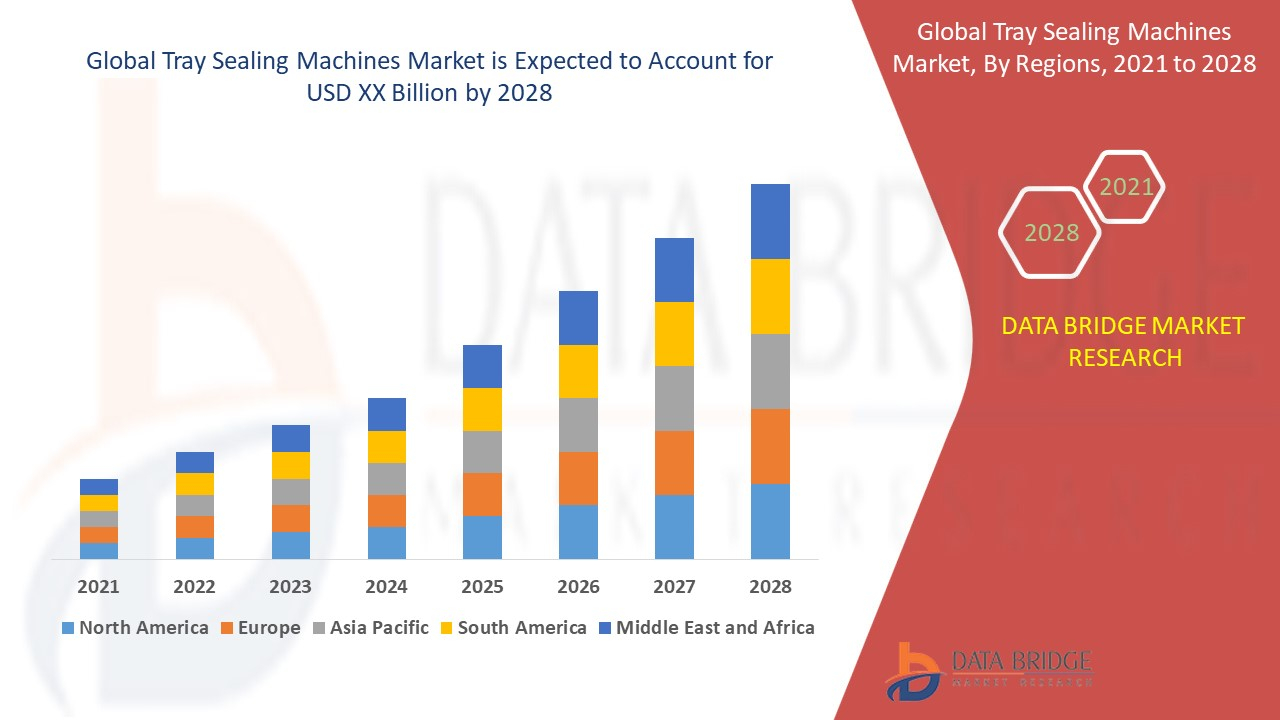
According to the latest report published by Data Bridge Market Research, the Tray Sealing Machines Market CAGR Value The global tray sealing machines market size was valued at USD 5.9 billion in 2024 and is projected to reach USD 10.18 billion by 2032, with a CAGR of 7.05% during the forecast period of 2025 to 2032. All the statistical data including facts and figures...