

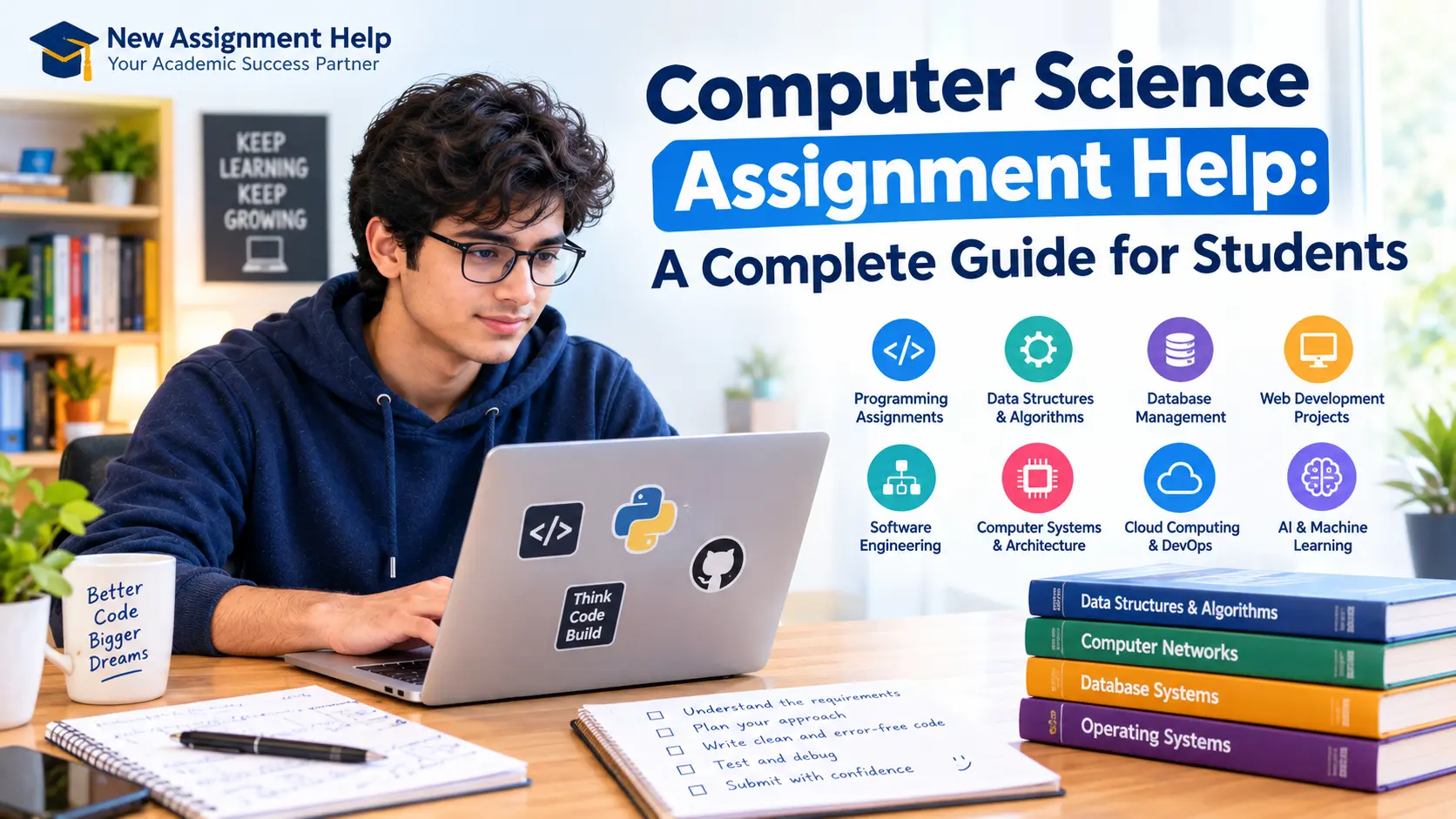

Computer science assignments can cover everything from programming and algorithms to databases, artificial intelligence, networking, software engineering, and cybersecurity. Unlike subjects where students may mainly focus on written explanations, computer science coursework often requires a combination of theoretical understanding and practical application. This is why Computer Science Assignment Help UK can be useful for students who want to understand difficult concepts, organise their coursework properly, and improve the quality of their academic work. The aim should not simply be to complete an assignment, but to develop the technical knowledge and problem-solving skills needed for future modules and professional work.
A well-written computer science assignment demonstrates more than a final answer or a working piece of code. It should show that the student understands the problem, has selected an appropriate method, can explain the reasoning behind their decisions, and can evaluate the final outcome. This guide explores the main challenges students face and provides practical ways to approach computer science assignments more effectively.
Understanding Computer Science Assignments
Computer science coursework can vary significantly depending on the university, module, academic level, and assignment brief. A first-year programming task might ask students to create a simple application, while a final-year project could involve developing and evaluating a complex software system.
Before beginning any assignment, students should carefully read the brief. It may contain specific requirements relating to programming languages, word count, references, diagrams, testing, documentation, or evaluation.
Some common areas covered by computer science assignments include:
- Programming and software development
- Data structures and algorithms
- Database management
- Web development
- Artificial intelligence and machine learning
- Cybersecurity
- Computer networks
- Operating systems
- Software engineering
- Human-computer interaction
- Data science
- Cloud computing
Understanding exactly what the question is asking is the first important step. Students sometimes begin writing code or researching sources before identifying the actual requirements. This can result in unnecessary work and make it harder to stay focused.
Breaking Down the Assignment Brief
Once the brief has been read, divide it into smaller tasks. For example, if an assignment asks you to develop a software application, evaluate its performance, and discuss possible improvements, these should be treated as separate sections of the same project.
Look carefully at the command words used in the question. Words such as "analyse", "evaluate", "compare", "design", "implement", and "discuss" have different meanings.
For example, "describe an algorithm" requires an explanation of how it works. "Analyse an algorithm" usually requires deeper consideration of its behaviour, efficiency, advantages, and limitations. "Evaluate an algorithm" may require a judgement supported by evidence or comparison.
This distinction is important because students can lose marks by providing information without directly answering the task.
Choosing the Right Research Approach
Research is an important part of many computer science assignments. Students should avoid relying entirely on general websites when academic sources are expected.
University textbooks, academic journals, conference papers, official technical documentation, and reputable research publications can provide stronger evidence. The sources selected should be relevant to the specific topic rather than simply related to computer science in general.
For programming tasks, official documentation can also be particularly valuable. Documentation helps students understand syntax, functions, libraries, frameworks, limitations, and recommended approaches.
When researching, keep organised notes. Record the source details while researching rather than trying to find them again at the end. This makes referencing much easier and reduces the possibility of accidentally using information without appropriate attribution.
Developing Strong Programming Solutions
Programming assignments require a different approach from purely theoretical coursework. Writing code without planning can lead to errors, duplicated work, and confusing program structures.
Start by understanding the required functionality. Write down what the program needs to do before deciding how to implement it. A simple flowchart, pseudocode outline, or list of functions can make the development process more manageable.
For example, a student developing a booking application might first identify the main operations:
- Accept user information.
- Check available options.
- Store booking details.
- Confirm the booking.
- Allow users to update or cancel it.
- Display relevant information.
After identifying the logic, the student can decide how each function should be implemented.
Good programming assignments should also consider readability. Meaningful variable names, suitable comments, logical structure, and consistent formatting make code easier to understand and maintain.
Testing and Debugging Your Code
Testing should not be treated as something that happens only after the programming has finished. It should be part of the development process.
Students can test programs using normal inputs, unusual inputs, boundary values, and invalid inputs. For example, if a programme accepts an age between 18 and 65, testing only the value 30 does not provide enough evidence that the program works correctly. Values such as 17, 18, 65, and 66 may reveal additional problems.
Debugging involves identifying why something is not working and then correcting the underlying problem. Simply changing code until the error disappears does not demonstrate strong technical understanding.
Keep a record of important testing results where appropriate. A good assignment can explain what was tested, what happened, whether the expected result was achieved, and how any identified problems were resolved.
Improving Academic Writing in Computer Science
Computer science assignments are not always about writing large amounts of text. However, written explanations are still important because they demonstrate understanding.
When explaining technical concepts, avoid filling paragraphs with unnecessary terminology. A clear explanation is generally more useful than one that uses complicated language without explaining the actual idea.
For example, if discussing a sorting algorithm, explain how it works, its computational complexity, where it may be useful, and what limitations it has. Where relevant, support technical claims with academic sources.
Students should also connect explanations to their own project. Instead of simply defining a concept, explain how that concept relates to the system, algorithm, database, or application being discussed.
This approach makes the assignment more analytical and shows that the student can apply theoretical knowledge in a practical context.
Using Assignment Help Effectively
University students sometimes need additional academic guidance when they encounter unfamiliar programming concepts, complex technical requirements, or difficult research questions. Proper Assignment Help for Students can be useful when it focuses on explanation, feedback, planning, and improving understanding rather than simply providing a finished answer.
Students can use academic support in several practical ways. They may ask for an explanation of a difficult concept, receive feedback on their structure, discuss possible research approaches, or review whether their work addresses the assignment brief.
For programming coursework, support can also help students understand why a particular approach works, identify weaknesses in their logic, and learn better debugging techniques. The student should still take responsibility for understanding and producing their academic work.
The most valuable form of support is therefore one that helps students become more independent. If a difficult topic is explained clearly, students can apply the same principles to future assignments rather than repeatedly depending on external assistance.
Managing Large Computer Science Projects
Large assignments can appear overwhelming when viewed as one task. Breaking the project into stages makes the workload more manageable.
A typical computer science project may involve:
- Understanding the requirements
- Conducting background research
- Planning the system
- Designing the solution
- Developing the implementation
- Testing the system
- Analysing results
- Writing the report
- Editing and proofreading
Set smaller deadlines for each stage rather than waiting until the final submission date. This is particularly useful for programming assignments because unexpected technical problems can take longer to solve than originally expected.
Students should also leave enough time for testing. A project that works on the developer's computer may still contain problems that become visible when different inputs or conditions are introduced.
Common Mistakes to Avoid
One common mistake is starting the assignment without properly understanding the brief. Another is focusing heavily on coding while neglecting the written explanation and evaluation.
Students should also avoid copying code from online sources without understanding it. Even if the code works, they may struggle to explain it during an assessment or answer questions about their implementation.
Another issue is poor referencing. Technical information, research findings, borrowed ideas, and external material should be referenced according to the university's required style.
Leaving everything until the final few days is another avoidable problem. Computer science assignments can involve technical issues that are difficult to predict, so early preparation gives students more time to deal with unexpected errors.
Reviewing the Final Assignment
Before submission, read the assignment against the original brief. Do not only check grammar and spelling. Review whether every requirement has actually been addressed.
For programming projects, confirm that the final version of the code is included correctly and that the programme works as expected. Check file names, screenshots, diagrams, references, appendices, and other required materials.
It can also help to read the assignment from the perspective of someone who has never seen the project before. Are the explanations clear? Can the reader understand why certain decisions were made? Are the results properly discussed?
Finally, check the university's submission requirements. Formatting, file type, naming conventions, referencing, and submission procedures can all affect whether an otherwise strong assignment is submitted correctly.
Final Thoughts
Computer science assignments are an opportunity to develop skills that extend beyond a single university module. Programming, logical reasoning, research, technical communication, testing, and problem-solving are all valuable abilities for future study and employment.
The most effective approach is to understand the brief first, divide the work into manageable stages, research reliable information, plan before coding, test solutions carefully, and explain technical decisions clearly. Students should also evaluate their results rather than simply presenting them.
Additional academic guidance can be useful when a concept or task is difficult, but the main objective should always be learning. By using feedback and explanations to strengthen their own understanding, students can approach future computer science assignments with greater confidence and independence.

