


Lecithin Manufacturers: Understanding Quality, Applications, and Supplier Selection
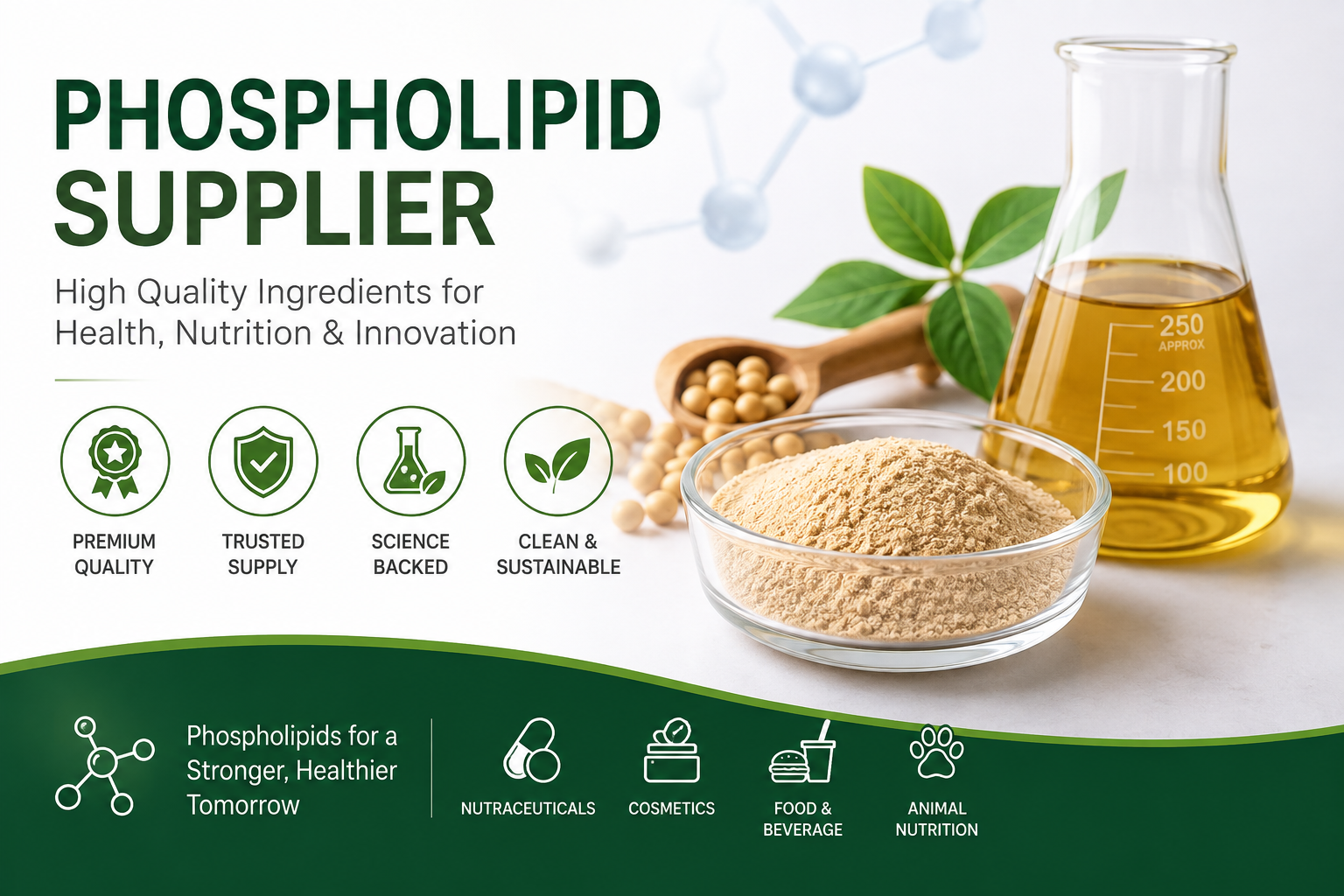
Lecithin is a versatile ingredient used across the food, pharmaceutical, nutraceutical, cosmetic, and animal nutrition industries. Its emulsifying, dispersing, and stabilizing properties make it useful in a wide range of formulations. As demand for functional and naturally derived ingredients continues to grow, businesses increasingly rely on experienced lecithin manufacturers for consistent-quality raw materials.
Selecting an appropriate manufacturer involves more than comparing prices. Buyers should consider the source of lecithin, production processes, quality controls, specifications, documentation, and the manufacturer's ability to meet ongoing supply requirements.
What Is Lecithin?
Lecithin is a mixture of naturally occurring phospholipids and other lipid components. It can be derived from several sources, including soy, sunflower, rapeseed, and other plant-based materials.
The properties of lecithin can vary depending on its source and processing method. It may be supplied in liquid, powder, granulated, or other specialized forms depending on its intended application.
Because different industries have different formulation requirements, manufacturers typically provide lecithin products with specific technical characteristics.
Applications of Lecithin
Lecithin has broad functionality, which explains its use across multiple industries.
Food Industry
In food manufacturing, lecithin is commonly used as an emulsifier and processing aid. It can help combine ingredients that do not naturally mix and may also support texture and consistency in certain formulations.
It can be found in applications involving chocolate, bakery products, spreads, beverages, instant foods, and nutritional products.
Nutraceuticals and Supplements
Lecithin is also used in dietary supplements and nutraceutical formulations. Depending on the product specification, it may be incorporated into capsules, powders, softgels, and functional nutrition products.
Manufacturers serving this sector generally need reliable raw materials with clearly defined specifications and appropriate quality documentation.
Cosmetics and Personal Care
In cosmetic formulations, lecithin can function as an emulsifying, stabilizing, or conditioning ingredient. It may be used in creams, lotions, serums, and other personal care products.
Its compatibility with lipid-based formulations makes it useful for formulators developing products with specific texture and delivery requirements.
What to Look for in Lecithin Manufacturers
Choosing among lecithin manufacturers requires evaluating several important factors.
Raw Material Source
The source of lecithin can influence its composition and suitability for particular applications. Buyers should determine whether the material is derived from soy, sunflower, or another source and whether the source meets their formulation requirements.
Quality and Purity
Consistent quality is essential for manufacturers using lecithin in commercial products. Buyers should review specifications, purity requirements, analytical data, and batch testing procedures.
A Certificate of Analysis can provide useful information about whether a particular batch meets agreed specifications.
Manufacturing Standards
Manufacturing facilities should operate according to appropriate quality and safety procedures. Depending on the intended application, buyers may need to evaluate certifications, quality management systems, traceability, and manufacturing controls.
Documentation
Documentation is an important part of raw-material procurement. Depending on the industry, buyers may request technical data sheets, safety documentation, allergen information, certificates of analysis, and regulatory or compliance statements.
Supply and Customization
Businesses with regular production requirements should consider whether a manufacturer can provide consistent supply at the required volume. Lead times, minimum order quantities, packaging options, storage requirements, and logistics should be discussed before establishing a long-term relationship.
Some lecithin manufacturers may also provide different grades, concentrations, or physical formats to meet specific formulation requirements. Buyers should communicate their intended application clearly so the appropriate product specification can be evaluated.
How to Evaluate a Manufacturer
Before selecting a supplier, businesses should compare product quality, manufacturing capabilities, documentation, pricing, technical support, and supply reliability. A manufacturer that communicates clearly and provides transparent product information can make procurement and quality-control processes more efficient.
It is also useful to request samples or technical documentation before committing to large-volume purchases. Testing the material within the intended formulation can help confirm compatibility and performance.
Conclusion
Lecithin is a multifunctional ingredient with applications across food, nutraceutical, pharmaceutical, cosmetic, and other industries. For businesses sourcing this ingredient, choosing reliable lecithin manufacturers is an important part of maintaining product quality and supply consistency.
Factors such as raw-material source, purity, manufacturing standards, testing, documentation, production capacity, and logistics should all be considered. By evaluating these factors carefully, manufacturers and formulators can establish a dependable lecithin supply that aligns with their technical and production requirements.
Categories
- Artificial Intelligence (AI)
- Technology
- Business
- Education
- Science
- Lifestyle
- Healthcare
- Entertainment
- Politics
- Environment
- Travel
- Finance
- Automobile
- News
- Art
- Causes
- Crafts
- career
- Dance
- Drinks
- Film
- Fitness
- Food
- Games
- Gardening
- Health
- Home
- Literature
- Music
- Networking
- Other
- Party
- Religion
- Shopping
- Sports
- Theater
- Wellness
Read More
The future of diagnostic healthcare will depend partly on the development of technologies that combine clinical reliability with convenience and improved patient experiences. The Non Invasive Parenteral Screening Market provides a useful starting point for exploring developments in screening solutions and their potential role in modern healthcare systems. As healthcare providers continue to...

The Orthodontic Supplies Market is expanding as orthodontic practices adopt digital workflows, clear aligners, advanced brackets, and chairside manufacturing technologies. Market Research Future estimates that the market will increase from USD 10.07 billion in 2025 to USD 24.74 billion by 2035, reflecting a 9.4% CAGR. Clear aligners are becoming a major growth engine within the industry. The...
The healthcare industry is adopting Cloud GIS to analyze disease patterns and improve healthcare planning. Geographic visualization helps identify underserved communities, understand disease distribution, and determine suitable locations for medical facilities. The Cloud GIS Market is experiencing significant growth as organizations increasingly adopt cloud-based technologies to manage,...

The Brains Behind Modern Energy and Chemical Production The oil refining and petrochemical sector is the backbone of the modern industrial world, a realm of immense complexity, high stakes, and hazardous processes. To operate these facilities safely, efficiently, and profitably, the industry relies on a sophisticated digital nervous system. The global Refining Industry Automation Software...

The Medical Gas Pigtails Market is gaining importance as hospitals and clinics strengthen the safety and reliability of medical gas supply systems. These specialized connectors are used to link gas cylinders with manifolds and distribution equipment, making them an essential part of oxygen and other medical gas delivery infrastructure. Growing healthcare infrastructure and the increasing need...
