


Pilot Training in India: Courses, Costs and DGCA Preparation in 2026
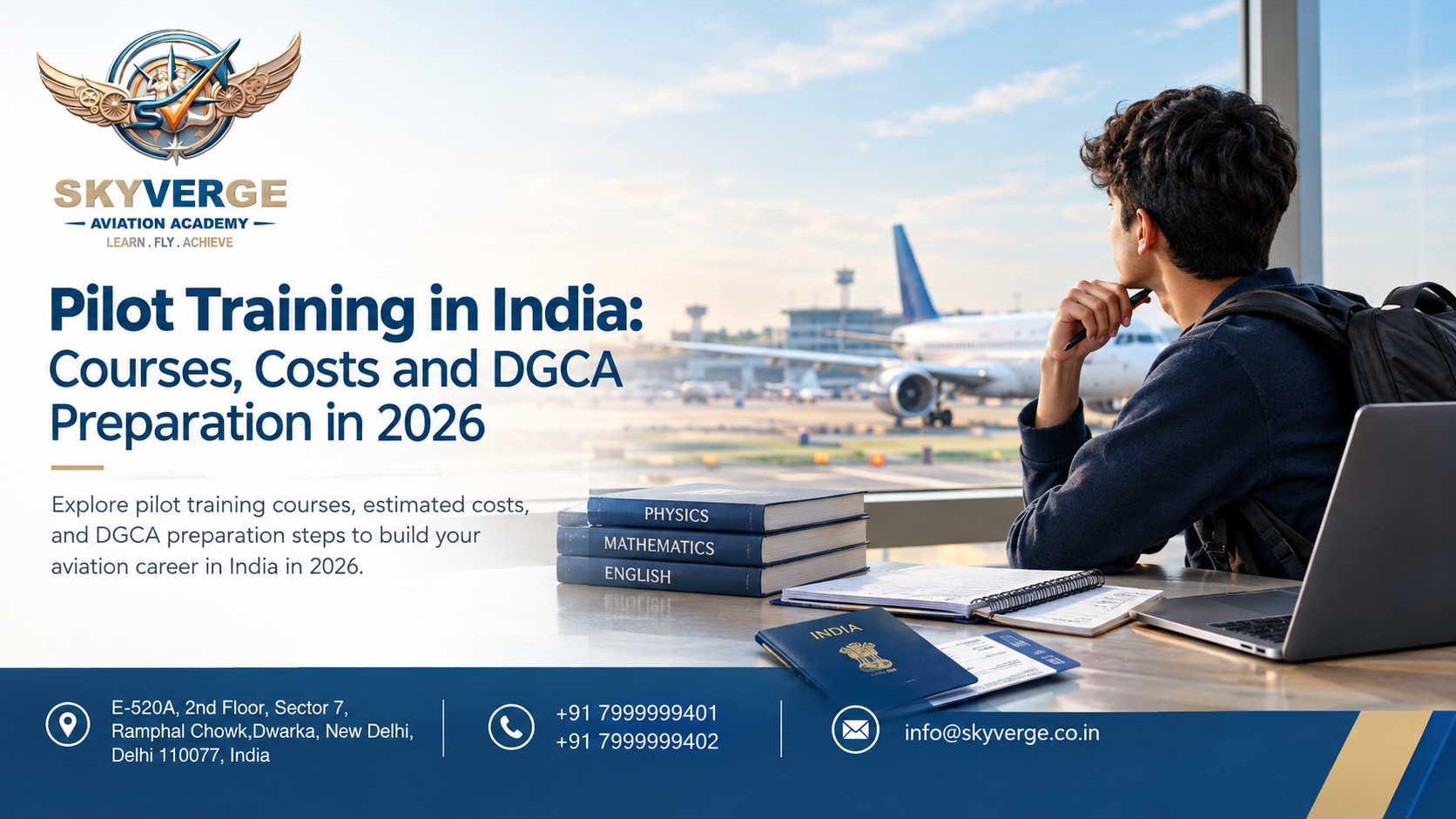
Becoming a commercial pilot is a structured journey that involves academic preparation, medical fitness, ground studies, flight training and regulatory examinations. For students planning an aviation career in 2026, understanding the process before joining a training programme can make the decision much easier.
There are several factors to consider, including the type of licence you want to obtain, the flying school you choose, the Pilot training cost in India, the requirements of the Directorate General of Civil Aviation (DGCA), and the quality of your theoretical preparation.
Students often search for the Best pilot training institute in India, but the right choice should not be based only on advertisements or rankings. It is more useful to compare training facilities, aircraft availability, instructor experience, DGCA-related preparation, training timelines and the overall structure of the programme.
Understanding the Pilot Training Journey in India
For students who want to become commercial pilots, the Commercial Pilot Licence (CPL) is one of the major milestones. However, obtaining a CPL involves more than simply completing flying hours.
The journey generally includes:
-
Meeting the applicable educational requirements
-
Completing the required medical examinations
-
Obtaining the necessary DGCA documentation
-
Preparing for theoretical examinations
-
Completing the required flight training
-
Maintaining appropriate training records
-
Meeting the applicable experience and licensing requirements
-
Completing the licensing process with DGCA
The exact requirements can change, so students should always verify the latest rules, examination notices and licensing requirements through official DGCA sources before making important decisions.
What Should Students Look for in a Pilot Training Institute?
The phrase Best pilot training institute in India can mean different things to different students. Instead of relying on a single claim, students should evaluate an institute using practical criteria.
DGCA Compliance and Training Structure
A student’s training should follow the applicable regulatory framework. Before enrolling, understand how the institute structures ground classes, flight training, examinations and documentation.
Aircraft Availability
Flight training depends heavily on aircraft availability and maintenance schedules. Students should ask how many aircraft are available for training and how maintenance or operational interruptions are handled.
Instructor Support
Experienced instructors can make a significant difference in how students understand both theoretical concepts and practical flying procedures. Students should understand the instructor-to-student environment and how academic or flying-related doubts are addressed.
Ground Training
Strong theoretical preparation is essential because aviation students need to understand subjects such as air navigation, meteorology, aircraft and engines, air regulations and other applicable areas.
This is where a structured DGCA ground school can become an important part of the preparation process.
Training Timeline
Students should avoid assuming that every CPL programme will finish within the same period. Weather, aircraft availability, maintenance, examination schedules and individual progress can affect the timeline.
Pilot Training Cost in India: What Should Students Budget For?
One of the first questions students and parents ask is about the Pilot training cost in India.
There is no single fixed amount applicable to every student because the overall expenditure depends on the training organisation, location, aircraft used, flying hours, accommodation, examination expenses and other requirements.
Students should therefore ask for a detailed fee structure rather than looking only at the headline programme fee.
Possible expenses can include:
-
Ground training fees
-
Flight training fees
-
Aircraft and instructor charges
-
DGCA examination-related expenses
-
Medical examination expenses
-
Study material
-
Accommodation and food
-
Travel expenses
-
Uniform or equipment costs
-
Licence and documentation-related expenses
-
Additional flying or training if required
Another important point is that students should understand what is included and excluded from the quoted fee.
For example, if a programme advertises a particular amount, ask whether that figure includes the complete flight training requirement, ground classes, examination preparation, accommodation and other associated costs.
A written fee structure can make comparisons between institutes much easier.
Understanding a CPL Course in India
A CPL course in India is designed for students who want to work towards a Commercial Pilot Licence and eventually pursue professional flying opportunities, subject to meeting the applicable regulatory and employer requirements.
The course normally combines theoretical learning with practical flight training.
Ground Training
Before and alongside flight training, students need to develop a strong understanding of aviation theory. Subjects can cover areas such as:
-
Air Regulations
-
Air Navigation
-
Aviation Meteorology
-
Aircraft and Engines
-
Technical General
-
Radio communication and related requirements
The exact subjects and examination requirements should be checked against the latest DGCA framework.
Flight Training
Practical training allows students to develop essential flying skills under instructor supervision. This includes learning aircraft handling, navigation, communication, procedures and other skills required during different stages of training.
Students should understand that flying proficiency develops progressively. Some students may require additional practice before meeting the required standards.
Examinations and Licensing
A CPL pathway also involves meeting the applicable examination, medical, documentation, flying-hour and other regulatory requirements.
Because DGCA requirements and procedures can be updated, students should check the latest official information rather than depending entirely on older blogs or social media posts.
Why DGCA Ground School Matters
Aviation training is not only about sitting inside an aircraft. A pilot must understand the technical and regulatory principles behind every flight.
A structured DGCA ground school helps students prepare for the theoretical side of their training.
Ground classes can help students understand complicated aviation concepts through classroom explanations, practice questions, revision sessions and discussions with instructors.
For a student, this preparation can be particularly useful when dealing with subjects that require both conceptual understanding and detailed technical knowledge.
At SkyVerge Aviation Academy, students can explore aviation training with a focus on understanding the academic and practical components of their chosen pathway rather than treating pilot training as simply a flying course.
2026: Things Students Should Check Before Enrolling
Students beginning their aviation journey in 2026 should pay attention to current regulatory requirements instead of relying on information published several years ago.
Before paying an admission or training fee, check:
-
The latest DGCA eligibility requirements.
-
Applicable medical requirements.
-
Current examination procedures and schedules.
-
Documentation requirements.
-
The institute’s current training and aircraft availability.
-
What is included in the quoted programme fee.
-
Whether additional flying or other expenses may be required.
-
The expected process for maintaining training records and completing licensing requirements.
This is particularly important because aviation regulations, examination procedures and administrative processes can be updated over time.
A Short Conversation Between a Student and Counsellor
Student: I want to become a commercial pilot, but I’m confused about where to start.
Counsellor: Start by understanding the CPL pathway, eligibility requirements, medical process and DGCA examinations. Once you understand these, you can compare training institutes more objectively.
Student: Is the cheapest course always the better option?
Counsellor: Not necessarily. Look at the complete fee structure, aircraft availability, training facilities, ground classes and possible additional costs.
Student: How important are ground classes?
Counsellor: Very important. Flying skills are only one part of professional pilot training. You also need a strong understanding of aviation theory and regulatory subjects.
Student: How long will my training take?
Counsellor: It varies. Your progress, weather, aircraft availability, maintenance and examination schedules can all affect the timeline.
Student: So what should I compare before enrolling?
Counsellor: Compare the training structure, regulatory compliance, facilities, aircraft availability, instructors, ground preparation, fees and student support. Don’t make the decision based on one factor alone.
5 Questions Students Commonly Ask Before Enrolling
1. What educational qualification is required to become a pilot?
Students should check the current DGCA eligibility requirements applicable to the licence or training pathway they intend to pursue. Academic requirements can be important at the beginning of the process.
2. How much does pilot training cost in India?
The total Pilot training cost in India varies depending on the institute, location, aircraft, flying requirements, accommodation and other expenses. Students should request a complete fee breakdown before enrolling.
3. Is a CPL course only about flying?
No. A CPL course in India includes both theoretical preparation and practical flight training. Students must understand aviation subjects as well as develop the necessary flying skills.
4. What is DGCA ground school?
A DGCA ground school focuses on the theoretical and academic side of pilot preparation. It can help students understand aviation subjects and prepare for the applicable DGCA examinations.
5. How should I choose a pilot training institute?
Rather than relying solely on the phrase Best pilot training institute in India, compare institutes based on their training structure, aircraft availability, instructors, ground preparation, facilities, regulatory requirements, fees and overall student support.
Making an Informed Decision
Choosing a pilot training programme is a significant decision for both students and their families. The best approach is to understand the complete pathway before committing financially.
Students should compare institutes using verifiable information, ask questions about the complete cost, understand the current 2026 regulatory requirements and assess how the academic and practical components of training are organised.
SkyVerge Aviation Academy can be considered as part of that research process, but students should take the time to understand their own requirements and compare available training options carefully.
Aviation is a professional field where preparation matters at every stage. Building a strong foundation through appropriate ground training, disciplined flying practice and a clear understanding of DGCA requirements can help students approach their pilot training journey with greater clarity.
Categories
- Artificial Intelligence (AI)
- Technology
- Business
- Education
- Science
- Lifestyle
- Healthcare
- Entertainment
- Politics
- Environment
- Travel
- Finance
- Automobile
- News
- Art
- Causes
- Crafts
- career
- Dance
- Drinks
- Film
- Fitness
- Food
- Games
- Gardening
- Health
- Home
- Literature
- Music
- Networking
- Other
- Party
- Religion
- Shopping
- Sports
- Theater
- Wellness
Read More
According to the latest report published by Data Bridge Market Research, the Middle East and Africa Telecom Expense Management Market The Middle East and Africa Telecom Expense Management market size was valued at USD 127.49 billion in 2025 and is expected to reach USD 159.09 billion by 2033, at a CAGR of 4.90% during the forecast period. Middle East...

In-depth research reveals that the Fiber Reinforced Polymer Composites market is experiencing a significant transformation, with an estimated market size reaching USD 610.99 million by 2035. This rapid expansion, characterized by a CAGR of 8.10%, underscores the increasing relevance of these materials in various applications. The market analysis indicates that a combination of technological...
The RNAi Technology Market is witnessing strong growth as RNA interference technologies become increasingly important in therapeutic development, drug discovery, diagnostics, and biotechnology research. According to Market Research Future, the market was valued at USD 4.96 billion in 2024 and is projected to grow from approximately USD 5.49 billion in 2025 to USD 14.99 billion by 2035,...
KJC is a respected bookmaker that has earned the confidence of many betting enthusiasts by providing a reliable, secure, and enjoyable betting experience. The platform is designed to serve both beginners and experienced players with an easy-to-use interface, a wide range of betting opportunities, competitive odds, and valuable promotions. Whether someone enjoys sports betting or exploring...

Looking for trusted real estate services in Ravet? Bohra Associates is your one-stop solution for buying, selling, and renting residential and commercial properties in Ravet and the surrounding Pune-Pimpri Chinchwad belt. With years of local market experience, honest dealing, and a strong network of verified property listings, Bohra Associates has become a name that homebuyers and investors...

