

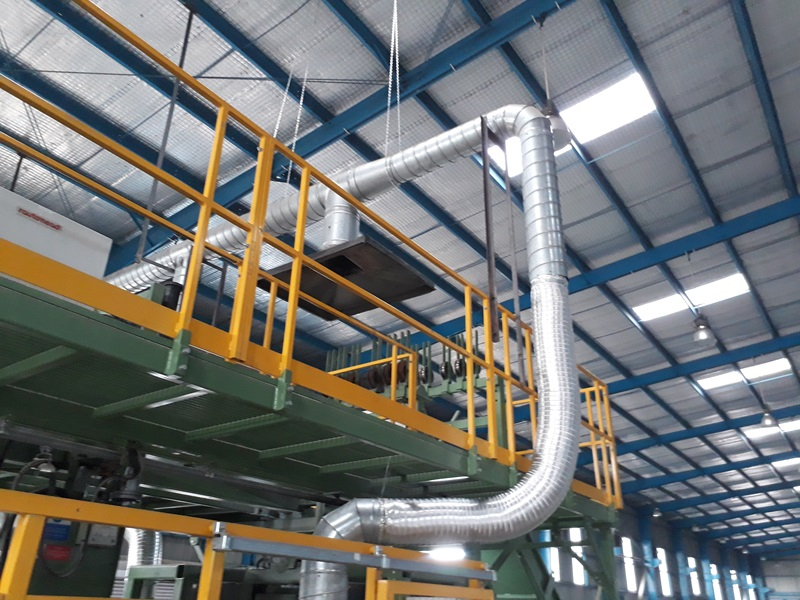
GPT-INDIA Fume Exhaust System: Designing Reliable Airflow From Source to Discharge

Industrial fumes rarely become a serious ventilation problem at the exhaust point alone. The real challenge starts much earlier, at the moment fumes are generated. If contaminated air is not captured close to the source, it can spread across the workplace before the extraction system gets a chance to remove it.
That is why an effective Fume Exhaust System should be designed as a complete airflow path rather than simply selecting an exhaust fan and connecting a few ducts. Hood location, capture velocity, duct dimensions, bends, filtration or treatment equipment, fan pressure and discharge conditions all influence the final performance.
GPT-INDIA approaches industrial ventilation with this system-level perspective. The objective is to move contaminated air from the generation point to the discharge or treatment stage with controlled airflow and practical operating requirements.
Why Source Capture Comes Before Fan Selection
A common mistake in industrial ventilation is to begin with the fan.
The fan is important, but it cannot compensate for poor source capture. If fumes escape from a process before reaching the hood, increasing fan capacity may simply increase energy consumption without delivering the expected improvement in workplace air quality.
A properly positioned extraction hood attempts to intercept fumes as close to the emission source as practical. The required airflow depends on the process, hood geometry, temperature of the fumes, movement of surrounding air and the distance between the source and capture point.
This makes source capture one of the first engineering decisions in an industrial Fume extraction system.
The Complete Airflow Path Matters
Once fumes enter the hood, they must travel through the duct network before reaching the fan or treatment equipment.
Every component contributes resistance. Straight duct sections create friction losses, while elbows, branches, dampers, transitions and filters introduce additional pressure losses.
If these factors are underestimated, the actual airflow delivered by the system can be lower than expected.
This is why airflow should be considered together with static pressure. A fan capable of moving a specified volume of air under free-air conditions may not deliver the same flow once connected to a long duct network containing multiple bends and process components.
Hood Design and Positioning
The extraction hood is effectively the entry point of the ventilation system.
Its position should reflect how fumes are actually released from the process. A hood placed too far from the source may require significantly higher airflow to achieve the same capture effect. In some applications, surrounding machinery or operators can also interfere with the movement of contaminated air.
Different processes may therefore require different hood arrangements. Welding stations, chemical tanks, heating operations, grinding areas and manufacturing equipment do not generate fumes in the same way.
The hood should be selected around the emission pattern rather than treating every application as a standard exhaust point.
Duct Design Can Change System Performance
Ductwork is sometimes treated as a secondary part of an exhaust project, but it has a direct effect on fan performance and operating cost.
An undersized duct can increase air velocity and pressure loss. An unnecessarily oversized duct can increase material and installation costs while changing airflow behaviour.
The number and type of bends also matter. Sharp directional changes can create higher losses than properly designed transitions and bends.
Branch systems require additional attention because airflow needs to be distributed among multiple extraction points. Without appropriate balancing, one hood may receive excessive airflow while another struggles to capture fumes effectively.
Selecting Between an Axial Flow Fan and Centrifugal Blowers
Fan selection should follow the requirements of the complete system.
An Axial flow fan generally moves air along the axis of the fan and can be suitable for applications requiring high airflow with comparatively lower system resistance. These fans can be useful in general ventilation and certain exhaust applications where the pressure requirement is limited.
Centrifugal Blowers operate differently. Air enters the impeller and is redirected outward, allowing the equipment to generate higher pressure suitable for systems containing significant duct resistance, filters, scrubbers or other process equipment.
Neither configuration should be selected simply because one fan type is commonly used in a particular industry. The actual airflow and static-pressure requirement should determine the selection.
Why Static Pressure Should Be Calculated Carefully
Static pressure represents the resistance the fan needs to overcome to maintain the required airflow.
Consider an extraction system serving several welding stations. The air may need to travel through long ducts, multiple elbows and dampers before reaching the exhaust point. If a filtration unit is also included, its resistance must be added to the system calculation.
Selecting a fan only from the required airflow figure can therefore result in insufficient performance.
A properly engineered system considers the complete pressure-loss profile. This helps the fan operate closer to its intended duty point and reduces the risk of discovering inadequate airflow after installation.
Fumes With Heat Require Additional Consideration
Hot fumes can behave differently from ambient-temperature air.
Temperature affects air density, material selection and the operating conditions of components exposed to the exhaust stream. If the process produces intermittent temperature peaks, the design should consider those conditions rather than using only the normal operating temperature.
Duct materials, flexible connections, fan construction and any treatment equipment should be selected according to the actual process conditions.
This is particularly relevant to furnaces, heating operations, thermal processing and certain metalworking applications.
Chemical Fumes Need More Than Conventional Ventilation
Chemical processes may produce fumes that require treatment before discharge.
In these situations, the Fume Exhaust System may form part of a larger air pollution control arrangement. Depending on the contaminant, the extracted air may need to pass through suitable filtration, scrubbing or adsorption equipment before final discharge.
The ventilation system and treatment system should therefore be considered together. Excessive duct losses, unsuitable materials or incorrect fan placement can affect the performance of the entire arrangement.
Where corrosive or chemically aggressive fumes are present, material compatibility becomes an important design consideration as well.
Welding and Fabrication Applications
Welding and fabrication environments can generate fumes and fine particulate matter close to operators.
Local extraction is generally more effective when the capture point is positioned close to the emission source. The system should account for the movement of the welding torch, workpiece size and operator position.
Large workshops may use several extraction points connected to a common system. In such cases, the duct network needs to be designed so that required airflow remains available at the intended operating points.
A properly planned Fume extraction system can help prevent fumes from spreading unnecessarily through the production area.
Paint and Surface Treatment Areas
Painting operations can produce airborne contaminants, vapours and overspray that require controlled exhaust.
The extraction arrangement must maintain suitable airflow through the working zone without creating unstable conditions that affect the finishing process.
Depending on the paint and process, additional treatment equipment may be necessary. An Activated carbon filter, for example, can be considered in applications where adsorption of certain vapours or odorous compounds is appropriate.
The exact treatment approach depends on the composition and concentration of the exhaust stream, so the process chemistry should be understood before selecting filtration equipment.
Fan Location Is Also an Engineering Decision
The physical position of the fan can influence system behaviour.
Depending on the application, placing the fan downstream of treatment equipment can allow the system to operate under negative pressure through much of the contaminated-air ductwork. This can help reduce the possibility of contaminated air escaping through minor duct leakage.
However, the fan itself must then be selected to handle the expected temperature, moisture, chemical exposure and pressure conditions.
Fan placement should therefore be evaluated together with ductwork, treatment equipment and discharge requirements.
Energy Efficiency Starts With Airflow Control
Energy consumption is closely connected with the amount of air being moved and the resistance against which the fan operates.
An exhaust system that moves significantly more air than necessary can consume additional power without providing proportional benefits. At the same time, reducing airflow below the required capture level can compromise fume control.
Where operating conditions vary, suitable dampers, variable-frequency drives or other control arrangements may help regulate system operation.
The objective is not simply to use the smallest fan possible. It is to maintain the required extraction performance without creating unnecessary resistance or airflow.
Maintenance of Industrial Exhaust Systems
Even a well-designed system requires periodic inspection.
Hoods should be checked for damage, obstruction and changes in position. Ductwork should be inspected for leakage, accumulation and physical deterioration. Dampers and control components should remain functional.
Fan assemblies require attention to bearings, impellers, belts where applicable, vibration and motor condition. Unusual vibration or noise can indicate developing mechanical problems.
Where filters or treatment equipment are installed, their pressure drop should also be monitored. A gradual increase may indicate loading and can eventually affect overall airflow.
Maintenance should therefore focus on the complete extraction system rather than only the fan.
Common Causes of Poor Fume Extraction
Poor extraction performance does not always mean the fan has failed.
The hood may be too far from the emission source. Ductwork may have excessive resistance. A filter may be overloaded. A damper may be incorrectly positioned. The system may have been modified after installation without recalculating airflow requirements.
Changes in production can also affect performance. Adding additional extraction points to an existing system, for example, can alter airflow distribution and available fan pressure.
Understanding the original design duty makes troubleshooting considerably easier.
Choosing Fume Exhaust System Manufacturers
When selecting Fume Exhaust System manufacturers, it is useful to examine whether the supplier understands the complete airflow system.
The manufacturer should be able to evaluate the source, hood arrangement, airflow requirement, duct network, pressure losses, fan selection and discharge conditions.
Fabrication quality is important, but system engineering is equally significant. A mechanically well-built fan connected to an incorrectly designed duct network may still fail to deliver the required extraction performance.
For industrial installations, application understanding and technical support can therefore be important considerations alongside equipment construction.
Why Experienced Fume Exhaust System Suppliers Matter
Fume Exhaust System suppliers can play a valuable role when the project involves multiple extraction points, unusual process conditions or integration with air treatment equipment.
A suitable supplier should be able to understand the process before recommending equipment. Information such as operating hours, contaminant type, source temperature, airflow requirement and duct length can significantly affect the design.
This application-first approach helps reduce the risk of selecting equipment based only on nominal capacity.
GPT-INDIA NAP Details
Green Planet Technologies, popularly known as GPT-INDIA, works in industrial air pollution control, ventilation and exhaust technology.
Address: 59/2/1, Site 4, Industrial Area, Sahibabad, Distt. Ghaziabad–201010, Uttar Pradesh, India
Phone: +91-9773500660
Email: info@gpt-india.com
Website: gptindia.in
Frequently Asked Questions
What is a Fume Exhaust System?
A Fume Exhaust System captures contaminated air or fumes from an industrial process and transports them through ductwork toward a discharge point or treatment system.
What is the purpose of a Fume extraction system?
A Fume extraction system is designed to capture fumes close to their source before they disperse throughout the workplace. Its effectiveness depends on hood design, airflow, ductwork and fan performance.
When is an Axial flow fan suitable?
An Axial flow fan can be suitable for applications requiring high airflow where system resistance is relatively low. Final selection should be based on the actual airflow and pressure requirements.
When are Centrifugal Blowers used?
Centrifugal Blowers are commonly considered where higher static pressure is required, such as systems containing longer duct networks, filtration equipment or other sources of resistance.
Can a fume exhaust system handle hot air?
It can be designed for hot-air applications when the operating temperature and peak conditions are properly evaluated. Fan construction, duct materials and connected equipment should be selected accordingly.
How can fume extraction performance be improved?
Performance can often be improved by checking source capture, hood positioning, duct resistance, fan duty, airflow balancing and the condition of filters or treatment equipment.
Conclusion
Effective industrial fume control is fundamentally an airflow engineering problem. The fan, hood, ductwork and treatment equipment must work together rather than being selected independently.
A properly designed Fume Exhaust System begins at the emission source and follows the contaminated air through every stage until controlled discharge. Correct hood positioning improves capture, suitable duct design manages pressure losses, and the right fan configuration helps maintain the required airflow.
For industrial facilities, this approach can make ventilation more predictable, easier to maintain and better aligned with actual production conditions. GPT-INDIA focuses on these complete-system considerations when developing industrial ventilation and exhaust solutions for different process environments.

