Clipping Path vs. Retouching: Understanding the Difference (and Why You Often Need Both)
The images of your products can make or break a sale in an image-driven world of eCommerce, advertising and digital marketing. Since online consumers do not have the opportunity to touch and feel your products, they will only get the information you provide them online. The pressure on delivering the perfect shot takes us to two of the most important post-production methods, clipping paths and retouching. They are often lumped into the category of “photo editing” but they have very different functions. Businesses can often make the most professional-looking image by using a professional image clipping path service to set the foundation before implementing any further improvement. Now let's explore the details of both techniques, their differences and why the trick to creating compelling photographs is nearly always to use them together.
What Does a Clipping Path Actually Do?
Imagine that a clipping path is the super accurate, electronic scissors. The Pen Tool is used in professional photo manipulation programs like Adobe Photoshop to create a vector path around a particular object with a precision that is closed. The main purpose of this action is to remove the subject from its original context. After successfully drawing this path, all objects outside of it can be completely deleted, made transparent or filled with a solid color, usually pure white for regular e-commerce products.
This isolation process is a basic process in digital imagery. Indeed, before a brand considers investing in a photo retouching service to improve the colors or make adjustments to the lighting, they need to make sure the product has been carefully and accurately removed from its initial environment. If you don't get a good, clean cutout, any later edits will appear amateurish and sloppy. Clipping paths are non-destructive and provide crisp and precise edges which are essential to products with hard defined lines such as consumer electronics, furniture and packaged goods.
What Does Photo Retouching Actually Fix?
Retouching is to a photo like the interior design, and the clipping path is the structure. Retouching takes place primarily by manipulating the actual pixels in the subject, and not just cutting an object from its background.
Even the high-end, top-notch camera lenses and professional studio lighting arrangements are prone to imperfection. There may be a speck of dust, a smudge, a scratch or an inconsistent light over a product's surface. Retouching is just concerned with these imperfections. This includes color correction to get the digital product to match the real-life product, careful removal of blemishes, smoothing out wrinkles on clothing, fixing highlights and shadows. The high-end retouching may further include the addition of realistic drop shadows or mirror reflections that will give the product a three-dimensional and high-end appearance.
Clipping Path vs. Retouching: The Key Differences
In other words, a clipping path moves the object around and retouching alters the appearance of the object.
-
Core Objective: A clipping path isolates and separates the subject. Retouching can make the subject look better and make it look more beautiful.
-
Tools Used: Clipping paths are strictly vector-based (using the Pen), and so must be precise in order to come up with a geometric clipping path. Retouching involves many of the tools at the top of the Raster list, such as healing brush, clone stamp, dodge/burn tool, and complicated adjustment layers.
-
Complexity and Skillset: Simple rectangular box paths are easy to draw, but complex paths (such as the bicycle with the thin wire spokes) are very time consuming and require lots of patience. But retouching is very subjective and artistic and involves understanding how to subtly alter colors, the behavior of light, and how to maintain the texture.
Understanding these basic distinctions can help explain why many times it's essential to use a specially-trained image clipping path to prepare the image for the artistic finesse of a retoucher.
Why You Need Both Clipping Paths and Retouching
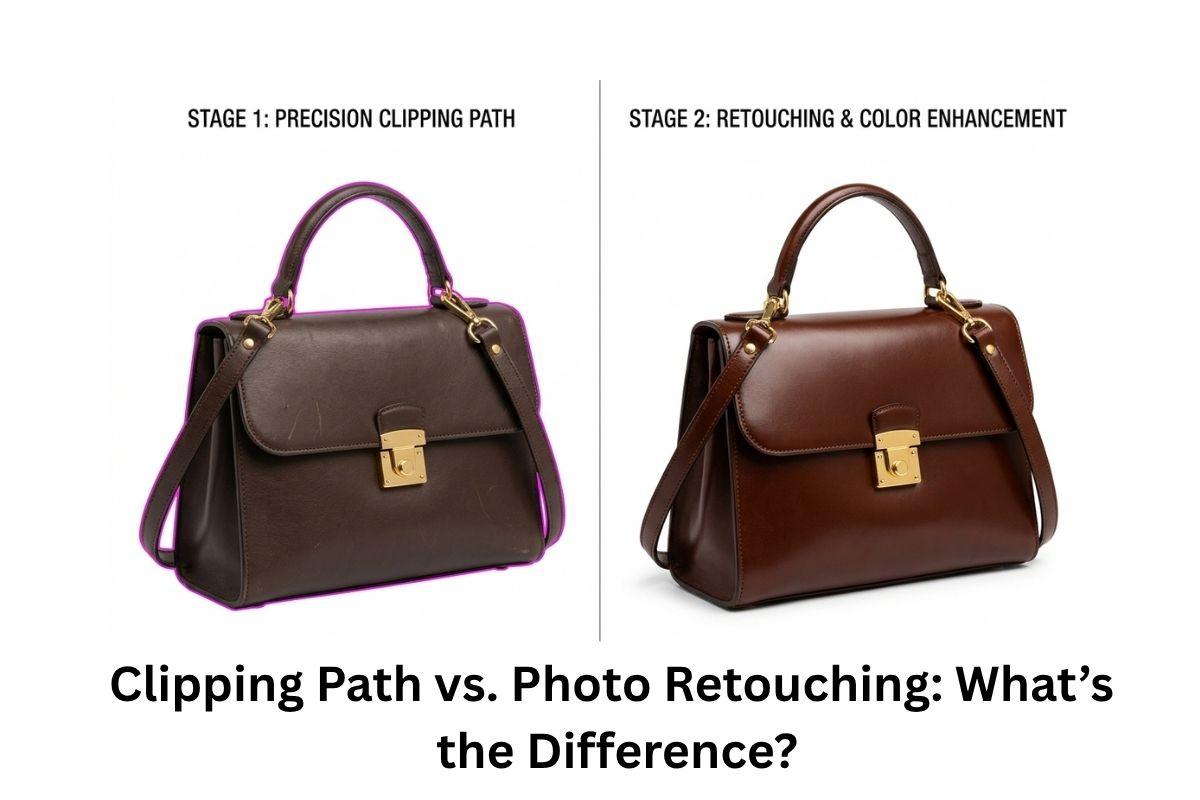
These techniques will not suffice for commercial photography. Let's take a look at a practical example, which is taking a beautiful leather handbag for a luxury brand's online catalogue.
One, the handbag should be removed from the noisy and cluttered background in a studio setting and then easily positioned on a consistent and white backdrop for web presentation. This means a very accurate route to ensure that the leather straps curve well and the metal buckles have sharp edges.
But no, cutting out the bag is not sufficient to sell the bag. The lighting might be too bright in the studio, that's causing the leather to look bad under the lights, or maybe there's a tiny little scuff that you couldn't avoid on the metal clasp. The hue may be slightly faded from the actual bag. The end result is perfectly isolated and flawlessly presented with a combination of an image clipping path service and high end image retouching services. The two processes seamlessly work together: the path is the blank canvas, while the retouching is the magic touch.
How to Build an Efficient Image Editing Workflow
For companies that deal with hundreds or thousands of product images each month, efficiency in editing is crucial. Relying on in-house resources to make these complex edits can soon become a stumbling block for your creative team, and can cause delays on critical product launches. Creating a fast and efficient process: clearly distinguishing the extraction stage from the enhancement stage will save time and money. For many ecommerce managers, it is apparent that a dedicated image clipping path service can take the grunt work of image removal off their plate, while leaving their in-house art directors free to work on the more aesthetic aspects of image retouching.
Final thoughts
As a critical aspect of e-commerce, professional photography, and digital marketing, it is essential for anyone dealing with these areas to comprehend the different functions of clipping paths and photo retouching. A path carefully details your product and provides you with a flexible canvas while retouching brings the image to life, making it an irresistible item to the consumer. The first step is to get the pictures cut using a reliable image clipping path service, but the retouching will create the masterpiece. For brands looking for perfect, high-converting photos, relying on a partnership with a professional photographer like Visuals Clipping guarantees that every shot is captured with the expertise, precision, and polish needed for success in today's competitive landscape.
Also Read: Clipping Path for Apparel: How to Handle Folds, Wrinkles, and Sheer Fabrics
Categories
- Artificial Intelligence (AI)
- Technology
- Business
- Education
- Science
- Lifestyle
- Healthcare
- Entertainment
- Politics
- Environment
- Travel
- Finance
- Automobile
- News
- Art
- Causes
- Crafts
- career
- Dance
- Drinks
- Film
- Fitness
- Food
- Games
- Gardening
- Health
- Home
- Literature
- Music
- Networking
- Other
- Party
- Religion
- Shopping
- Sports
- Theater
- Wellness
Read More
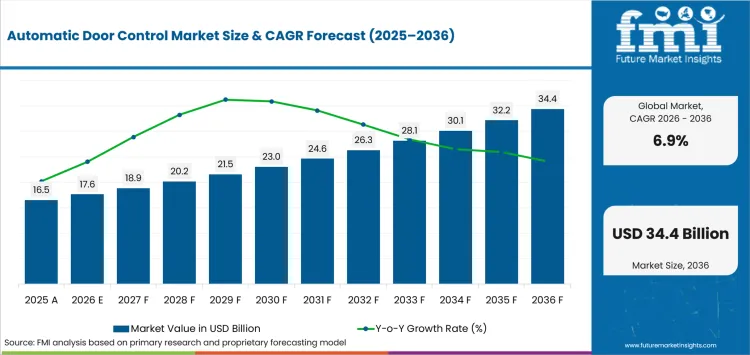
According to Future Market Insights (FMI), the global automatic door control market is poised for strong expansion as commercial construction and building modernization increase demand for sensor-based and automated entrance systems. The market is projected to grow from USD 17.6 billion in 2026 to USD 34.4 billion by 2036, registering a 6.9% CAGR during the forecast...
The Security Barrier Systems Market Size is projected to reach record heights, reflecting the global imperative to bolster defenses around critical assets. Understanding the sheer scale of the market requires an analysis of both emerging technological integration and the foundational growth in the physical infrastructure sectors. Market Overview and Introduction The market for security barriers...

Anticipation is often worse than reality, especially when a new treatment is involved. Knowing exactly what happens during a cold peeling appointment removes uncertainty, helps you prepare properly, and allows you to participate confidently in your own care. Cold Peeling for Face in Riyadh If you have scheduled Cold Peeling for Face in Riyadh, this step-by-step overview walks you...
Manche Spieler starren nur auf die steigende Zahl oben rechts und drücken dann blind auf Start, aber bei progressiven Jackpots zählt eben mehr als der auffällige Wert auf dem Bildschirm. Wer versteht, wie sich der Pool aufbaut, wann er sich verändert und woran der Gewinn geknüpft ist, trifft meist die vernünftigeren Entscheidungen. Eine brauchbare erste...

Why Outstate Moving Requires Extra Preparation Moving to another state is a significant life event that involves much more than transporting boxes from one location to another. Longer travel distances, detailed schedules, and careful coordination all play an important role in a successful relocation. Household belongings must be packed securely, transportation must be planned carefully, and...