


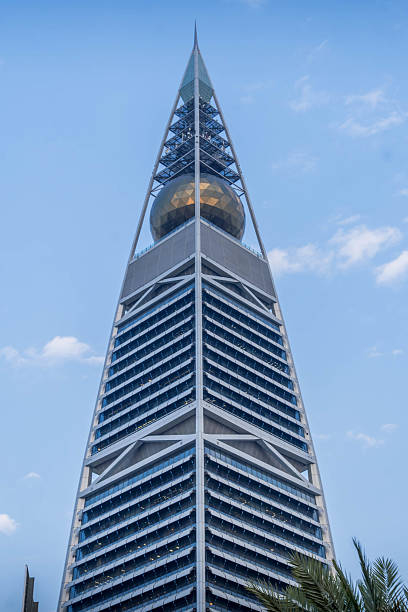
Riyadh has become one of the most significant commercial property markets in Saudi Arabia, supported by business expansion, infrastructure investment, population growth, corporate relocation and Vision 2030 initiatives. However, stronger market activity does not eliminate uncertainty. It can create new forms of exposure related to supply, rental costs, tenant demand, construction expenses, financing, regulation, location and changing business requirements. A real estate advisor in saudi arabia can help investors and businesses assess these factors before committing capital to offices, retail assets, mixed use developments or other commercial properties.
The growing importance of commercial risk assessment is also connected to broader financial planning. A Financial advisory firm can evaluate how property commitments affect liquidity, financing capacity, cash flow and overall investment exposure. This is particularly relevant in Riyadh because the city is experiencing strong demand for high quality commercial space while also preparing for substantial future supply. Current market indicators show that Riyadh remains resilient, but they also demonstrate why investors need to distinguish between present market strength and future risk.
Riyadh Commercial Real Estate Is Entering a More Complex Phase
Riyadh's commercial real estate market has benefited from Saudi Arabia's economic diversification strategy. Government initiatives, international business expansion, infrastructure development and the Regional Headquarters Programme have supported demand for office, retail, hospitality and mixed use assets. According to 2026 market data, Riyadh's office stock exceeded 6 million square metres of gross leasable area, with prime properties operating close to capacity. Demand has been supported by multinational companies and expanding sectors including technology, healthcare, financial services and consulting.
Strong demand can create confidence among investors, but commercial risk becomes more important when market conditions are changing quickly. A property purchased during a period of high occupancy may face different conditions once additional supply enters the market. For investors, this means commercial property should not be assessed only through current rental income. The analysis should also consider:
-
Future competing supply
-
Tenant concentration
-
Rental affordability
-
Lease expiry schedules
-
Operating expenses
-
Financing costs
-
Construction cost inflation
-
Location specific demand
-
Regulatory requirements
-
Exit liquidity
These factors can influence the actual return generated by a commercial property over several years.
Rising Office Supply Is Changing the Risk Profile
One of the most important commercial risks in Riyadh is the expected increase in office supply. 2026 market assessments indicate that Riyadh had approximately 6.10 million square metres of office stock in Q2 2026, with announced developments potentially increasing this to approximately 10.60 million square metres by 2028. That represents potential growth of around 74%.
This does not automatically indicate falling rents or declining investment performance. Instead, it means that investors need to pay greater attention to the quality, location and timing of new supply. A building with excellent accessibility, modern specifications, strong amenities and an attractive tenant profile may continue to perform differently from older properties facing direct competition from new developments.
Market conditions in 2026 also indicate that rental appreciation is beginning to moderate as new office inventory enters the market. Older office stock may experience greater competitive pressure because tenants increasingly prefer modern specifications and flexible leasing arrangements. Therefore, commercial risk is becoming more location and asset specific. Two properties within Riyadh may experience very different outcomes despite being exposed to the same overall economic environment.
High Occupancy Does Not Remove Commercial Risk
Riyadh's current office occupancy figures demonstrate strong demand. 2026 market data indicates Grade A office occupancy of 97%, while Grade B occupancy reached 95%, producing citywide occupancy of 96%. Grade A rents increased 3.4% year on year to SAR 2,810 per square metre, while Grade B rents increased 2.3% to SAR 1,690 per square metre.
These figures indicate a strong current market, but occupancy should not be interpreted as a guarantee of future performance. An investor assessing a commercial building needs to understand why occupancy is high and whether that demand is sustainable. For example, a property may have high occupancy because of temporary shortages of suitable space. Once new buildings are delivered, tenants may have greater choice.
Commercial risks may therefore emerge through:
-
Increased tenant bargaining power
-
Longer leasing periods required to secure occupants
-
Higher incentives for tenants
-
Greater refurbishment requirements
-
Pressure on older buildings
-
Increased competition between landlords
A real estate advisor in saudi arabia can evaluate these variables through market research, comparable transactions, tenant analysis and location assessment rather than relying exclusively on current occupancy figures.
Construction Costs Are Increasing Development Risk
Development costs represent another important source of commercial risk. 2026 market assessments indicate that construction raw material costs have increased by approximately 20% since the beginning of the year. Higher construction costs can affect developers in several ways. A project initially designed around a particular budget may require additional financing or changes to specifications. Developers may also delay construction, redesign projects or reconsider development timing.
For commercial property investors, this creates several interconnected risks. If construction costs increase substantially, new developments may become more expensive to deliver. However, if developers continue delivering projects, the additional supply can still increase competition between properties. The effect depends on asset type, location, financing structure and tenant demand.
Development feasibility should therefore consider:
-
Land acquisition costs
-
Construction expenses
-
Financing costs
-
Contractor pricing
-
Project duration
-
Expected rental income
-
Stabilisation period
-
Tenant incentives
-
Operating costs
-
Exit assumptions
A project can appear attractive based on headline rental expectations but produce a weaker return when development delays and cost increases are incorporated into the financial model.
Macroeconomic Conditions Can Influence Commercial Property
Riyadh's commercial property market operates within the wider Saudi economy. According to the IMF's 2026 assessment, Saudi Arabia's real GDP expanded by 4.6% in 2025, while real GDP growth was projected at 1.7% for 2026. Non oil GDP growth was projected at 2.6% in 2026, with average inflation projected at 2.2%.
The figures illustrate an important distinction. Saudi Arabia continues to experience structural economic transformation, but annual economic growth can fluctuate because of oil production, regional conditions, trade disruptions and investment cycles. Commercial property investors need to understand how these changes affect tenants.
For example, weaker economic growth could cause some companies to delay expansion. Higher operating expenses could reduce tenant profitability. Conversely, government investment and strategic projects can continue supporting demand in selected locations and sectors. This makes commercial property analysis more dependent on tenant economics than simple assumptions about national GDP growth.
Riyadh's Position as a Business Hub Creates Both Opportunity and Exposure
Riyadh is increasingly positioned as the Kingdom's primary corporate and administrative centre. International companies establishing regional operations can create additional demand for offices, hospitality, retail and supporting services. Market data from 2026 indicates that 9,018 foreign investment licences were issued during Q2 2026, representing an increase of 252% year on year.
These licences do not directly translate into office requirements, but continued international business activity and the Regional Headquarters Programme remain relevant to Riyadh's long term occupier demand. This creates an important commercial consideration for investors. Demand generated by international companies can support premium office locations, but businesses entering Riyadh may also become more selective about property quality, accessibility, technology infrastructure and workplace standards.
Buildings that cannot adapt to these requirements may face increasing competition. A real estate advisor in saudi arabia can assess whether a commercial asset is positioned for changing occupier preferences by examining location characteristics, tenant profiles, building specifications and competing developments.
Retail Supply Is Another Important Risk Factor
Commercial risk in Riyadh is not limited to offices. Retail property is also experiencing significant structural change. 2026 market assessments indicate that Riyadh retail occupancy averaged 93% and that retail stock could increase by approximately 40% in the medium term. If announced developments materialise, Riyadh could reach approximately 5.85 million square metres of retail space by 2028.
Increasing retail supply can support consumer choice and create new destinations, but it can also increase competition among shopping centres and retail assets. Retail investors therefore need to examine the quality of demand rather than simply measuring current occupancy.
Important factors include:
-
Household spending patterns
-
Visitor volumes
-
Tourism activity
-
Catchment population
-
Tenant sales performance
-
Retailer mix
-
Parking capacity
-
Accessibility
-
Entertainment offerings
-
Food and beverage demand
Market data also indicates that food and beverage accounted for 15% of point of sale transactions in Saudi Arabia during 2025, with restaurants and cafés recording SAR 105.5 billion in spending. This demonstrates how changing consumer behaviour can affect the design and commercial positioning of retail assets.
Location Quality Is Becoming More Important
As Riyadh's commercial property supply expands, location quality can become an increasingly important determinant of investment performance. A property located close to major employment centres, transportation infrastructure and established commercial districts may have a different risk profile from a property in an emerging area where future demand depends heavily on planned infrastructure.
Location assessment should consider both current conditions and future development. Investors should examine:
-
Road and transport connectivity
-
Proximity to employment centres
-
Accessibility for employees and customers
-
Nearby residential development
-
Planned infrastructure
-
Competing commercial projects
-
Parking availability
-
Public facilities
-
Future land use
-
Potential changes in surrounding density
Riyadh's development pipeline makes this analysis particularly important because today's peripheral location may become a major commercial district, while an apparently established location may face increasing competition.
Mixed Use Development Requires Detailed Risk Assessment
Mixed use projects are becoming increasingly relevant to Riyadh's development landscape. King Salman International Airport announced 7 memoranda of understanding and cooperation agreements in February 2026 with real estate developers for mixed use projects within its development area. The broader airport master development area covers approximately 57 square kilometres, with nearly 12 square kilometres allocated for real estate development.
Projects combining offices, retail, hospitality, residential communities and entertainment can diversify revenue sources. However, they can also introduce greater development complexity. Different components may experience different demand cycles. Office demand can change independently from retail demand. Hospitality performance can respond to tourism and business travel, while residential demand can be influenced by affordability and household formation.
Therefore, mixed use investment analysis should not assume that all components will perform equally. Each component should be assessed separately for:
-
Demand
-
Pricing
-
Supply
-
Operating expenses
-
Development costs
-
Tenant requirements
-
Stabilisation timing
-
Exit liquidity
The combined project should then be tested under different market scenarios.
Financing Risk Is Becoming More Relevant
Commercial property usually involves substantial capital requirements. Financing therefore represents another major area of risk. Interest costs can influence development feasibility, acquisition returns and investor cash flow. A project that depends on aggressive rental growth may become more vulnerable if financing expenses increase or leasing takes longer than expected.
Financial analysis should consider several scenarios rather than relying on one forecast. For example, investors can test:
-
Lower rental growth
-
Higher vacancy
-
Higher construction costs
-
Delayed project completion
-
Increased financing expenses
-
Lower exit values
-
Longer tenant acquisition periods
A Financial advisory firm can support this process by connecting property assumptions with broader financial objectives, capital structure and cash flow requirements. This approach is particularly important for companies purchasing commercial property for operational use because the property decision can affect working capital, debt capacity and future expansion plans.
Tenant Quality Can Determine Property Stability
Commercial property performance depends heavily on tenants. A building with strong occupancy can still carry risk if rental income depends heavily on a small number of tenants. Tenant concentration should therefore be examined before acquisition or development.
Investors should evaluate:
-
Number of major tenants
-
Lease duration
-
Rental escalation provisions
-
Tenant credit quality
-
Lease renewal history
-
Sector concentration
-
Vacancy periods
-
Tenant incentives
-
Outstanding rental payments
A diversified tenant base may reduce exposure to the financial difficulties of a single occupier, while a highly concentrated asset can experience significant income disruption if one major tenant leaves. Lease maturity schedules are also important. If several major leases expire during the same period, the property could face a significant renewal challenge.
Older Commercial Buildings May Face Greater Pressure
The growing availability of modern office and retail space can increase pressure on older properties. Market assessments indicate that older office stock in Saudi Arabia is facing increasing competitive challenges as occupiers favour modern specifications and landlords use greater flexibility to maintain occupancy.
This means investors may need to evaluate refurbishment requirements before acquiring an older property. Potential expenditure can include:
-
Building systems upgrades
-
Energy efficiency improvements
-
Interior refurbishment
-
Technology infrastructure
-
Security systems
-
Common area improvements
-
Parking upgrades
-
Tenant amenities
Ignoring these costs can result in an overly optimistic assessment of future returns.
Regulatory and Market Changes Need Continuous Monitoring
Saudi Arabia's real estate environment continues to develop alongside broader economic and regulatory reforms. Investors therefore need to monitor changes affecting property ownership, taxation, leasing, development approvals, zoning, financing and foreign participation.
The opening of the Saudi property market to non-resident international investors on 22 January 2026 represents an important structural development for the sector. Greater international participation can increase capital availability and market activity, but it can also change competitive dynamics. For commercial property owners, greater investor participation may affect pricing expectations, asset liquidity and competition for attractive properties.
Scenario Planning Can Improve Commercial Risk Analysis
Because Riyadh's commercial property market is changing rapidly, scenario planning can provide a more realistic view of possible outcomes. Instead of assuming that current market conditions will continue indefinitely, investors can construct different operating scenarios.
A practical framework may include:
Base scenario: Current demand continues with moderate rental growth and gradual supply expansion.
Higher supply scenario: New office and retail developments are delivered faster than expected, increasing competition.
Slower demand scenario: Corporate expansion slows and tenants become more cautious about additional space.
Higher cost scenario: Construction, financing and operating costs remain elevated.
Strong demand scenario: Business relocation, investment and population growth generate sustained occupier demand. The purpose is not to predict one specific outcome. It is to understand how sensitive an investment is to changing assumptions.
How Commercial Investors Can Evaluate Risk More Effectively
A structured commercial property assessment can reduce the possibility of overlooking important risks. Investors should combine market research with property specific financial analysis. A detailed assessment should cover:
-
Market supply and demand
-
Rental trends
-
Occupancy levels
-
Tenant quality
-
Competitive properties
-
Development pipeline
-
Construction costs
-
Financing assumptions
-
Location characteristics
-
Regulatory conditions
-
Exit strategy
-
Sensitivity analysis
The objective is to determine whether expected returns remain reasonable after realistic risk factors are included. A real estate advisor in saudi arabia can bring together market intelligence, property analysis and commercial assumptions to help investors understand how a specific asset fits within Riyadh's changing market environment.
Commercial Risk Matters More in 2026
The importance of commercial risk in Riyadh is increasing because the market is moving from a period of simple supply scarcity toward a more differentiated environment. Current Grade A office occupancy of 97% demonstrates strong demand, while the potential increase in Riyadh office stock from approximately 6.10 million square metres to 10.60 million square metres by 2028 demonstrates the scale of future change.
At the same time, construction material costs have risen by approximately 20% since the beginning of 2026, while Saudi Arabia's IMF projected real GDP growth for 2026 stands at 1.7%. These figures show why investors need to examine several variables together.
High occupancy does not eliminate supply risk. Strong investment does not eliminate financing risk. Economic diversification does not eliminate tenant risk. New development does not automatically guarantee future demand. Instead, the commercial property market increasingly requires detailed analysis of how individual assets respond to changing conditions.
Building Resilience Into Riyadh Commercial Property Decisions
Commercial real estate decisions often involve long holding periods, substantial capital commitments and limited flexibility once development or acquisition has taken place. This makes early risk identification particularly valuable.
Investors can strengthen their decision process by separating short term market performance from long term structural demand. The following principles can support more disciplined analysis:
-
Evaluate future supply rather than only current occupancy.
-
Test rental assumptions against competing developments.
-
Analyse tenant quality and lease maturity.
-
Include realistic construction and operating costs.
-
Review financing sensitivity.
-
Consider multiple demand scenarios.
-
Examine location specific infrastructure.
-
Assess refurbishment requirements for older assets.
-
Monitor regulatory developments.
-
Maintain sufficient financial flexibility for changing market conditions.
Riyadh continues to benefit from major investment, corporate expansion and economic transformation. However, the scale of development itself creates a more sophisticated competitive environment. Commercial assets will increasingly need to compete on location, quality, accessibility, efficiency, tenant experience and financial performance.
For businesses and investors, the key issue is therefore not simply whether Riyadh's commercial property market is expanding. The more relevant consideration is how individual assets will perform as supply increases, occupier expectations evolve and economic conditions change. A real estate advisor in saudi arabia can help investors assess these market dynamics at the property level, while financial modelling and scenario analysis can reveal how changes in rents, occupancy, costs and financing affect investment outcomes.
The growing importance of commercial risk reflects Riyadh's transition into a larger and more competitive business market. Strong demand remains an important market characteristic, but future performance will increasingly depend on asset quality, location, tenant fundamentals, supply timing and financial resilience. Understanding these variables allows investors and businesses to evaluate commercial property decisions using a broader and more realistic risk framework.

