

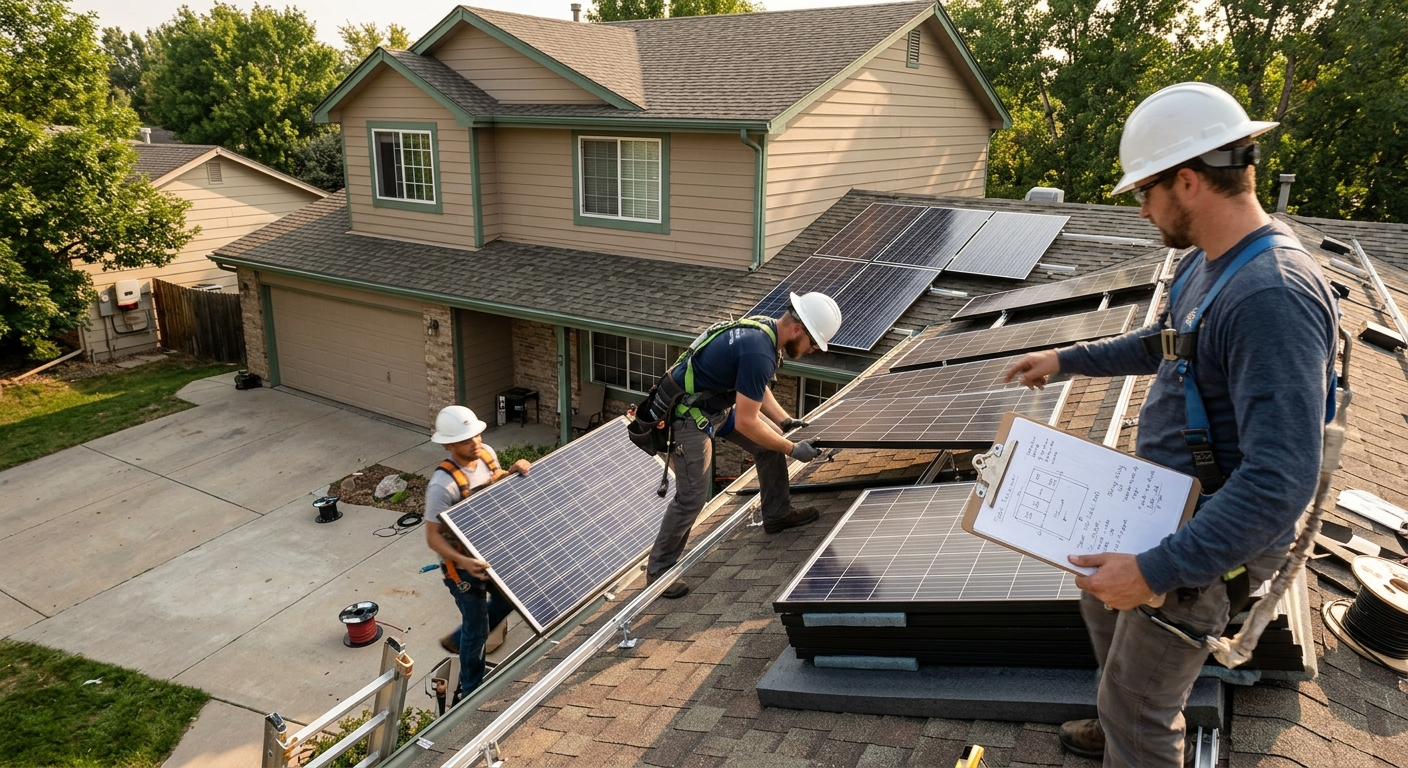

A 5kW solar system does not always require the same number of panels. The panel wattage decides the starting point.
A 500W panel produces more rated power than a 400W panel, so fewer panels are needed to reach roughly 5kW. With 400W panels, you would need 13 panels, giving a total rated capacity of 5.2kWp. Using 500W panels would bring the count down to 10.
The calculation is simple, but choosing the panel count for a real home involves more than reaching a number on paper.
Working Out The Panel Count
The basic calculation uses 5,000 watts as the target:
5,000 ÷ panel wattage = number of panels
Because you cannot install part of a panel, the result is rounded up.
| Panel Wattage | Number Of Panels | Total Capacity |
|---|---|---|
| 350W | 15 | 5.25kWp |
| 400W | 13 | 5.20kWp |
| 425W | 12 | 5.10kWp |
| 450W | 12 | 5.40kWp |
| 500W | 10 | 5.00kWp |
This puts most 5kW residential systems somewhere between 10 and 15 panels. The exact figure depends mainly on the output of the panels selected.
There is no need to have exactly 5.00kWp. A system slightly above 5kWp may make better use of the available roof than trying to hit the figure precisely.
Why Panel Wattage Matters
Panel output has increased over time, which allows installers to reach a higher system capacity with fewer modules. That can be useful where roof space is restricted.
Imagine a roof with several skylights and a chimney. You may have plenty of total roof area, but only certain sections can take panels. A higher-output panel could help achieve the required capacity without filling every usable section.
Physical dimensions still need checking. A panel with a higher electrical rating is not automatically smaller, so the installer needs to consider both its output and its measurements.
The layout can also affect how many panels fit comfortably on the roof. This is one reason a proper pv solar panel installation assessment should look at the property itself rather than relying only on the panel wattage.
How Much Roof Space Is Needed?
Solar panels are relatively large pieces of equipment. A typical residential panel can be around 2 metres long and 1 metre wide, although dimensions vary between products.
Ten panels therefore need considerably less roof area than fifteen. Even so, the usable space will not always match the simple panel dimensions.
Chimneys, roof windows, dormers, vents and roof edges can limit where panels can go. Shading can also make some areas less useful for generation.
The roof shape matters as well. A clear rectangular roof may allow a neat layout, while a roof split into several smaller sections can make the same number of panels harder to arrange.
5kW Does Not Mean 5kW All Day
The term 5kW refers to the system's rated peak capacity. It does not mean the panels will continuously produce 5kW of electricity.
Solar output changes throughout the day. Weather, sunlight levels, temperature, shading and roof orientation all have an effect.
A 5kWp system may produce strong output around the middle of a sunny day, then generate much less during the morning and evening. Winter production will also differ from summer production.
This matters when estimating how useful the system will be. Looking only at the panel count can give a misleading picture of the electricity a household will actually receive.
Roof Direction Can Change The Result
Two properties can have identical 5kWp systems but produce different amounts of electricity.
A roof that receives good sunlight for most of the day has different conditions from one shaded by trees or nearby buildings. East- and west-facing roof areas can also produce useful solar electricity, although their generation pattern through the day will differ from a south-facing roof.
An installer should assess these conditions before deciding how the panels should be arranged. The goal is not simply to fill the roof. The layout should make sensible use of the areas available for generation.
What Should The Inverter Be Rated At?
The inverter is another part of the system that needs to be considered alongside the panels.
A 5kWp array does not automatically mean that every system component must have an identical 5kW rating. The inverter choice depends on the array, electrical design and the conditions at the property.
The electricity connection also needs consideration. Current UK building guidance says renewable generation systems should be appropriately sized for the site and available infrastructure, with factors such as on-site demand and network export limits taken into account.
That is why the final system design should be based on the property rather than the panel count alone.
Does A 5kW System Need A Battery?
No. A battery is an optional part of a solar PV system.
Its usefulness depends largely on when the household uses electricity. Solar panels generate during daylight hours, while some homes have their highest electricity demand later in the day.
A battery can store some surplus generation for later use. However, the best battery size is not decided simply by having a 5kW array.
Daily electricity use, daytime consumption and other equipment in the home all affect the amount of storage that may be useful.
What Affects Solar Panel Installation Cost?
The number of panels is only one part of the price. Your solar panel installation cost can also depend on the panel specification, inverter, roof access, mounting equipment, electrical work and the complexity of the roof.
A straightforward installation with good roof access may require less work than a system spread across several roof sections.
Battery storage, if included, will add to the overall cost. Scaffolding and additional electrical work can also affect the final quotation.
When comparing prices, check the full system specification rather than comparing the headline figure alone. The quotation should make clear the number and wattage of panels, total system capacity, inverter and any additional equipment included.
Is 5kW Enough For Your Home?
A 5kWp system can suit many households, but electricity use should guide the decision. Check your annual consumption and think about future demand from an electric car, heat pump or other high-use appliances.
Roof space matters too. Shading, roof direction and the available installation area can all affect how much electricity the system generates.
For a 5kWp target, expect roughly 10–15 panels, depending on their individual wattage. The final design should match the home's electricity demand and roof conditions rather than focusing on panel numbers alone.

