What to Do When Your Retirement Finances Feel Unclear

Retirement planning can become confusing when your money is spread across several accounts and financial decisions have been made at different points in your life.
You might have an old 401(k) from a previous employer, an IRA, a taxable investment account, savings at the bank, and perhaps other assets. You may also have Social Security benefits to consider, insurance decisions to make, and questions about when you can realistically stop working.
Having multiple financial accounts isn't necessarily a problem. The bigger issue is not knowing how everything fits together.
A clear retirement strategy can help turn scattered financial information into a practical plan. Whether you're just beginning to prepare or retirement is approaching, organizing your finances can make it easier to identify gaps, make decisions, and stay focused on your long-term goals.
Begin With a Complete Financial Inventory
Before changing investments or increasing savings, find out exactly what you have.
Create a simple list of your financial resources, including:
-
Checking and savings accounts
-
401(k) and other employer retirement plans
-
Traditional and Roth IRAs
-
Taxable investment accounts
-
Pensions
-
Real estate
-
Business interests
-
Insurance policies
-
Other significant assets
Then list your major debts, such as mortgages, auto loans, credit cards, and personal loans.
This gives you a basic snapshot of your financial position.
Many people are surprised when they see everything together. An account that seemed insignificant by itself may become important when combined with several other assets.
Separate Retirement Goals From Short-Term Money
Not every dollar you own needs to be invested for retirement.
You may need money for emergencies, home repairs, a vehicle, education, or other expenses before retirement arrives. Keeping money for short-term needs separate from long-term investments can make your overall financial strategy easier to manage.
For example, money you expect to need soon may need greater accessibility and less exposure to market fluctuations than money you won't use for decades.
The right approach depends on your circumstances, but separating goals is a useful first step.
Find Out How Much Retirement May Cost
A retirement account balance doesn't tell you whether you can afford your desired lifestyle.
Start by estimating your future monthly expenses.
Think about housing, food, utilities, transportation, insurance, healthcare, entertainment, travel, taxes, and unexpected expenses.
Some costs may decline after you stop working, while others could increase. Healthcare and travel are two areas that can be difficult to estimate accurately.
Instead of relying on a single number, consider creating a basic retirement budget with essential expenses and optional spending.
This can help you understand which costs must be covered regardless of market conditions and which expenses could be adjusted if necessary.
Identify Your Future Income Sources
After estimating expenses, determine where your retirement income could come from.
Potential sources may include Social Security, pensions, retirement accounts, investment income, rental income, business income, or part-time work.
For example, suppose your estimated retirement expenses are $6,000 per month and your predictable income sources provide $3,500.
The remaining $2,500 needs to come from other resources.
This simple calculation can reveal whether your current savings and investment strategy need further attention.
It also changes the retirement-planning conversation from simply asking, "How much have I saved?" to asking, "How will my savings support my expenses?"
Review Your Investment Risk
An investment strategy should reflect when you expect to need the money.
Someone who is 25 years away from retirement has more time to potentially recover from market declines than someone who expects to begin withdrawals next year.
That doesn't mean an investor approaching retirement should eliminate stocks or other growth investments. Retirement may last for decades, and some long-term growth may still be necessary.
The more important question is whether the overall portfolio has a reasonable balance between growth potential, income needs, liquidity, and risk.
Review how much you have invested in stocks, bonds, cash, and other assets. Also check whether one company, industry, or investment has become too large a portion of your portfolio.
Don't Forget About Inflation
A retirement plan based only on today's expenses may underestimate future costs.
The price of groceries, housing, healthcare, transportation, and other services can change over time. Even moderate inflation can significantly affect purchasing power over a long retirement.
This is one reason retirement planning needs to consider both current spending and future purchasing power.
Your investment strategy may need some growth potential to help your savings keep pace with rising costs, depending on your time horizon and risk capacity.
Think About How You Will Withdraw Your Savings
Accumulating retirement savings is only half the job.
Eventually, you need to decide how those savings will be used.
If you have several retirement accounts, withdrawing money from one account instead of another may have different tax and financial consequences. The timing of withdrawals can also affect how long your portfolio may last.
Questions to consider include:
-
Which accounts should provide income first?
-
How much should you withdraw?
-
How much cash should remain available?
-
How will withdrawals affect taxes?
-
What happens if markets decline early in retirement?
There is no universal withdrawal strategy that works for everyone. Your age, income sources, account types, tax situation, spending needs, and other circumstances all matter.
Prepare for the Unexpected
A retirement plan should not depend on everything going exactly as expected.
You could face an unexpected medical bill, home repair, family responsibility, market downturn, or change in your retirement date.
Building flexibility into your plan can make these events easier to handle.
An emergency reserve, appropriate insurance coverage, manageable debt, and a diversified investment portfolio can all contribute to financial resilience.
The goal isn't to predict every possible problem. It is to avoid creating a plan that works only under perfect conditions.
How Professional Guidance Can Help
A financial advisor can be useful when financial decisions become interconnected.
For example, changing your investment allocation could affect your retirement income strategy. Selling an investment could create tax consequences. Retiring earlier could change how long your savings need to last.
Professional planning can help bring these decisions together instead of treating each one separately.
If you're researching financial advisor services in Folsom, consider asking potential professionals how they approach retirement income, investment risk, fees, financial planning, and ongoing reviews.
You should also understand how the advisor is compensated and what services are included.
Good questions include:
-
How will you evaluate my current retirement position?
-
How will you estimate future income needs?
-
How often will my plan be reviewed?
-
How do you approach investment risk?
-
What fees will I pay?
-
How will you explain recommendations?
Clear communication is important because you should understand the strategy you're following.
Review Your Plan After Major Life Changes
A retirement strategy shouldn't remain unchanged for decades.
Review it when something significant happens, such as:
-
Changing jobs
-
Receiving an inheritance
-
Buying a home
-
Paying off a mortgage
-
Getting married or divorced
-
Starting or selling a business
-
Receiving a significant increase in income
-
Deciding to retire earlier or later
These events can change your savings rate, investment needs, insurance requirements, taxes, or expected retirement expenses.
Even without a major life event, an occasional financial review can help you determine whether your assumptions are still reasonable.
Make Retirement Planning Easier to Follow
A complicated financial strategy isn't necessarily a better one.
You should be able to explain your retirement plan in simple terms:
How much am I saving?
What am I saving for?
When might I need the money?
Where will my retirement income come from?
What level of investment risk am I taking?
What happens if my circumstances change?
If you cannot answer these questions, that's a sign that your financial plan may need closer attention.
Final Thoughts
Retirement planning becomes much easier when you stop looking at individual accounts and start looking at the complete financial picture.
Organize your assets, understand your expenses, identify potential income sources, review investment risk, account for inflation and taxes, and prepare for unexpected costs. These steps can help turn uncertainty into a clearer financial direction.
You don't need to predict the future perfectly. You need a plan that makes sense based on what you know today and enough flexibility to adjust when life changes.
Categories
- Artificial Intelligence (AI)
- Technology
- Business
- Education
- Science
- Lifestyle
- Healthcare
- Entertainment
- Politics
- Environment
- Travel
- Finance
- Automobile
- News
- Art
- Causes
- Crafts
- career
- Dance
- Drinks
- Film
- Fitness
- Food
- Games
- Gardening
- Health
- Home
- Literature
- Music
- Networking
- Other
- Party
- Religion
- Shopping
- Sports
- Theater
- Wellness
Read More
Viele Spieler klicken sich viel zu schnell durch ein Casino. Die Oberfläche wirkt aufgeräumt, die Startseite strahlt Vertrauen aus, und genau dann passieren die teuren Fehler. Eine gute Online-Casino-Bewertung fängt nicht bei bunten Bonusbanner an und auch nicht bei der Spiellobby, sondern bei Lizenz, Auszahlungspraxis und Regeln, die man tatsächlich nachlesen kann. Wer...

The 8 Ball Strike Cup is continuing its live championship stage as the World Cup 2026 moves closer to its final match, giving fans another competitive event to follow during one of soccer’s biggest moments. The championship is also being streamed live on Facebook, with the final broadcast scheduled for July 17. As Argentina gets ready to face Spain in the title match,...

The Surgical Retractors Market is expected to remain relevant as hospitals and surgical facilities continue to modernize their operating environments. Surgical retractors play a practical role in maintaining access and visibility during procedures, making them an important component of many surgical instrument portfolios. Future demand is likely to be influenced by the increasing adoption of...
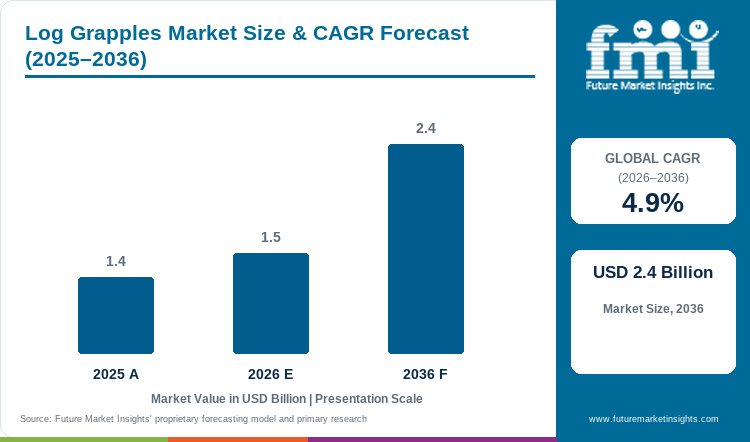
The global Log Grapples Market is projected to grow from USD 1.5 billion in 2026 to USD 2.4 billion by 2036, expanding at a 4.9% CAGR during the 2026–2036 forecast period, according to Future Market Insights. The market was valued at USD 1.4 billion in 2025. Demand for log grapples is being supported by forestry contractors replacing worn equipment when slower jaw movement or rotation...
According to a report by Intel Market Research, the global Vancomycin Hydrochloride API Market was valued at USD 418.7 million in 2025, estimated at USD 438.0 million in 2026, and projected to reach USD 625.0 million by 2034, representing a 4.54% CAGR during 2026–2034. Vancomycin hydrochloride is a fermentation-derived glycopeptide API used in sterile intravenous products and oral...