How to Get an EU VAT Registration Number for Cross-Border Business

Selling goods or services across European markets can create VAT responsibilities for businesses. For companies expanding beyond their home country, understanding where VAT registration may be required is an important part of planning cross-border operations.
An EU VAT registration number identifies a business for VAT purposes in an EU member state. Businesses should understand that VAT registration is generally handled at the national level, so the exact process and requirements can vary depending on where the company carries out taxable activities.
What Is an EU VAT Registration Number?
An EU VAT registration number is a tax identification number issued to a business registered for VAT in an EU member state.
Businesses may use VAT numbers on invoices and other relevant tax documentation. They can also be important when handling certain cross-border transactions within the EU.
There is not one universal VAT number issued by the European Union. Instead, businesses receive VAT numbers from the individual countries where registration is required.
When Might a Business Need VAT Registration?
VAT obligations depend on several factors, including the company's activities, location, customers, and transaction structure.
A business may need to consider VAT registration when it:
-
Sells goods or services in an EU country
-
Imports goods into the EU
-
Holds stock in an EU country
-
Operates through a local establishment
-
Makes certain cross-border sales
-
Supplies goods or services to customers in other EU markets
The exact requirement should be assessed based on the business's specific situation.
Step 1: Identify Where VAT Registration Is Required
The first step is to identify the countries where the business may have VAT obligations.
A company selling only from its home country may have different requirements from an e-commerce business storing goods in multiple EU countries.
Businesses should consider:
-
Where the company is established
-
Where goods are stored
-
Where goods are sold
-
Where services are supplied
-
Whether customers are businesses or consumers
-
Whether goods are imported from outside the EU
This assessment helps determine which registrations may be relevant.
Step 2: Gather Business Information
Before applying, businesses should prepare accurate company information.
Depending on the country and situation, this may include:
-
Company registration details
-
Business address
-
Director or owner information
-
Business activity details
-
Information about goods or services
-
Details of expected transactions
-
Relevant supporting documents
Keeping this information consistent can help make the registration process more organized.
Step 3: Submit the VAT Registration Application
VAT registration is generally handled by the relevant national tax authority.
The application process can differ between EU member states. Businesses should therefore follow the specific requirements of the country where registration is being requested.
For companies operating in the Netherlands, local VAT registration requirements should be reviewed before starting taxable activities.
Step 4: Receive the VAT Number
Once the registration process is completed, the business receives its VAT identification number.
The company should keep this information available and use it correctly on relevant invoices and business documentation.
Step 5: Understand Ongoing VAT Obligations
Obtaining a VAT number is not the end of the process. Registered businesses may also have ongoing reporting and record-keeping responsibilities.
Depending on the business and country, these can include:
-
VAT returns
-
VAT payments
-
Invoicing requirements
-
Transaction records
-
Cross-border reporting
-
Record retention
Businesses should understand these obligations before expanding their sales across multiple EU markets.
VAT Registration for Businesses Entering the Netherlands
The Netherlands can be an important operating base for international companies entering Europe. Businesses carrying out taxable activities in the country may need to assess whether they require Dutch VAT registration.
Companies looking for a Netherlands VAT registration number can arrange local support as part of their Dutch business setup.
VAT registration should be considered alongside other requirements, such as company formation, banking, accounting, and payroll where applicable.
How Banking Can Support Cross-Border Operations
International businesses also need a practical way to receive customer payments and pay suppliers.
A suitable international business bank account Netherlands can help businesses manage Dutch and international financial transactions.
Companies dealing with different currencies may also need to consider exchange costs and payment methods when planning their European operations.
What About Currency Exchange?
Cross-border businesses may receive payments in currencies other than euros. This can create additional costs when money needs to be converted.
Businesses should consider exchange rates, transaction fees, supported currencies, and transfer times.
For companies operating from the Netherlands, currency exchange Netherlands services can be part of a broader approach to managing international payments.
Common VAT Registration Mistakes
Businesses expanding into Europe should avoid treating VAT registration as a one-size-fits-all process.
Common issues can include:
-
Assuming one VAT number covers every EU country
-
Registering without understanding the business's actual VAT obligations
-
Providing inconsistent company information
-
Ignoring ongoing VAT reporting requirements
-
Waiting until cross-border sales have already started
-
Failing to distinguish between different types of transactions
Careful planning can help businesses understand their responsibilities before expanding.
How FirmNL Supports International Businesses
FirmNL is a Netherlands-based business consulting firm supporting international founders, startups, and companies entering the Dutch and wider EU market. Its services include business formation, banking, tax and compliance, accounting, payroll, and other operational support.
For businesses establishing operations in the Netherlands, local support can help coordinate VAT registration with other parts of the business setup.
FirmNL's approach combines Dutch regulatory knowledge with an international perspective and support for foreign founders.
Final Thoughts
Getting an EU VAT registration number for cross-border business starts with understanding where the company has VAT obligations. Since VAT registration is generally handled at the national level, businesses should assess each market based on their activities and transaction structure.
For companies expanding into the Netherlands, VAT registration can be considered alongside banking, currency management, company formation, and other operational requirements. Proper preparation can make European expansion more organized and easier to manage.
Categories
- Artificial Intelligence (AI)
- Technology
- Business
- Education
- Science
- Lifestyle
- Healthcare
- Entertainment
- Politics
- Environment
- Travel
- Finance
- Automobile
- News
- Art
- Causes
- Crafts
- career
- Dance
- Drinks
- Film
- Fitness
- Food
- Games
- Gardening
- Health
- Home
- Literature
- Music
- Networking
- Other
- Party
- Religion
- Shopping
- Sports
- Theater
- Wellness
Read More
The city never really sleeps. mumbai call girls wait in the neon glow of hotels and quiet apartments, ready for those who just stepped off the train or plane. You arrive tired. Suitcase still packed. Mind racing with the usual first-time nerves. Mumbai feels huge, loud, full of possibilities you only heard about in whispers. Then the thought comes. Company. Real company. Not the kind that...

1. Chitrakoot's Easy Bike Rental Service For travelers, tourists, professionals, students, and locals, Dau Bike Rental Chitrakoot offers practical and adaptable two-wheeler rental options. Renting a bike or scooter to explore Chitrakoot is a convenient method to get between temples, ghats, marketplaces, tourist destinations, and neighboring attractions. Dau Bike Rental Chitrakoot simplifies...

The Dental Bone Graft Market is expected to remain an important segment of the broader dental biomaterials industry as restorative and implant procedures continue to evolve. Bone graft products provide clinicians with solutions for managing bone deficiencies that may affect the placement or stability of dental implants. Future market development is likely to be closely connected with innovation...
Buying or owning a home in Texas comes with many responsibilities, and some hidden issues can easily go unnoticed until they become expensive surprises. That is why many homeowners rely on Home Inspection Services Killeen, TX before making important decisions about a property. A professional evaluation helps uncover concerns that are not obvious during a casual walk through. Choosing Complete...

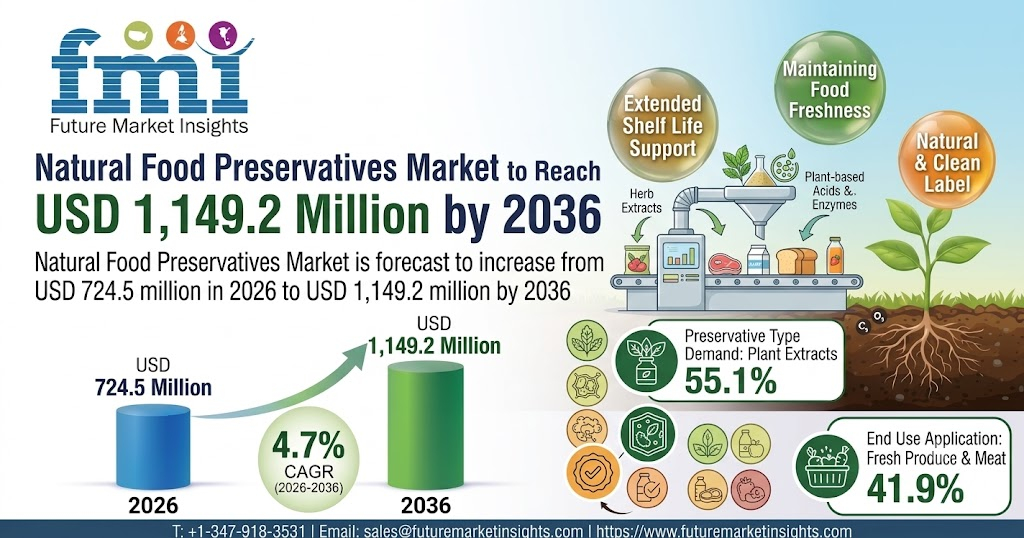
The global natural food preservatives market is forecast to increase from USD 724.5 million in 2026 to USD 1,149.2 million by 2036, expanding at a 4.7% CAGR during the 2026-2036 forecast period, according to Future Market Insights. The market stood at USD 691.8 million in 2025. Growth is being supported by increasing demand for shelf-life extension, greater focus on reducing food...