Jacket Back Digitizing for Sharp Large Embroidery
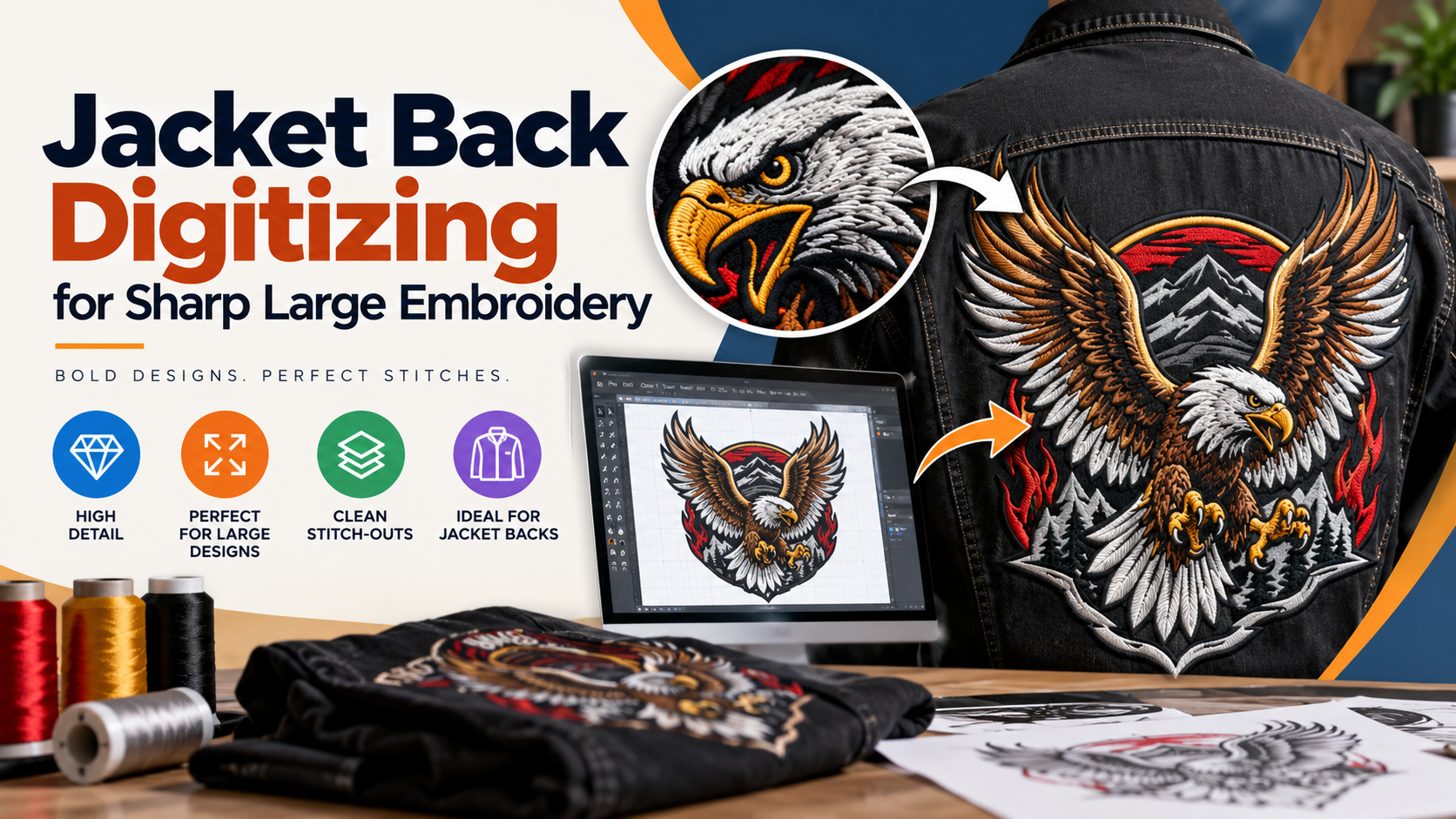
Large jacket embroidery can contain bold lettering, wide fill areas, detailed graphics, and multiple design elements that must work together. Our professional jacket back digitizing services prepare artwork with careful attention to stitch density, underlay, sequencing, direction, compensation, and fabric type. Through accurate jacket back digitizing, we turn your artwork into machine ready stitch instructions designed around its actual size and embroidery requirements.
At iDigitize, we prepare large back designs by considering how every section will translate from digital artwork into thread. Instead of simply enlarging a smaller embroidery file, we plan the design according to its final dimensions, jacket material, lettering, fills, outlines, and other important elements.
What Is Jacket Back Digitizing?
Jacket back digitizing converts artwork into a machine readable embroidery file specifically planned for a large design on the back of a jacket.
Digital artwork such as a JPG or PNG tells us what the design looks like, but an embroidery machine needs stitch instructions. These instructions determine stitch type, direction, density, underlay, sequence, and other settings that control how the design is constructed.
Because jacket back embroidery can cover a large area, these decisions need to account for more than appearance. The digitized design must also consider fabric behavior, large fill areas, lettering, outlines, and the relationship between different embroidered sections.
Why Large Embroidery Requires Different Planning
Large embroidery should not be treated as a small logo that has simply been increased in size.
As a design becomes larger, fill areas expand, stitch paths become longer, and more fabric sits underneath the embroidery. Detailed graphics may also contain several colors, overlapping shapes, text, and outlines.
For jacket back digitizing, we consider:
-
Final design dimensions
-
Jacket or fabric type
-
Artwork complexity
-
Large fill areas
-
Stitch density
-
Underlay
-
Stitch direction
-
Push and pull compensation
-
Stitch sequencing
-
Lettering and outlines
-
Machine file format
Planning these elements together helps us create a more organized embroidery file for large scale production.
How We Prepare Large Jacket Back Designs
Every jacket design has different artwork and production requirements. We therefore build the stitch plan around the supplied design rather than applying identical settings to every file.
1. Start With the Correct Embroidery Size
We need the intended dimensions before planning the embroidery.
Size affects lettering, outlines, spacing, fills, stitch types, and fine details. A design that looks clear at one size may need different treatment when embroidered much larger or smaller.
For example, a large mascot graphic can contain broad color areas alongside small facial or decorative details. Both need to work at the same final size.
Providing exact dimensions allows us to plan the file around the intended embroidery area.
2. Break the Artwork Into Stitchable Elements
Large artwork is easier to control when its individual sections are considered separately.
A jacket back design may contain:
-
Main graphics
-
Background shapes
-
Large lettering
-
Small supporting text
-
Borders
-
Outlines
-
Solid fills
-
Decorative details
We decide how each area should be constructed and how it should connect with surrounding elements.
This is an important part of our professional jacket back digitizing services because complex artwork often requires several stitch types and directions within one design.
3. Manage Large Fill Areas
Large fill areas require careful planning because they can contain many stitches across a broad section of fabric.
Density needs to provide suitable coverage without adding unnecessary thread. Stitch direction also needs to support the shape of the design.
Underlay creates a foundation beneath visible stitches and can help support larger embroidered sections.
Rather than treating every filled area identically, we consider its size, shape, position, and relationship with nearby design elements.
How Stitch Direction Helps Create Sharp Details
Stitch direction can influence how clearly different areas appear.
If several neighboring shapes use the same stitch angle, the visual separation between them may be reduced. Different stitch directions can help define separate sections and add visual structure to the embroidered artwork.
Direction is especially useful when a jacket design contains large shapes, lettering, outlines, or overlapping areas.
During jacket back digitizing, we plan stitch direction according to the individual shapes instead of using one direction across the complete design.
Why Registration Matters in Large Embroidery
Registration refers to how accurately different embroidered elements align with one another.
Large designs may include fills that need to meet outlines, lettering positioned over background elements, or multiple shapes that must remain visually connected. Fabric movement during stitching can affect how these sections line up.
Digitizing decisions such as sequence, underlay, stitch direction, and compensation can all influence registration.
We consider these relationships while building the embroidery file so the design elements are planned as one complete composition rather than isolated stitch areas.
How Fabric Affects Large Jacket Embroidery
Fabric behavior matters because the embroidery is being stitched into a physical material rather than displayed on a screen.
Different jacket materials can react differently as stitches are added. Denim, fleece, leather, varsity materials, and lighter jacket fabrics do not have identical characteristics.
This can affect decisions involving:
-
Density
-
Underlay
-
Compensation
-
Fill construction
-
Stitch direction
-
Overall design structure
For this reason, we recommend including the jacket or fabric type when submitting artwork for jacket back digitizing.
The material information gives us useful context when preparing the stitch file.
Keeping Lettering Sharp and Readable
Jacket back designs frequently use lettering as a major visual element.
Names, club lettering, team names, business text, slogans, and decorative typography can occupy a significant portion of the artwork. Large letters may also contain outlines, shadows, or multiple colors.
We consider character spacing, stroke width, stitch direction, outline thickness, and the distance between lettering and nearby graphics.
Small supporting text requires additional attention because thread cannot reproduce extremely fine digital details in exactly the same way as pixels.
The final embroidery size should therefore guide how lettering is digitized.
Fine Details Need Enough Embroidery Space
A large overall design does not mean every individual element is large.
Illustrations, logos, mascots, and emblems can still contain tiny lines, narrow gaps, small shapes, and detailed internal features.
If these elements are packed too closely together, their separation can become difficult to maintain in embroidery.
We evaluate:
-
Line thickness
-
Space between shapes
-
Small lettering
-
Outline width
-
Overlapping elements
-
Fine decorative features
Good jacket back digitizing focuses on preserving important visual details while keeping the stitch construction practical for the intended dimensions.
Common Problems With Large Jacket Back Designs
Several issues can reduce the clarity or practicality of large embroidery files.
Excessive density: Too many stitches can create unnecessary thread buildup across large areas.
Weak sequencing: Poorly organized stitching can cause unnecessary movement between different sections.
Ignoring fabric type: Embroidery settings should consider the material used for production.
Poor registration planning: Fills, outlines, and overlapping elements need to remain properly related.
Too much fine detail: Very thin lines or tiny elements may not translate effectively into thread.
Incorrect dimensions: Digitizing without knowing the final size can affect nearly every part of the stitch plan.
These considerations make professional jacket back digitizing particularly useful for large and detailed embroidery artwork.
Choosing the Right Machine File Format
The final embroidery file needs to match the machine or software used for production.
Common embroidery formats supported for jacket back designs include:
-
DST
-
PES
-
EMB
-
EXP
-
JEF
-
VP3
-
HUS
-
XXX
The correct format depends on your embroidery setup. If you know which format your machine requires, include that information with your artwork.
Machine compatibility is important, but the file still needs properly planned stitches. Changing the extension alone does not replace the digitizing process.
What Should You Send Before Digitizing?
Before sending artwork for jacket back digitizing, prepare the information that defines how the design will be embroidered.
We recommend providing:
-
The clearest artwork available
-
Exact embroidery dimensions
-
Jacket or fabric type
-
Back placement
-
Required embroidery machine format
-
Important lettering or color instructions
-
Other relevant design requirements
The clearer the artwork and production information, the easier it is to understand the intended size, layout, and important visual details.
Prepare Large Jacket Artwork for Machine Embroidery
At IDigitize, our jacket back digitizing process prepares large artwork as organized machine embroidery instructions. We consider dimensions, density, underlay, stitch direction, sequencing, compensation, fabric, registration, lettering, and fine details when building the embroidery file.
If you have a large logo, mascot, emblem, illustration, or lettering design for a jacket back, send us your artwork along with the intended dimensions, fabric type, placement, and machine format. We can prepare the design for embroidery production.
Frequently Asked Questions
What is jacket back digitizing?
Jacket back digitizing converts large artwork into stitch instructions that an embroidery machine can read. We define elements such as stitch types, density, underlay, direction, sequence, and compensation according to the design, intended dimensions, and jacket material.
Why do large embroidery designs need special digitizing?
Large designs can contain broader fill areas, longer stitch paths, detailed graphics, lettering, outlines, and multiple overlapping elements. We need to plan how these sections interact with each other and with the jacket fabric rather than simply enlarging a smaller embroidery file.
Can detailed artwork be used for large jacket embroidery?
Yes, but each detail needs enough space to translate into thread. Very thin lines, tiny lettering, narrow gaps, or complicated internal shapes may require careful treatment. We evaluate fine elements according to the intended embroidery dimensions and surrounding artwork.
Does jacket material affect the digitized file?
Yes. Jacket materials have different physical characteristics, so fabric type provides useful context for decisions involving density, underlay, compensation, fill construction, and stitch planning. We recommend providing the intended material when submitting your jacket back artwork.
Which embroidery file format should I request?
The required format depends on your embroidery machine or production software. Common formats include DST, PES, EMB, EXP, JEF, VP3, HUS, and XXX. Check your machine requirements and provide the required format when submitting the artwork.
Categories
- Artificial Intelligence (AI)
- Technology
- Business
- Education
- Science
- Lifestyle
- Healthcare
- Entertainment
- Politics
- Environment
- Travel
- Finance
- Automobile
- News
- Art
- Causes
- Crafts
- career
- Dance
- Drinks
- Film
- Fitness
- Food
- Games
- Gardening
- Health
- Home
- Literature
- Music
- Networking
- Other
- Party
- Religion
- Shopping
- Sports
- Theater
- Wellness
Read More
Nasal Drug Delivery Market is expected to experience continued development as pharmaceutical companies focus on innovative and patient-friendly methods of administering medicines. The market is benefiting from the growing interest in non-invasive drug delivery, technological improvements, and the increasing need for convenient treatment options. According to Market Research Future, the global...

The Oral Mesalazine Market plays an important role in the treatment of inflammatory bowel diseases (IBD), particularly ulcerative colitis and mild-to-moderate Crohn’s disease. Oral mesalazine, also known as mesalamine or 5-aminosalicylic acid (5-ASA), is widely prescribed to reduce intestinal inflammation, induce remission, and maintain long-term disease control. As the global burden of...
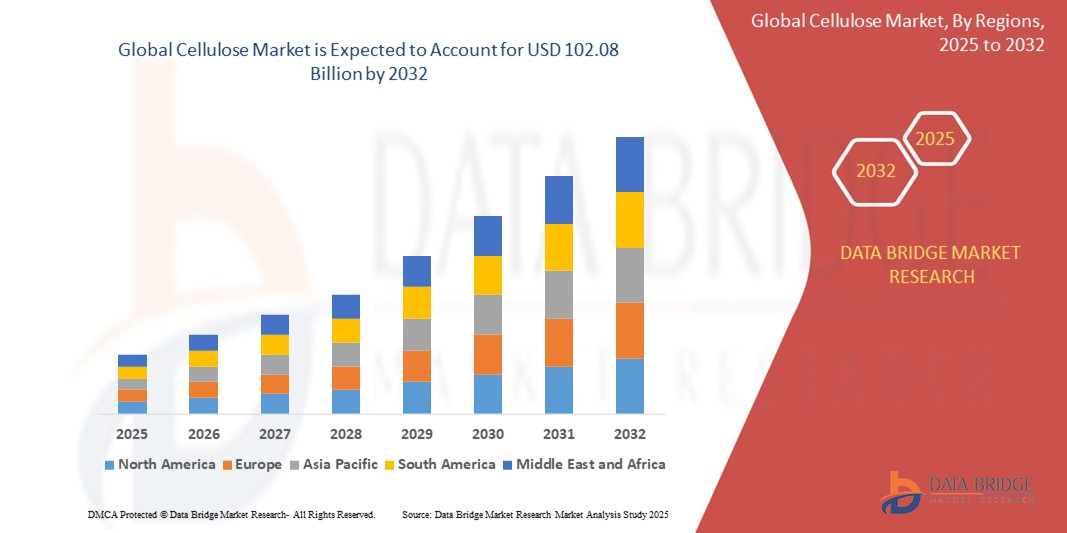
According to the latest report published by Data Bridge Market Research, the Cellulose Market CAGR Value The global cellulose market size was valued at USD 48.78 billion in 2024 and is expected to reach USD 102.08 billion by 2032, at a CAGR of 9.67% during the forecast period The universal Cellulose Market research report is a complete...
The Acute Pancreatitis Market is expanding as healthcare providers respond to the rising incidence of pancreatic inflammation and the growing need for effective diagnosis and treatment. Market Research Future estimates the market at USD 7.36 billion in 2025 and projects it to reach USD 22.52 billion by 2035, registering an 11.84% CAGR. (marketresearchfuture.com) Advances in diagnostic imaging...
Wer in Berlin regelmäßig spielt, merkt ziemlich schnell, dass ein großes Willkommenspaket meist nur beim ersten Login glänzt. Der echte Nutzen zeigt sich später. Genau da setzt der Reload Bonus an, und wer die Mechanik sauber versteht, schaut sich auf Alfcasino nicht bloß hübsche Startangebote an, sondern Angebote, die den Alltag von Vielspielern wirklich...