Are Test Automation Challenges Affecting Your Testing Process?

Software testing has become an essential part of modern application development. As businesses release software faster and more frequently, QA teams increasingly rely on automation to improve speed, consistency, and test coverage. However, automation does not automatically solve every testing problem. Poor planning, unstable test scripts, limited resources, and changing application requirements can create obstacles that reduce the value of automation.
These Test automation challenges can affect the testing process in several ways. They may increase maintenance work, delay releases, create unreliable test results, and make QA teams spend more time fixing automation than testing applications. Understanding these challenges is the first step toward building a more efficient and dependable testing strategy.
Common Problems in Test Automation
One of the most common Test automation challenges is selecting the right test cases for automation. Not every test should be automated. Repetitive, stable, and time-consuming test cases are usually good candidates, while exploratory or frequently changing scenarios may require manual testing. Automating the wrong tests can result in unnecessary maintenance and limited returns.
Another issue is maintaining test scripts. Modern applications change frequently, and even a small modification to a user interface can cause existing scripts to fail. When QA teams have hundreds or thousands of automated tests, updating these scripts can become a major workload. Without proper maintenance practices, automation can quickly become difficult to manage.
Unstable and Flaky Tests
Flaky tests are another major concern. A test may pass during one execution and fail during another without any actual defect in the application. These inconsistent results can reduce confidence in automation reports and force testers to investigate false failures.
Flaky tests are often caused by timing problems, unstable environments, dynamic application elements, test data issues, or dependencies between test cases. Addressing these Test automation challenges requires teams to identify the root cause of failures instead of simply rerunning failed tests.
Tool and Technology Selection
Choosing an automation tool can also be difficult. QA teams need to consider application technology, programming skills, integration requirements, scalability, reporting capabilities, and maintenance needs. A tool that works well for one organization may not be suitable for another.
Businesses should evaluate tools based on their actual testing requirements rather than choosing a platform only because it is popular. The right technology should support the existing development and CI/CD environment while making automation easier for testers.
Lack of Skilled Resources
Automation requires both testing knowledge and technical skills. QA professionals may need to understand scripting, frameworks, test data management, APIs, version control, and CI/CD pipelines. Organizations without sufficient expertise may struggle to build and maintain effective automation frameworks.
Training existing team members can help overcome this problem. Low-code and AI-assisted testing technologies can also reduce the amount of manual scripting required for certain automation activities. These approaches can make automation more accessible while allowing teams to focus on higher-value testing tasks.
Automation Maintenance and Cost
Although test automation can reduce repetitive manual work, it still requires ongoing investment. Test scripts need regular updates as applications evolve. Test environments must remain available, dependencies need to be managed, and automation results must be reviewed.
Ignoring maintenance can create another set of Test automation challenges, where an expanding automation suite becomes expensive and time-consuming to support. Teams should measure automation performance regularly and remove outdated or redundant tests when necessary.
Integration With CI/CD
Continuous integration and continuous delivery require testing to happen rapidly and reliably. Automated tests need to fit smoothly into development pipelines so that defects can be identified early.
However, slow test suites, unreliable environments, and poorly optimized scripts can become bottlenecks. These Test automation challenges may delay builds and reduce the effectiveness of continuous testing. Prioritizing critical tests, running tests in parallel, and optimizing execution time can help teams improve pipeline performance.
How Can Teams Improve Their Testing Process?
Organizations can take several practical steps to address automation problems. First, define clear automation goals based on business and testing requirements. Next, identify test cases that provide the greatest value when automated. Build maintainable frameworks with reusable components, stable locators, clear naming conventions, and proper documentation.
Teams should also monitor test results continuously. Reporting tools can help identify recurring failures, flaky tests, and areas requiring maintenance. Reviewing automation metrics such as execution time, pass rates, failure causes, and coverage can provide useful insights.
AI-powered technologies are increasingly being used to support automation activities such as test creation, maintenance, analysis, and failure identification. These capabilities can help reduce repetitive work and make automation more adaptable to application changes.
The Role of a Modern Automation Platform
A modern test automation platform can help organizations centralize test creation, execution, maintenance, reporting, and analysis. AI-assisted solutions may further simplify repetitive tasks and help teams identify issues faster.
For organizations dealing with Test automation challenges, platforms such as Webomates.com can be considered as part of a broader strategy for improving software quality and automation efficiency. The goal should not simply be to automate more tests, but to create a testing process that is reliable, maintainable, scalable, and aligned with development needs.
Conclusion
Test automation can significantly improve software testing when it is implemented thoughtfully. However, problems involving test selection, script maintenance, flaky results, tool selection, technical skills, cost, and CI/CD integration can limit its effectiveness.
Addressing Test automation challenges requires continuous monitoring, smart test planning, appropriate tools, skilled teams, and maintainable automation practices. With the right strategy, organizations can turn automation into a reliable part of the software development lifecycle and deliver higher-quality applications more efficiently.
Categories
- Artificial Intelligence (AI)
- Technology
- Business
- Education
- Science
- Lifestyle
- Healthcare
- Entertainment
- Politics
- Environment
- Travel
- Finance
- Automobile
- News
- Art
- Causes
- Crafts
- career
- Dance
- Drinks
- Film
- Fitness
- Food
- Games
- Gardening
- Health
- Home
- Literature
- Music
- Networking
- Other
- Party
- Religion
- Shopping
- Sports
- Theater
- Wellness
Read More
The Veterinary Surgical Instruments Market is expanding as veterinary healthcare providers increasingly adopt advanced surgical technologies and improve access to specialized animal care. According to Market Research Future, the market was valued at USD 1.74 billion in 2025 and is projected to reach USD 3.37 billion by 2035, registering a CAGR of 6.90% during the forecast period. Growing...

The Sexual Wellness Market is gaining significant attention as consumers increasingly prioritize personal health, intimacy, hygiene, and overall well-being. The growing understanding that sexual health is an important component of a healthy lifestyle is encouraging consumers to explore a wider range of wellness products. Increasing awareness, evolving social attitudes, and greater access to...
The Medical Wiring Harness Market is gaining importance as healthcare equipment becomes increasingly sophisticated, connected, and technology-driven. Medical wiring harnesses are essential components that organize and protect wires while enabling reliable transmission of power, signals, and data within diagnostic, therapeutic, monitoring, and surgical equipment. The market is being...
Forecasts indicate that the France cloud analytics market is on a trajectory for remarkable growth, anticipating a market size of USD 7,507.0 million by 2035. This surge represents a remarkable compound annual growth rate (CAGR) of 19.36% from a market size of USD 658.56 million in 2024. As organizations increasingly prioritize data-driven approaches, the demand for sophisticated analytics is...

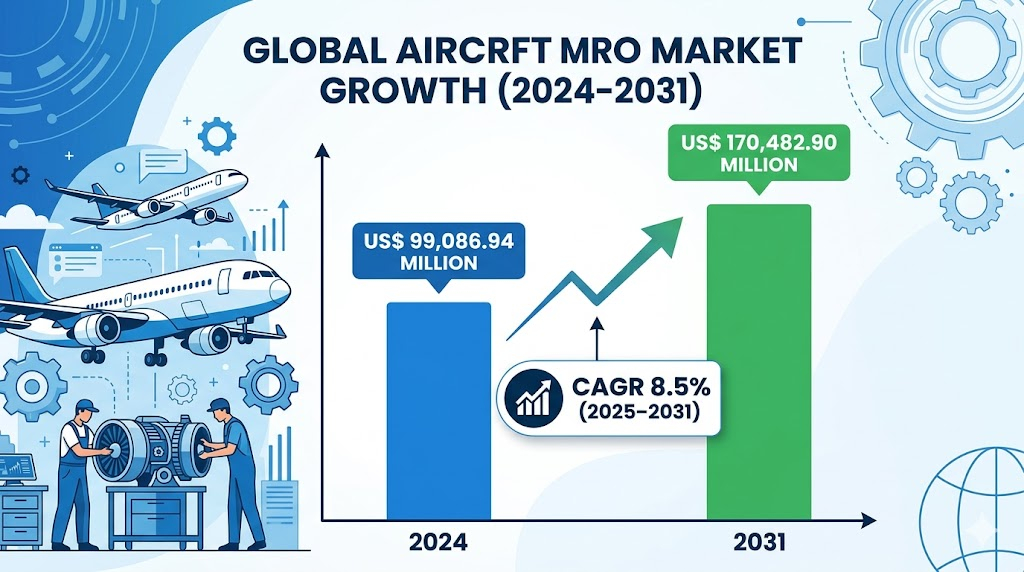
The global aviation industry relies heavily on maintenance, repair, and overhaul (MRO) services to ensure operational safety, regulatory compliance, and fleet reliability. According to a comprehensive research report by The Insight Partners, the aircraft MRO market size is projected to reach US$ 170,482.90 million by 2031 from US$ 99,086.94 million in 2024. The market is expected to...