

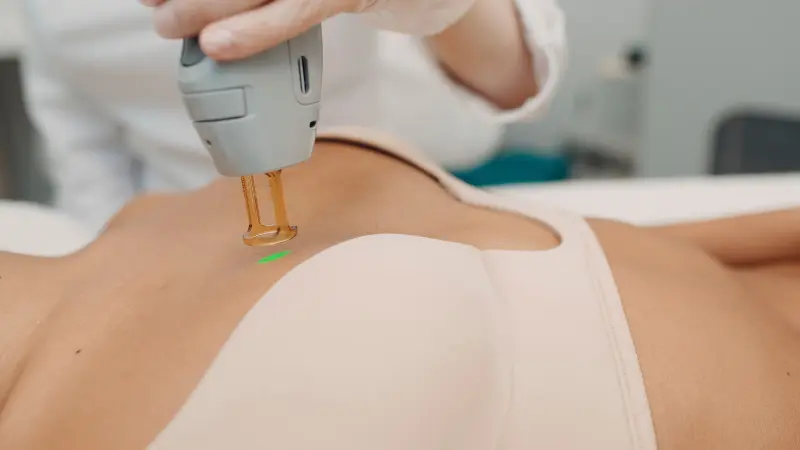

Chest hair is natural, but some people prefer to reduce it because of personal grooming preferences, appearance, or the inconvenience of shaving and waxing. Laser Hair Removal in Dubai can be used to reduce unwanted chest hair by targeting the pigment within the hair follicles. The treatment is particularly useful for people with darker, thicker chest hair, although suitability depends on factors such as hair color, skin tone, hair density, and individual response.
How Does Laser Hair Removal Work on Chest Hair?
Laser hair removal uses concentrated light energy to target the pigment in the hair follicle.
When the pigment absorbs the laser energy, it creates heat that can damage the follicle and reduce its ability to produce new hair.
Chest hair usually grows in different cycles, meaning not every follicle is active at the same time. For this reason, several treatment sessions are generally needed rather than relying on one appointment.
With repeated treatments, the treated area may gradually show less hair growth, slower regrowth, and finer hair.
Is Chest Hair a Good Target for Laser Treatment?
Chest hair can be a suitable target, especially when it is dark and coarse.
The laser relies on pigment to absorb its energy, so darker hair generally provides a stronger target than blonde, grey, or white hair.
Hair thickness also matters. Coarse hair often contains more pigment than very fine hair and may respond more noticeably.
However, every person responds differently. A consultation can help determine whether the hair and skin combination is appropriate for laser treatment.
Can Laser Hair Removal Treat the Entire Chest?
Yes, treatment can be performed across different parts of the chest depending on the desired result.
A treatment plan may include:
- Upper chest
- Center of the chest
- Lower chest
- Areas around the collarbone
- Chest and upper abdomen
- The full chest area
Some people want complete reduction, while others prefer to maintain a certain amount of chest hair and only reduce its density.
The treatment area can therefore be discussed during consultation according to personal preferences.
Can Laser Hair Removal Reduce Thick Chest Hair?
Thick chest hair often responds well to laser treatment because the hair contains a greater amount of pigment.
The laser targets the follicle rather than simply cutting the hair at the skin's surface. As treatment progresses, some follicles may become less active.
This can lead to a gradual reduction in hair density.
Laser treatment is not designed to remove all chest hair instantly, and results vary according to hair characteristics, skin tone, treatment settings, and individual response.
How Many Sessions Are Needed for Chest Hair?
Multiple sessions are normally required because hair follicles go through different growth phases.
The laser is most effective when the targeted follicle is in an appropriate active growth stage. Other follicles may be resting during the same appointment and can become active later.
The number of sessions depends on several factors, including:
- Hair thickness
- Hair density
- Hair color
- Skin tone
- Growth cycle
- Hormonal influences
- Individual response
A professional can recommend an appropriate schedule after assessing the chest hair and skin.
Is Chest Hair Laser Removal Painful?
The level of discomfort varies from person to person.
During treatment, the laser may create a brief snapping, warmth, or pinching sensation. People with thicker and denser chest hair may notice the treatment more strongly because more pigment is being targeted.
Cooling technology may be used during the procedure to help protect the skin and improve comfort.
The sensation is usually temporary and occurs mainly while the laser pulses are being delivered.
What Happens During a Chest Hair Laser Session?
The treatment begins with an assessment of the chest, including the skin tone, hair color, thickness, and density.
The area is usually cleaned and prepared before treatment. Shaving may be recommended so that the laser can target the follicles beneath the skin without excessive hair remaining above the surface.
The provider then moves the laser device across the selected area and delivers controlled pulses.
Protective eyewear should be worn during the procedure. Cooling may also be used depending on the laser system and treatment plan.
After treatment, the chest may look slightly red or feel warm for a short period.
Should Chest Hair Be Shaved Before Laser Treatment?
Shaving is commonly recommended before laser hair removal.
The reason is that the hair follicle needs to remain beneath the skin so the laser can target its pigment. If the hair is left long above the skin, more energy may be absorbed by the visible hair instead of being directed toward the follicle.
Waxing, plucking, or epilating may need to be avoided before treatment because these methods remove the hair from the root.
Specific preparation instructions should always be followed according to the treatment provider's advice.
Can Laser Hair Removal Cause Ingrown Chest Hairs?
Laser hair removal may help people who experience ingrown hairs caused by repeated shaving or other hair removal methods.
When hair growth is reduced, fewer hairs may become trapped beneath the skin.
This can be useful for people who regularly develop small bumps, irritation, or ingrown hairs across the chest after shaving.
However, laser treatment does not guarantee that ingrown hairs will disappear completely. Hair texture, friction, skincare habits, and individual skin characteristics can also contribute to ingrown hairs.
Can Darker Skin Be Treated on the Chest?
People with darker skin can undergo laser hair removal, but treatment needs to be selected and adjusted carefully.
Darker skin contains more melanin, and this pigment can also absorb laser energy. If inappropriate technology or settings are used, there may be an increased risk of burns or pigmentation changes.
Longer-wavelength systems such as Nd are commonly considered for darker skin, although the appropriate option depends on the individual's skin tone, hair characteristics, and treatment area.
A professional assessment is important before treating darker skin.
What About Light or Grey Chest Hair?
Laser hair removal works best when there is sufficient pigment in the hair follicle.
Dark brown or black chest hair usually provides a stronger target than very light hair.
Blonde, grey, and white hair may respond poorly because they contain less melanin for the laser to absorb.
This does not mean that every person with light hair is automatically unsuitable for treatment. A professional assessment can help determine whether laser treatment is likely to provide useful results.
Does Hormonal Growth Affect Chest Hair?
Hormones can influence body hair growth, including the amount and thickness of chest hair.
Chest hair can become thicker or more noticeable during different stages of life. Genetics also play an important role in determining hair distribution.
Laser treatment can target existing hair follicles, but it does not correct an underlying hormonal cause of increased hair growth.
If there is a sudden or unusual change in body hair, it may be appropriate to discuss it with a qualified healthcare professional.
What Are the Possible Side Effects?
Laser hair removal is generally associated with temporary skin reactions, although side effects can vary.
Possible effects include:
- Mild redness
- Temporary warmth
- Small areas of swelling around follicles
- Sensitivity
- Temporary irritation
- Temporary changes in pigmentation
More significant reactions, such as burns or pronounced pigmentation changes, are less common but can occur, particularly when unsuitable settings are used or recently tanned skin is treated.
Proper assessment and following preparation and aftercare instructions can help reduce unnecessary risks.
Does Sun Exposure Affect Chest Hair Treatment?
Yes. Recent tanning or significant sun exposure can make laser treatment more challenging.
Sun exposure increases melanin in the skin, which can increase the amount of laser energy absorbed by the surrounding skin.
For this reason, treatment may need to be delayed if the chest is recently tanned or sunburned.
Using appropriate sun protection and following the provider's instructions before and after treatment can help protect the skin.
What Should You Do After Chest Hair Laser Treatment?
After treatment, the chest may be temporarily sensitive.
A gentle skincare routine can help keep the area comfortable while it recovers. Strong exfoliants, aggressive scrubbing, and irritating products may need to be avoided for a period recommended by the provider.
It is also important to avoid unnecessary heat and friction immediately after treatment.
Sun protection is particularly important because recently treated skin can be more sensitive to sunlight.
Do not scratch, pick, or pull at the treated area if mild irritation occurs.
Is Chest Hair Laser Removal Suitable for Everyone?
Not everyone is automatically suitable for laser hair removal.
Before treatment, factors such as skin tone, hair color, hair thickness, recent tanning, medications, skin sensitivity, and existing skin conditions should be considered.
Treatment may need to be postponed if the chest has:
- Sunburn
- Active irritation
- Open wounds
- Certain skin infections
- Significant inflammation
A professional consultation can help identify potential concerns before treatment begins.
Can Laser Hair Removal Permanently Remove Chest Hair?
Laser hair removal is best described as a long-term hair reduction treatment rather than a guarantee of permanent hair removal.
Some follicles may stop producing noticeable hair for a long time, while others may continue to produce finer or lighter hair.
Hormonal changes can also stimulate new hair growth.
Because of this, some people may benefit from occasional maintenance sessions after completing their initial treatment plan.
How Can You Get Better Results?
Several factors can support a consistent treatment process.
Following the recommended appointment schedule allows treatment to target follicles during appropriate growth phases.
Avoiding waxing or plucking between sessions can also help preserve the follicle as a treatment target.
Protecting the skin from tanning is important, particularly for people with darker skin.
Following preparation and aftercare instructions can also reduce unnecessary irritation and help the skin recover between treatments.
Conclusion
Laser hair removal can be a suitable option for reducing unwanted chest hair, particularly when the hair is dark and coarse. Instead of temporarily cutting or removing hair from the surface, laser treatment targets the follicle and can gradually reduce hair growth over multiple sessions.
The number of sessions and the final results vary according to hair thickness, density, color, skin tone, hormonal influences, and individual response. People with darker skin can also be treated, but appropriate laser technology and carefully selected settings are especially important.
For anyone considering chest hair reduction, a professional assessment can help determine whether laser hair removal is appropriate and create a treatment plan based on the individual's skin and hair characteristics.
Frequently Asked Questions
Can laser hair removal be used for chest hair?
Yes. Laser hair removal can be used to reduce unwanted chest hair by targeting pigment in the hair follicles.
Is laser hair removal effective for thick chest hair?
Dark, thick chest hair often responds well because it contains more pigment for the laser to target. Results vary between individuals.
How many sessions are needed for chest hair?
Several sessions are generally required because hair follicles grow through different phases. The exact number depends on hair density, thickness, skin tone, and individual response.
Can the whole chest be treated with laser hair removal?
Yes. Different areas of the chest can be treated, including the upper, middle, and lower chest, depending on the person's goals.
Should I shave my chest before laser hair removal?
Shaving is commonly recommended because it removes visible hair while leaving the follicle beneath the skin. Follow the provider's instructions about when to shave.
Can laser hair removal reduce chest hair permanently?
Laser hair removal provides long-term hair reduction rather than a guarantee of permanent removal. Some regrowth may occur and maintenance treatments may be needed.
Does laser hair removal help with ingrown chest hairs?
It may help reduce ingrown hairs by reducing hair growth. However, it cannot guarantee that ingrown hairs will be completely prevented.
Can dark skin be treated for chest hair?
Yes. Darker skin can be treated, but appropriate laser technology and settings are important because darker skin contains more melanin.
Can grey or white chest hair be treated with a laser?
Grey and white hair generally responds poorly to laser hair removal because it contains little or no melanin for the laser to target.
Is chest hair laser removal painful?
Treatment can cause brief warmth, snapping, or pinching sensations. Discomfort varies, and cooling may be used to make treatment more comfortable.

