Investment Banking Course: Understanding Pitch Books and Deal Presentations

Investment banking involves much more than financial calculations. Investment bankers also need to present financial information in a clear and structured way. Whether the purpose is to advise a company on a transaction, raise capital or evaluate a strategic opportunity, the analysis often needs to be communicated through professional presentations.
One important part of this process is the pitch book. Learning how pitch books are structured can be a useful part of an Investment Banking Course, especially for students who want to understand how financial analysis is presented in real-world transactions.
What Is an Investment Banking Pitch Book?
A pitch book is a presentation prepared by an investment bank to communicate an idea, analysis or potential transaction to a client.
The exact structure can vary depending on the purpose of the presentation.
A pitch book may include:
-
Company and industry overview
-
Market analysis
-
Financial performance
-
Valuation
-
Transaction options
-
Comparable companies
-
Potential buyers or investors
-
Deal considerations
-
Recommendations
The objective is to present complex information in a way that clients can understand and use for decision-making.
Why Are Pitch Books Important?
Investment banking involves working with large amounts of financial and market information.
A client may not want to go through hundreds of pages of financial data. Instead, they need the important findings presented clearly.
A well-structured pitch book can help answer questions such as:
-
What is happening in the industry?
-
How is the company performing?
-
What could the company be worth?
-
Who could potentially acquire it?
-
What financing options are available?
-
What could a transaction look like?
This makes presentation skills an important complement to financial modelling and valuation.
Typical Sections of a Pitch Book
The structure depends on the assignment, but a pitch book may contain several common sections.
Executive Summary
This section provides a short overview of the key findings and purpose of the presentation.
Company Overview
It may include information about the company's business, products, markets and competitive position.
Industry Overview
The presentation may explain market size, growth trends, competition and relevant industry developments.
Financial Analysis
Historical revenue, profitability, margins and other financial information may be presented through tables and charts.
Valuation
The pitch book may include valuation analysis using methods such as comparable companies, precedent transactions or discounted cash flow.
Transaction Analysis
For an M&A assignment, the presentation may discuss possible transaction structures, potential buyers and strategic considerations.
Role of Excel in Pitch Book Preparation
Excel and PowerPoint often work together in financial analysis.
An analyst may first build calculations in Excel and then use the outputs to create presentation slides.
For example:
Financial Model → Valuation Analysis → Key Findings → Presentation
This means that analysts need to understand both the calculations and the story behind the numbers.
Data Visualization
A pitch book should not simply contain large tables of numbers.
Charts can make financial information easier to understand.
Examples include:
-
Revenue growth charts
-
EBITDA margin trends
-
Market share charts
-
Valuation comparison charts
-
Transaction timelines
The objective is to make the key information easier to interpret.
What Students Can Learn in an Investment Banking Course
A practical Investment Banking Course can introduce students to the process of turning financial analysis into professional presentations.
Students may learn how to:
-
Analyse company information
-
Identify important financial metrics
-
Build valuation analysis
-
Organise financial data
-
Create charts and tables
-
Structure a presentation
-
Communicate financial findings clearly
This is particularly useful because investment banking work often requires analysts to explain their analysis to senior team members and clients.
Why Presentation Skills Matter
Even a technically strong analysis can lose its value if it is difficult to understand.
Investment banking presentations therefore need to be:
-
Clear
-
Accurate
-
Concise
-
Well structured
-
Consistent
-
Relevant to the client
Students can benefit from practising how to communicate financial information rather than focusing only on calculations.
Practical Learning at The WallStreet School
The WallStreet School's investment banking training focuses on practical finance skills, including financial modelling, valuation and transaction-related concepts. Learning through practical exercises can help students understand how analysis can eventually be converted into professional financial presentations.
Who Can Benefit?
Pitch book and presentation skills can be useful for:
-
Finance students
-
Investment banking aspirants
-
MBA students
-
Commerce graduates
-
Financial analysts
-
Professionals moving into corporate finance
These skills can also be useful beyond investment banking because financial presentations are common in corporate finance, consulting, equity research and other finance roles.
Conclusion
Investment banking requires both analytical and communication skills. Pitch books provide a structured way to present financial analysis, valuation and transaction ideas to clients.
An Investment Banking Course that combines financial modelling, valuation and presentation skills can help learners understand how financial information moves from raw data to analysis and finally to a clear business presentation.
Learning to present numbers effectively can therefore be an important part of developing practical investment banking skills.
Categories
- Artificial Intelligence (AI)
- Technology
- Business
- Education
- Science
- Lifestyle
- Healthcare
- Entertainment
- Politics
- Environment
- Travel
- Finance
- Automobile
- News
- Art
- Causes
- Crafts
- career
- Dance
- Drinks
- Film
- Fitness
- Food
- Games
- Gardening
- Health
- Home
- Literature
- Music
- Networking
- Other
- Party
- Religion
- Shopping
- Sports
- Theater
- Wellness
Read More
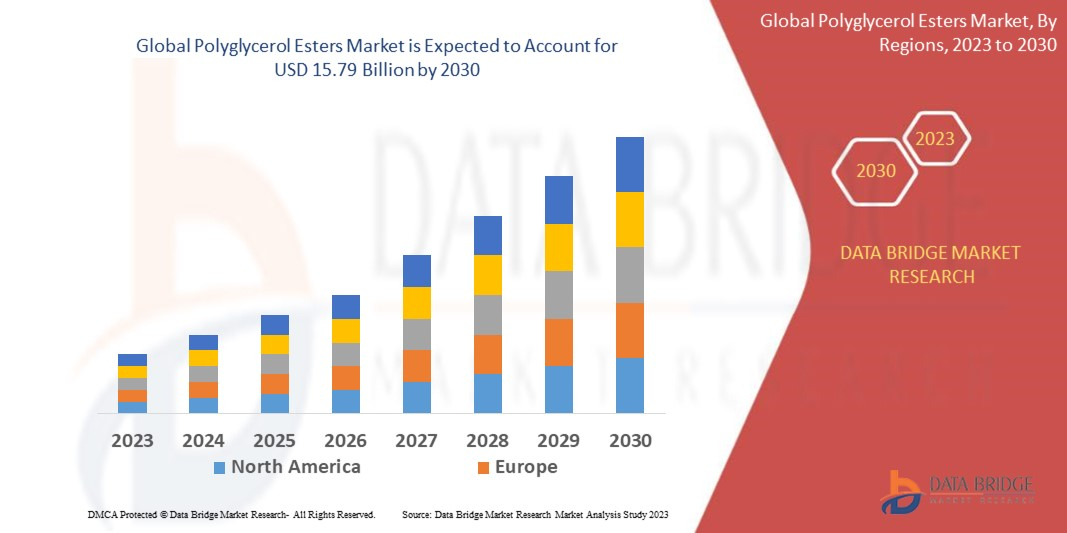
According to the latest report published by Data Bridge Market Research, the Polyglycerol Esters Market CAGR Value Global polyglycerol esters market size was valued at USD 595.78 million in 2024 and is projected to reach USD 725.50 million by 2032, with a CAGR of 2.49% during the forecast period of 2025 to 2032. Polyglycerol Esters Market analysis report contains...
The Scoliosis Treatment Market is witnessing a transformative phase, forecasted to reach approximately 563.77 million USD by 2035. This represents a robust compound annual growth rate (CAGR) of 11.40% from its anticipated valuation of 171.9 million USD in 2024. Such growth reflects an increasing prevalence of scoliosis, particularly among adolescents, coupled with technological advancements...

A LIDAR Drone is an advanced unmanned aerial vehicle (UAV) equipped with Light Detection and Ranging (LiDAR) technology that uses laser pulses to accurately measure distances and generate detailed three-dimensional maps of the Earth's surface. These drones collect precise elevation and spatial data quickly, even in dense vegetation or challenging terrain where conventional...
Building wealth is only one part of achieving long-term financial security. Once your assets grow, managing them effectively can become more complicated. Investment accounts may be spread across different institutions, retirement savings may follow different strategies, and decisions about taxes, risk, estate planning, and future income can become interconnected. This complexity often creates...

Radiofrequency treatments use controlled RF energy to heat targeted layers of the skin, supporting collagen production and tissue remodeling. People researching Radiofrequency Treatments in Dubai often want to know how this technology can improve roughness, uneven texture, fine lines, and overall skin quality. By delivering controlled thermal energy beneath the skin's surface,...