

Solar energy has become a pretty important source of clean electricity around the world, and yeah, the demand for solar panels keeps growing. So manufacturers end up needing materials that can protect solar cells and also support long-term module performance, like in real outdoor conditions. One of the most important materials used in solar panel production is EVA encapsulant film; honestly, it is not a small role.
EVA means ethylene vinyl acetate. It's basically a polymer material, often tucked between the solar cells and the other layers of the module during manufacturing. It acts like a kind of gentle spacer and bedding, so everything stays put, more or less. When you use high-quality EVA sheets for solar panels, they help protect the solar cells from moisture and dust, mechanical stress too, plus general environmental exposure over time.
For manufacturers, picking the right material, and especially the right supplier, is a key step if you want dependable solar modules. This guide kinda walks you through how EVA sheets actually work, the main plus sides, and what you should keep an eye on when you’re purchasing them, so you do not end up stuck later with the wrong spec.
What Are EVA Sheets for Solar Panels?
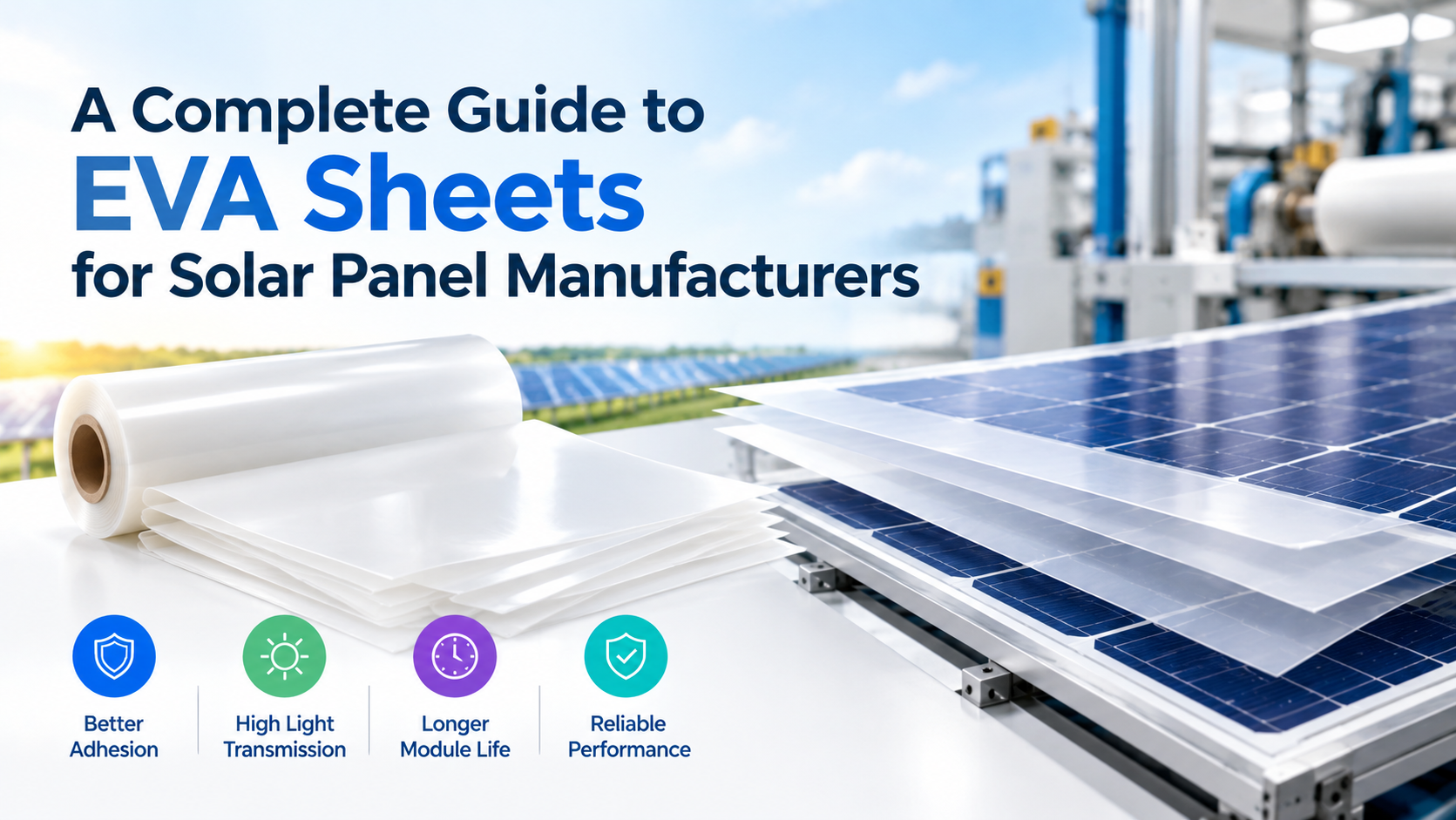
EVA sheets are kinda thin polymer films used to wrap or encapsulate solar cells inside a photovoltaic module. In the lamination process, a bit of heat and pressure help the film stick to the surrounding layers, so it forms a protective kind of structure.
These sheets provide adhesion between the solar cells and the front glass plus the backsheet or the rear glass, depending on how that module is set up. They also lower the risk of harm from vibration, temperature changes, and moisture exposure — basically those annoying environmental factors.
When manufacturers choose EVA sheets for solar panels, they should think about optical transmission rate and the glue bond strength, how well it cures, plus how resistant it is to outside conditions in general, like humidity, heat, and all those things. The right material can really support module reliability over the whole service life period.
Why Is EVA Encapsulant Important in Solar Module Manufacturing?
Solar cells are kinda sensitive components; they need protection from outdoor stuff, like external conditions in general. If there is no proper encapsulation, moisture, heat, and also mechanical stress can end up lowering their performance pretty fast.
EVA film serves a few important roles when it comes to solar module production; it does the job of shielding and support at the same time.
Protection Against Moisture and Environmental Exposure
Moisture can impact electrical connections a bit, and it can also help cause corrosion inside solar modules. When the EVA film is processed properly, it makes a sort of protective wall around the cells, and it reduces exposure to the outdoors or other conditions.
Manufacturers should think about the whole module design too, because the long-term protection against dampness depends on glass, backsheet, edge sealing, and a few other materials as well.
Strong Adhesion Between Module Layers
EVA film kinda binds the different layers of a solar module while they are laminated. Having suitable adhesion helps keep the whole structure steady, and it also lowers the chance of separation between those layers, more or less.
For that reason, a trusted EVA sheet manufacturer should deliver consistent material quality, so solar module makers can get dependable bonding during the production run.
Light Transmission and Solar Performance
Solar cells kinda need enough sunlight to be able to generate electricity properly. If the optical transmission in the EVA film is high, then more light can slip through to the cells, and in the end it helps steady energy creation.
But the film also has to keep decent optical properties when it spends time outside. Picking the material, setting the lamination conditions, and doing environmental testing — all of that affects how it will behave long term.
How to Choose the Right EVA Sheet Manufacturer
Choosing a supplier is not just about looking at prices; there’s more to it. Manufacturers have to check the technical quality, the steadiness of production, the paperwork and documentation, plus if that supplier can keep up a steady flow. Also, it matters how well they handle regular demand, not only once, but over and over again.
Check Product Quality and Specifications
Before picking an EVA sheet manufacturer, you should really check out the technical specs of those films. Like, pay attention to thickness, overall width, optical transmission, adhesion, curing behaviour, and how it handles both heat and ultraviolet exposure.
Try to request the technical data sheets and also the test reports that matter. These papers help the production team compare different materials and figure out if a given film suits their module design, kind of directly.
Evaluate Manufacturing Consistency
Consistent film thickness and those processing characteristics are kinda important for smooth lamination. If there are variations between batches,s then bonding can get weird, production efficiency drops, and the final look or appearance of the solar modules might change a bit.
Experienced EVA encapsulant manufacturers should have appropriate quality-control procedures, and they should give clear info about product specifications plus how consistent each batch is.
Consider Customisation and Supply Capacity
Solar manufacturers might need slightly different film dimensions, depending on their module formats and the way the production line runs. A supplier that can offer matching roll widths and also give you options for film thickness, plus a delivery schedule that is truly dependable, can help keep things running more smoothly, honestly.
It also helps a lot to double-check minimum order quantities, the lead times, packaging standards, and the sort of technical help that’s available before you put in any big bulk order.
Understanding the Role of Solar EVA Film Manufacturers
The quality of encapsulant film really comes down to material selection, how it is processed, and then the quality checks that follow, sort of. If you pick a reliable solar EVA film manufacturer,r they tend to focus on making films that actually satisfy what modern photovoltaic module production needs.
Manufacturers should look closely at how the film behaves in the lamination conditions you plan to use, not just in theory. Like really see it, not only imagine it. Some key checks are gel content, shrinkage level, how strong the adhesion level is, optical features , and also how well it withstands environmental ageing over time.
Also, not every EVA film matches every module design. A certain film might sound good on paper, but it should still be tested under the manufacturer’s real production conditions before you commit to large-scale adoption.
Working with experienced solar eva film manufacturers can help too, because it’s easier to request technical documentation and deal with production related concerns in a more straightforward way.
How to Select a Reliable EVA Film Supplier
A reliable EVA film Supplier should do a lot more than just deliver the material. It’s kind of about those extra pieces too, like giving solid product information, staying clear in communication, and keeping availability consistent so the long-term purchasing decision actually feels stable.
Before you finalize a supplier, it helps to look at a few things, not just one:
-
technical documentation: check the specs and any quality or performance test report(s) that are around right now. see if they're available, if possible, because sometimes there is none, and we still need to confirm what we can.
-
product consistency: make sure each batch really matches the requirements you agreed on.
-
supply reliability: verify production capacity, and also how the delivery schedules are expected to look.
-
technical assistance: ask if they can support you with material selection and those lamination-related questions.
-
Commercial terms: Can you compare the pricing scheme, how the payment terms work, the packaging breakdown in detail, and also what the minimum order quantities are?
If you compare multiple EVA encapsulant manufacturers, buyers usually get a clearer picture of the options, and they’re more likely to pick a product that fits both technical needs and commercial expectations, instead of guessing in the dark.
Common Mistakes to Avoid When Buying EVA Sheets
A common mistake is selecting film based only on its purchase price, like people just look at the cost and move on. Lower-cost material may not provide the required processing characteristics or the long-term performance, especially for a specific module design.
Another mistake is ignoring compatibility with the existing lamination process. Even small differences in curing time, temperature requirements, and shrinkage can mess with production result;, then everything looks “fine” until it doesn’t.
Manufacturers should also avoid relying only on supplier claims; you know, those statements that sound great. Testing samples, checking documentation, and doing suitable module-level evaluations is usually the most sensible way to judge product quality instead of guessing.
And when comparing an eva film Supplier , don’t just look at the price tag. Consider the total value of the material, including consistency, technical support, delivery reliability, and how well it suits the intended application.
Conclusion
EVA encapsulant film it plays a big role for protecting solar cells , while also holding photovoltaic module layers together in a stable way. The optical traits, the adhesion level, and the resistance to all sorts of outdoor exposure make it a very common material in the solar panel manufacturing world.
Picking the right EVA sheets for solar panels is not just about grabbing the cheapest option; you still need to pay attention to specs, check lamination fit, run quality checks, and think about long-term dependability. Manufacturers should look through the product paperwork, test some sample pieces, and confirm the supply ability before going ahead with any purchasing choice.
Teaming up with a trustworthy EVA sheet manufacturer and with seasoned solar EVA film manufacturers can make it easier for solar module producers to keep manufacturing quality consistent. If buyers compare technical performance along with the commercial side, they can choose an EVA film solution that fits their production needs and supports solar modules that behave reliably.

