

Managing customer relationships is an important part of running a successful car dealership. From handling new enquiries to arranging test drives and completing vehicle sales, every interaction can influence a customer's buying decision. However, when customer details and follow-up activities are spread across spreadsheets, phone calls, and messaging applications, sales teams can struggle to maintain an organised process.
A Dealer CRM Software helps dealerships centralise customer information, track sales opportunities, manage follow-ups, and improve communication throughout the buying journey. For automotive businesses in the UAE, the right CRM can make daily sales activities more organised while helping teams build stronger customer relationships.
What Is Dealer CRM Software?
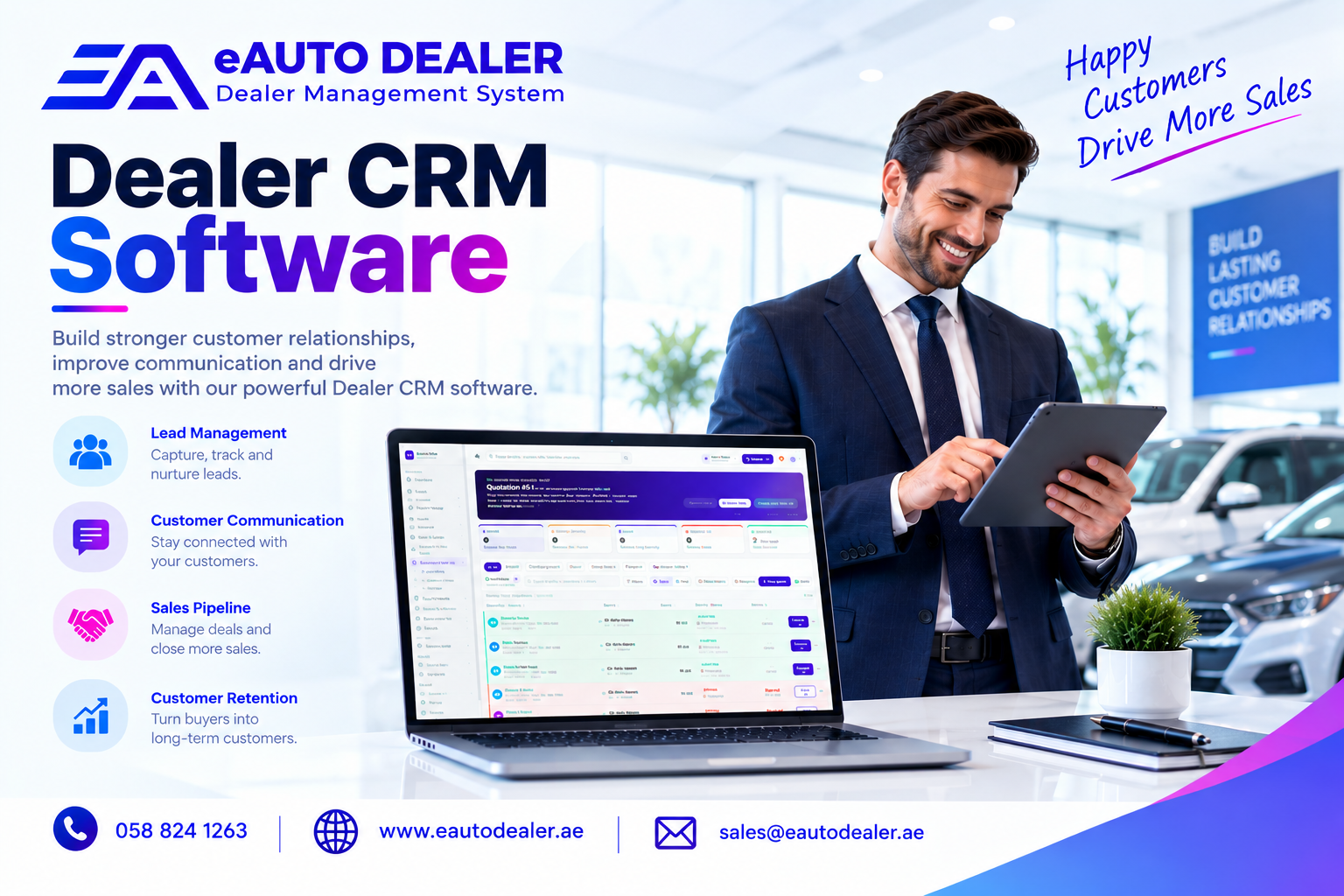
Dealer CRM software is a customer relationship management system designed to help dealerships manage customer enquiries, sales activities, and communication from one platform. It allows sales representatives to maintain customer profiles, record conversations, schedule follow-ups, and monitor the progress of potential deals.
Unlike basic contact management tools, dealership CRM solutions can support automotive sales workflows, including vehicle enquiries, test drive appointments, quotations, bookings, and customer purchase history. Depending on the system, the CRM may also connect with inventory, accounting, and other dealership operations.
This gives sales teams a clearer understanding of customer requirements and helps managers monitor opportunities across the sales pipeline.
Why Do Car Dealerships Need CRM Software?
Car dealerships often manage enquiries from multiple sources, including websites, social media, online vehicle marketplaces, phone calls, and showroom visits. Without a structured process, important enquiries may be missed, follow-ups may be delayed, and customer information may become difficult to retrieve.
Dealer CRM software helps organise these activities in a central system. Sales representatives can see which customers need attention, while managers can review lead assignments and identify opportunities that have stopped progressing.
A well-managed CRM process can help dealerships improve response consistency, reduce manual administration, and deliver a more professional customer experience.
Key Features of Dealer CRM Software
1. Centralised Lead Management
Lead management allows dealerships to collect and organise customer enquiries in one place. Each record can include contact details, preferred vehicle, budget, enquiry source, assigned salesperson, and current status.
Centralised records make it easier to identify new enquiries, assign responsibility, and review previous interactions. This is particularly useful for dealerships that receive a high volume of leads from different marketing channels.
2. Automated Follow-Up Reminders
Following up with potential buyers is essential because many customers need time to compare vehicles, review quotations, or arrange financing before making a decision.
CRM software can schedule reminders, create sales tasks, and notify representatives when an enquiry requires attention. These tools help sales teams maintain a consistent follow-up process without depending entirely on memory.
Automation should support meaningful communication. Representatives still need to provide relevant information and respect customers' communication preferences.
3. Customer Database and Interaction History
A central customer database helps sales teams understand previous conversations and customer requirements. Representatives can review vehicle preferences, enquiry history, quotations, and recorded follow-up activities before contacting a buyer.
This reduces repeated questions and helps staff provide more relevant recommendations. It also supports smoother handovers when another salesperson needs to continue managing an enquiry.
4. Sales Pipeline Management
A sales pipeline shows the stages each customer passes through before completing a purchase. Dealerships can organise opportunities into stages such as new enquiry, contacted, vehicle selected, test drive, quotation, negotiation, booking, and completed sale.
Managers can use this information to identify delayed deals, review sales activity, and determine where additional support is needed.
Pipeline visibility also helps dealerships understand why some enquiries progress while others remain inactive.
5. Vehicle Inventory Integration
Connecting CRM software with vehicle inventory can help sales representatives access relevant stock information while speaking with customers. Depending on the integration, staff may be able to check vehicle availability, specifications, pricing, and stock location.
This reduces the need to switch between separate systems and makes it easier to recommend suitable alternatives when a particular vehicle is unavailable.
For used car dealerships, where stock can change frequently, accurate inventory information is especially valuable.
6. Sales Reporting and Performance Tracking
CRM reporting helps dealership managers understand how effectively their sales teams handle enquiries. Useful metrics may include lead response time, follow-up completion, appointment bookings, quotations issued, conversion rates, and performance by lead source.
These reports can reveal areas for improvement. For example, a dealership may discover that it generates many enquiries but struggles to turn them into showroom visits. Managers can then investigate response quality, appointment scheduling, and customer requirements.
Benefits of Dealer CRM Software for UAE Dealerships
The main benefit of dealer CRM software is better organisation across the customer journey. By keeping lead information and sales activities in one place, dealerships can reduce scattered records and make follow-ups easier to manage.
Other potential benefits include:
-
Improved lead handling: Sales teams can assign enquiries and monitor their progress.
-
More consistent communication: Reminders help representatives follow up at appropriate times.
-
Better customer service: Access to interaction history supports more relevant conversations.
-
Clearer sales visibility: Managers can identify stalled opportunities and review pipeline activity.
-
More informed decisions: Reports help businesses understand lead sources and sales performance.
-
Smoother teamwork: Shared records can support collaboration between sales representatives and branches.
Results depend on accurate data, staff training, and consistent use of the system. CRM software is most effective when it supports a clearly defined sales process.
How to Choose the Right Dealer CRM Software
Before selecting a CRM, identify the challenges your dealership wants to solve. Some businesses need better lead tracking, while others require inventory integration, more reliable reporting, or improved coordination between branches.
Consider these factors when comparing providers:
Ease of use: The interface should make it simple for sales representatives to update customer records and manage daily tasks.
Customisation: Check whether lead stages, reminders, and assignment rules can match your dealership's workflow.
Integration: Confirm compatibility with your website, inventory system, accounting platform, and relevant communication tools.
Security: Review user permissions, data protection measures, backup policies, and activity logs.
Scalability: Make sure the system can support additional users, branches, and growing enquiry volumes.
Support and cost: Compare subscription fees, implementation, training, integrations, and ongoing technical support.
Request a demonstration and test the system with realistic sales scenarios before making a decision.
How eAuto Dealer Supports Dealerships
The eAuto Dealer is designed for UAE car dealerships that need connected workflows across sales, CRM, inventory, purchasing, accounting, and branch operations. Its dealership-focused approach can help businesses manage customer enquiries alongside relevant vehicle and sales information.
By bringing these activities into one platform, dealerships can improve visibility across their workflows and reduce dependence on disconnected records. Before choosing a system, businesses should review its available features, integrations, and reporting capabilities against their specific operational needs.
Dealer CRM Software vs Dealer Management System
Dealer CRM software primarily focuses on customer relationships, lead management, follow-ups, and sales opportunities. A dealer management system generally covers a wider range of dealership operations, which may include inventory, vehicle purchasing, accounting, garage activities, and branch management.
Some platforms combine CRM and dealer management capabilities. An integrated solution may be useful for businesses that want customer enquiries connected with vehicle stock, quotations, invoices, and other operational records.
The right option depends on the size of the dealership and how closely its sales processes need to connect with the rest of the business.
Final Thoughts
Dealer CRM software helps car dealerships manage customer relationships through organised lead tracking, consistent follow-ups, sales pipeline visibility, and customer history. When connected with vehicle inventory and other dealership systems, it can also reduce manual work and help sales teams access relevant information more efficiently. Businesses should compare features, integrations, usability, security, and long-term costs before choosing a platform. Selecting a CRM that fits the dealership's daily workflow can support better customer service and more consistent sales management.
Frequently Asked Questions
1. What is dealer CRM software used for?
Dealer CRM software helps dealerships manage customer enquiries, organise contact records, schedule follow-ups, track sales opportunities, and maintain communication throughout the buying process.
2. Is dealer CRM software suitable for used car dealerships?
Yes. Used car dealerships can use CRM tools to manage buyer enquiries, record vehicle preferences, arrange appointments, track quotations, and follow up with potential customers.
3. Can dealer CRM software connect with inventory management?
Many dealership CRM systems support inventory integration. This can help sales representatives access vehicle details and availability while managing customer enquiries.
4. What is the difference between CRM and DMS?
CRM focuses on customer relationships and sales activities, while a DMS typically manages broader dealership operations such as inventory, purchasing, and accounting. Some solutions combine both capabilities.
5. How does dealer CRM software improve sales performance?
It helps sales teams organise leads, maintain follow-ups, track opportunities, and review conversion reports. These capabilities can reduce missed enquiries and highlight areas where the sales process needs improvement.

