

Managing one rental property can be straightforward, but handling several properties at the same time quickly becomes more complex. Landlords and property managers need to keep track of tenants, rent payments, lease dates, maintenance issues, expenses, documents, and communication across different units. Without a clear system, important tasks can easily be delayed or overlooked. Managing multiple rental properties effectively requires structured processes, accurate records, and better visibility across the entire portfolio. Using digital tools and consistent workflows can help reduce manual effort while improving control over day-to-day operations. For growing landlords and property businesses, the goal is to create a management process that remains organized even as the number of units increases.
Why Managing Multiple Rental Properties Becomes Challenging
The main difficulty with managing several rental properties is the volume of information involved. Each unit may have a different tenant, rental amount, lease expiry date, maintenance history, payment schedule, and set of documents.
As the portfolio grows, relying on memory, spreadsheets, or scattered messages becomes less reliable. A landlord may need to follow up on one tenant’s overdue payment while arranging maintenance at another property and preparing a lease renewal for a third. This is why portfolio-level organization is essential.
A structured rental property management system gives property owners a clearer way to monitor important activities without treating every unit as a separate manual task.
Keep All Property Information in One Place
One of the most important steps is to centralize property information.
Each property record should include details such as unit type, location, tenant information, rental value, lease period, payment terms, maintenance history, and supporting documents.
Keeping this information in one system makes it easier to understand the status of every property without searching through different folders or spreadsheets.
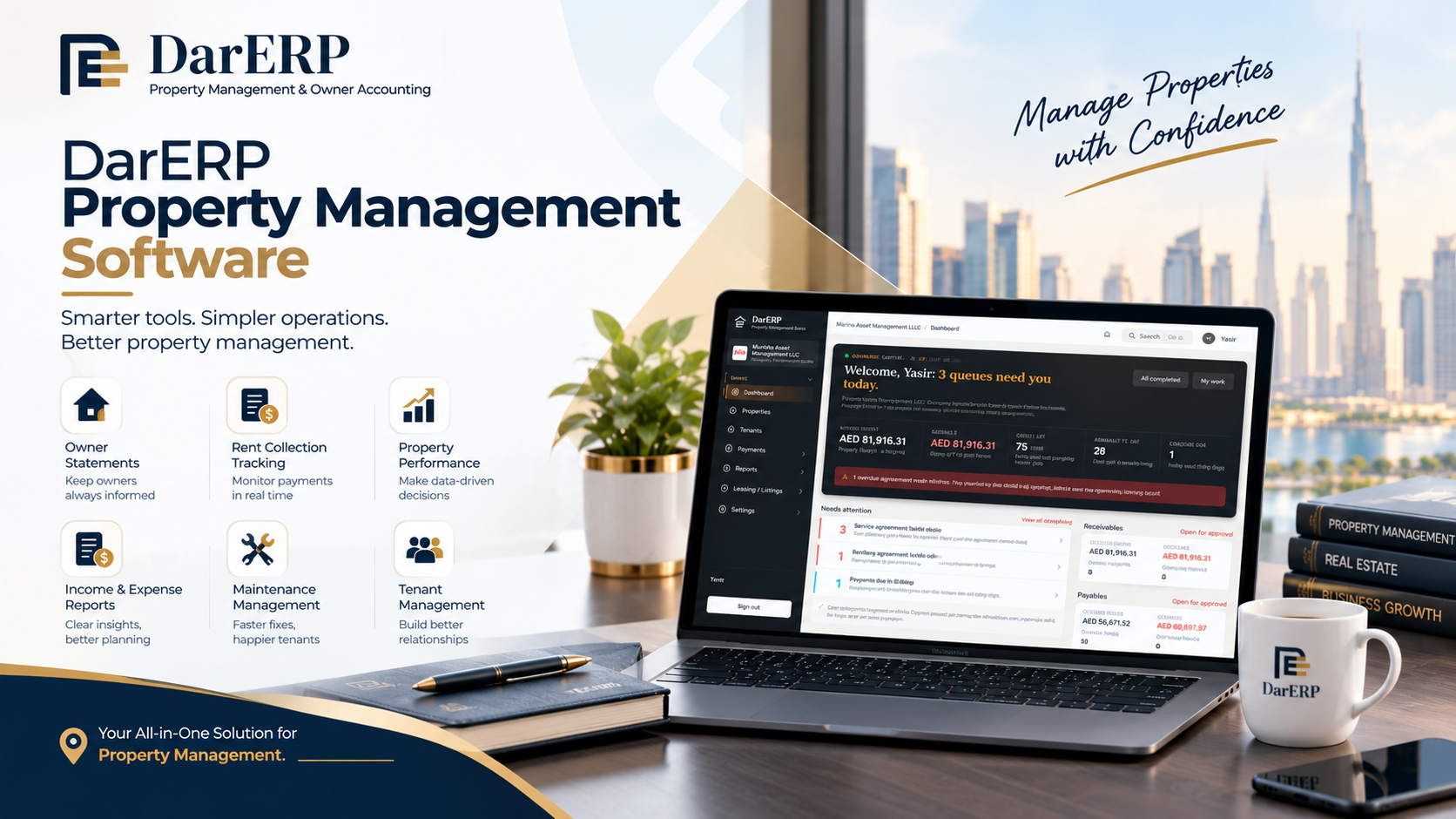
For larger portfolios DarERP can support this type of centralized organization by connecting property, tenant, lease, and operational information in one environment.
Create a Consistent Lease Management Process
Lease management can become difficult when every property has a different contract date and renewal schedule.
Property managers should maintain a clear record of lease start dates, expiry dates, notice periods, rental amounts, deposits, and renewal terms.
A structured lease administration process helps ensure that renewals are not handled at the last minute. It also gives landlords enough time to discuss new terms, prepare documents, or plan for potential vacancies.
Consistent lease tracking can significantly reduce administrative pressure when managing multiple rental units.
Track Rent Payments and Outstanding Balances
Rental income needs to be monitored carefully across the entire portfolio.
Instead of checking payments property by property, landlords should maintain a central overview of expected rent, received payments, outstanding balances, and upcoming due dates.
A rent collection management system can make this process more efficient by linking payments directly to tenants and lease agreements.
Useful financial tracking should help answer simple questions quickly: Which tenants have paid? Which payments are due soon? Which balances are overdue?
The faster this information is available, the easier it becomes to manage cash flow and follow up when needed.
Key Practices for Managing Multiple Rental Properties
The best results usually come from consistent processes rather than complicated systems.
Two practical priorities are:
-
Standardize recurring workflows: Use the same process for tenant onboarding, rent collection, lease renewals, maintenance requests, and move-outs.
-
Review your portfolio regularly: Monitor occupancy, overdue rent, upcoming renewals, maintenance costs, and unit performance instead of waiting for problems to appear.
These simple practices help create a more predictable management process across multiple properties.
Build a Better Maintenance Workflow
Maintenance can become one of the most time-consuming parts of managing a rental portfolio.
Requests may come through phone calls, text messages, emails, or messaging apps, which makes them difficult to track consistently.
A better approach is to record every maintenance request in a structured system. Each request should include the property, unit, issue, date reported, responsible person, current status, and completion details.
A property maintenance tracking system also creates a service history for each unit. This makes it easier to identify recurring problems and understand which properties may require more attention.
DarERP Property Management Software can help property teams keep maintenance activities connected with the relevant property and tenant records.
Organize Tenant Communication
Good tenant communication is important, but communication should also be documented properly.
When multiple tenants are involved, it becomes difficult to remember verbal discussions or messages sent weeks earlier.
Important communication related to rent, maintenance, renewals, notices, or documentation should be recorded clearly.
A structured tenant relationship management process helps property managers maintain consistency and reduces confusion between tenants and staff.
It can also make handovers easier if more than one employee is involved in managing the same portfolio.
Monitor Property Expenses
Rental income is only part of the financial picture. Property owners also need to understand how much each unit or property costs to operate.
Expenses may include repairs, maintenance, utilities, management fees, supplier charges, and other operating costs.
Tracking these expenses by property gives a more accurate view of profitability.
A property expense management process also helps landlords compare properties. One property may generate strong rent but have unusually high maintenance costs, while another may produce more stable net income.
This information is important when deciding where to invest, improve, or adjust management strategies.
Keep Property Documents Organized
Multiple properties also mean multiple documents.
These may include lease contracts, tenant identification documents, invoices, receipts, ownership records, maintenance reports, and payment records.
Using a digital property document management approach helps ensure that documents remain connected to the correct unit or tenant.
This reduces the risk of misplacing files and makes important information easier to retrieve when needed.
A clear document structure becomes increasingly important as the portfolio grows.
Review Occupancy and Vacancy Regularly
Vacancy directly affects rental income, so occupancy should be monitored continuously.
Property managers should know which units are occupied, which leases are expiring soon, and which properties are currently vacant.
A good rental portfolio management process can help identify upcoming vacancies early and give teams more time to prepare listings, arrange viewings, or plan renovations.
Vacancy monitoring is not only about filling empty units. It can also help landlords understand whether pricing, property condition, or tenant demand needs to be reviewed.
Use Reporting to Make Better Decisions
Managing multiple rental properties requires more than recording transactions. Owners need to understand how the portfolio is performing.
Useful reports may include rental income, occupancy rates, overdue balances, maintenance costs, upcoming lease expiries, and property-level expenses.
These insights help identify both strong-performing and underperforming assets.
Instead of making decisions based on assumptions, landlords can use real portfolio data to improve pricing, maintenance planning, budgeting, and future investment decisions.
DarERP Property Management Software UAE can help businesses bring operational and financial data together for a clearer portfolio-level view.
Automate Repetitive Administrative Tasks
The more properties you manage, the more repetitive tasks appear.
These can include payment reminders, lease renewal follow-ups, document updates, reporting, and maintenance status checks.
Automating or standardizing these processes reduces unnecessary manual work and allows property teams to focus on more important decisions.
Even small improvements in repetitive workflows can save significant time when applied across dozens or hundreds of units.
Know When to Move Beyond Spreadsheets
Spreadsheets can work well for a small number of properties, but they become harder to manage as the portfolio grows.
Multiple versions of the same file, manual updates, missing formulas, and inconsistent data can create problems.
If property information is becoming difficult to maintain, reporting takes too long, or different team members are working with separate records, it may be time to move to a centralized property platform.
The objective is not simply to replace spreadsheets, but to create a more reliable way of managing property operations.
Final Thoughts
Managing multiple rental properties successfully depends on organization, consistency, and visibility.
Property owners need a reliable way to monitor tenants, leases, rent collections, maintenance, expenses, documents, and occupancy across the entire portfolio.
By standardizing workflows and centralizing information, landlords and property managers can reduce administrative pressure and respond to issues more quickly.
The right digital system can also make it easier to understand portfolio performance and support future growth. As the number of properties increases, having structured processes becomes less of a convenience and more of a necessity.
Frequently Asked Questions
1. What is the best way to manage multiple rental properties?
The best approach is to centralize property, tenant, lease, payment, maintenance, and document information in one system. Standardized workflows also help keep operations consistent across the portfolio.
2. How can landlords track rent across multiple properties?
Landlords can use a rental management platform or structured payment tracking system to monitor expected rent, received payments, overdue balances, and upcoming due dates for all tenants in one place.
3. When should a landlord use property management software?
Property management software becomes useful when spreadsheets and manual processes are no longer easy to maintain. It is especially helpful for landlords or companies managing multiple units, recurring maintenance, frequent lease renewals, and growing financial records.

