

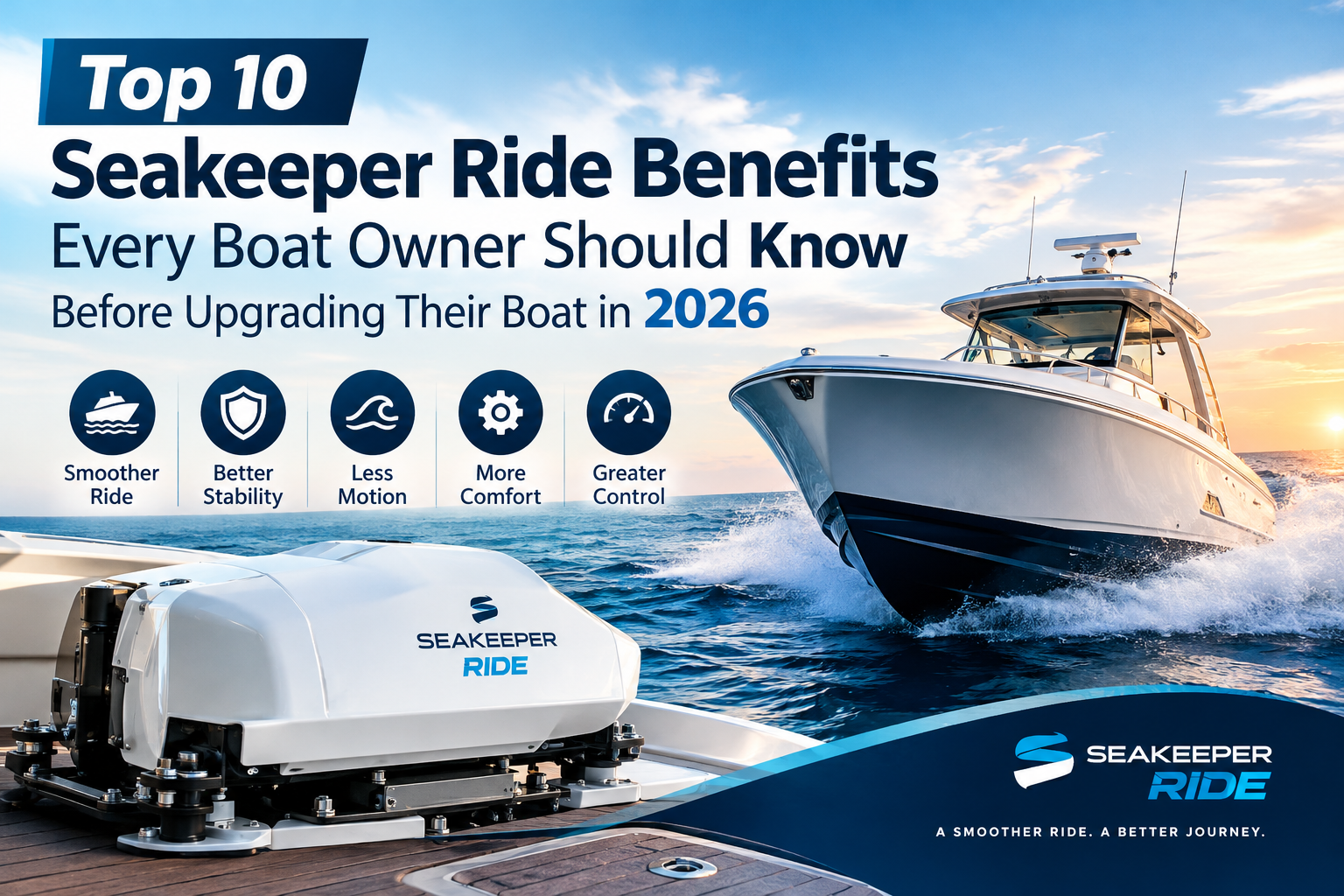
Top 10 Seakeeper Ride Benefits Every Boat Owner Should Know Before Upgrading Their Boat in 2026

Introduction
Owning a boat is a great way to enjoy fishing, family trips, and adventures on the water. However, rough waves, sudden changes in water conditions, and uncomfortable boat movement can make some trips difficult. This is where Seakeeper Ride can make a difference. This active boat control system is designed to reduce unwanted pitch and roll while underway, helping improve comfort, control, and the overall boating experience. For boat owners considering an upgrade in 2026, understanding its benefits can help them decide whether this technology is right for their vessel.
Modern boating technology continues to improve how boats perform in different conditions. Many boat owners are looking for equipment that makes their trips more comfortable without requiring major changes to their boating habits. A suitable stabilization system may help reduce excessive movement and make time on the water more enjoyable.
Before investing in a new system, it is important to understand how it works, what benefits it offers, how much installation may cost, and whether it is compatible with your boat. This guide explains the top 10 Seakeeper Ride benefits, along with important considerations for choosing a system and preparing your boat for an upgrade.
What Is Seakeeper Ride?
Seakeeper Ride is an active vessel control system designed to help manage boat motion while underway. It uses sensors, control technology, and transom-mounted controllers to respond to changing conditions and adjust the boat's running attitude.
Unlike traditional systems that depend mainly on manual adjustments, this technology can make rapid corrections automatically. Depending on the boat and operating conditions, these adjustments can help reduce unwanted pitch, roll, and related motion.
Boat owners researching a Boat Stabilizer should understand that different products work in different ways. Some systems are designed primarily to reduce roll at rest, while others focus on controlling motion when the boat is moving. Choosing the right technology depends on the vessel, its hull design, and how it is used.
Seakeeper Ride is particularly relevant to owners of compatible planing boats who want better control while cruising, running offshore, or enjoying recreational activities.
Top 10 Seakeeper Ride Benefits in 2026
1. Improved Comfort on the Water
One of the biggest reasons boat owners consider a stabilization upgrade is comfort. Waves and changing water conditions can cause a boat to pitch forward and backward or roll from side to side. These movements may make passengers feel uncomfortable, especially during longer trips.
The Seakeeper Ride System is designed to adjust the boat's running attitude automatically. By responding to changing conditions, it can help reduce unwanted motion and create a more comfortable ride.
This benefit can be valuable for families, recreational boaters, and passengers who prefer a smoother experience. Children and older passengers may particularly appreciate a ride that feels more controlled.
However, performance depends on factors such as hull design, boat speed, wave conditions, and correct installation. No stabilization system can eliminate every movement caused by rough water.
2. Better Boat Control in Changing Conditions
Water conditions can change quickly. A boat may encounter waves from different directions, wakes from passing vessels, or uneven conditions while turning.
Active control technology can respond to boat movement and make adjustments without requiring the operator to constantly change settings manually. This may help the boat maintain a more balanced running attitude in suitable conditions.
Better control can also make everyday boating feel more predictable. Operators may find it easier to maintain a comfortable course when the system is working as intended.
Still, stabilization equipment does not replace safe boating practices. Operators must continue to adjust speed, maintain a proper lookout, and follow weather and navigation guidance.
3. Reduced Pitch and Roll While Underway
Pitch refers to the boat moving up and down at the bow and stern, while roll describes side-to-side tilting. Both movements can affect comfort and handling.
Seakeeper Ride uses active control surfaces to help manage these motions while the boat is underway. By adjusting the boat's attitude, the system can help reduce certain unwanted movements.
This is useful for boat owners who regularly travel across changing water conditions or want to improve the experience for passengers.
The system's effectiveness varies with the vessel and operating environment. Owners should discuss expected results with a qualified Seakeeper Ride Dealer before purchasing equipment.
4. A More Enjoyable Fishing Experience
Fishing trips often involve spending several hours on the water. Excessive movement can make it difficult to stand comfortably, move around the deck, or concentrate on fishing.
A properly selected stabilization system may help create a more comfortable running experience when traveling between fishing locations. It can also make trips more enjoyable for passengers who are sensitive to boat motion.
For anglers using bay boats and other compatible planing vessels, reducing unwanted movement underway can be a useful upgrade.
It is important to understand that Seakeeper Ride is not a fish-finding device and does not replace equipment designed to stabilize a boat at rest. Its primary purpose is active motion control while underway. Owners should select equipment according to their fishing style and the conditions in which they usually operate.
5. Automatic Adjustments With Less Manual Work
Traditional trim tabs can require the operator to make adjustments based on the boat's attitude and changing water conditions. Active systems can reduce the need for constant manual correction by responding automatically.
This is one of the main attractions of the Seakeeper Ride System. Sensors monitor motion, and the control system adjusts the actuators to help manage the boat's running attitude.
Automatic operation can make the boating experience more convenient, particularly for owners who prefer technology that handles routine corrections.
However, operators should learn how their equipment works before relying on it. They must also understand any system warnings, operating limitations, and manufacturer recommendations.
6. Potential Improvements in Running Efficiency
Boat attitude can influence drag, handling, and how efficiently a vessel moves through the water. If a boat runs at an unsuitable angle, it may experience less desirable performance.
An active control system can help maintain a more suitable running attitude under certain conditions. Depending on the boat and its setup, this may contribute to improved performance or efficiency.
The actual results are not the same for every vessel. Fuel consumption depends on engine condition, load, speed, hull design, weather, and many other factors.
Boat owners should therefore avoid assuming that installing a stabilization system will always reduce fuel costs. Ask the installer what improvements are realistic for your particular boat and whether any performance testing is available.
7. More Confidence for Family and Recreational Boating
Family boating is often about spending quality time together, exploring new places, and enjoying the water. Uncomfortable movement can make some passengers nervous, especially when they are not experienced boaters.
A suitable active control system may help make the ride feel more controlled in appropriate conditions. This can improve the overall experience for passengers who prefer a more stable ride.
It may also help the operator maintain a more comfortable running attitude while navigating normal changes in water conditions.
However, confidence should never lead to unnecessary risks. Even a boat fitted with advanced technology must be operated according to weather conditions, vessel capacity, and the experience of the person at the helm.
8. Modern Technology for Compatible Boats
Boat owners increasingly look for technology that improves how their vessels operate. The Seakeeper Ride platform combines sensors, electronic controls, and actuators to manage boat motion.
This makes it an option worth researching for owners who want to upgrade a compatible planing boat with active control technology.
Before purchasing, confirm that the selected system matches your boat's specifications. Hull type, boat size, transom configuration, and installation requirements all matter.
Some owners may also need other upgrades or repairs before installation. For example, damaged electrical wiring or unsuitable connections may need attention. Professional Marine Electronics Installation can help ensure that compatible electronic equipment is connected and configured correctly.
A qualified installer can explain how the system fits into your boat's existing equipment and whether any additional work is needed.
9. A Possible Upgrade in Overall Boating Experience
When considering a boat upgrade, owners often focus on engines, electronics, seating, and appearance. Motion control is another area that can affect how enjoyable a vessel feels during normal use.
A suitable stabilization system may improve the experience for owners who frequently travel between destinations, carry passengers, or operate their boats in changing conditions.
The value of this upgrade depends on how often the boat is used and what the owner wants to improve. Someone who regularly experiences uncomfortable pitch and roll may see more value than someone who mainly uses a boat in calm, protected waters.
Before deciding, compare the equipment cost, installation requirements, maintenance needs, and expected benefits. It is also worth reviewing other Marine Stabilizers and understanding how their functions differ.
10. Professional Support and Long-Term Maintenance
An advanced marine system needs correct installation and appropriate maintenance. Professional support can help owners choose a suitable model, understand its operating requirements, and address problems if they develop.
A qualified installer should check compatibility, explain how the equipment operates, and test the installation according to the manufacturer's instructions.
Regular inspections can also help identify damaged cables, loose connections, physical damage, or other issues that may affect system performance.
When researching Seakeeper Ride, look for service providers who understand the equipment and can explain warranty coverage, maintenance recommendations, and available support.
Professional guidance is especially valuable when the boat also needs electrical work, engine service, or repairs before installation.
Seakeeper Ride 450: What Should Boat Owners Know?
The Seakeeper Ride 450 is a model name that boat owners may encounter when comparing available active control products. Before choosing this or another model, verify its current specifications and compatibility with your vessel through official product information or an authorized dealer.
Do not select equipment based on model numbers alone. The right system depends on the boat's dimensions, hull characteristics, operating profile, and installation requirements.
Ask the dealer to explain how the chosen model is expected to perform on your boat. It is also helpful to discuss installation time, maintenance, warranty terms, and the availability of replacement components.
These steps can help you avoid buying a system that does not match your needs.
What Affects Seakeeper Ride Price in 2026?
The Seakeeper Ride Price depends on the specific system, the boat's configuration, and the installation work required. Prices can change over time, so boat owners should request a current quote instead of relying on an old online estimate.
Important cost factors include:
-
The model and equipment package selected.
-
Compatibility with the boat's hull and transom.
-
Labor required for mounting and installation.
-
Electrical connections and any additional work.
-
Existing equipment that may need modification.
-
Testing, configuration, and commissioning.
-
Warranty and after-installation support.
The total project cost may be different from the advertised equipment price. Ask for a written estimate that separates the equipment, labor, and any additional charges.
If your boat needs electrical repairs before installation, the cost may increase. Comparing detailed quotes from qualified providers can help you understand the full investment.
Why Choose a Professional Seakeeper Ride Dealer?
Choosing the right dealer is an important part of the upgrade process. An experienced Seakeeper Ride Dealer can help you determine whether the system suits your boat and explain what the installation involves.
Before selecting a provider, ask about experience with your boat type, product compatibility, installation procedures, warranty support, and future maintenance.
You should also confirm that the provider follows the manufacturer's requirements and performs appropriate system checks after installation.
A professional approach can reduce the risk of compatibility problems and help you understand how to use the equipment correctly.
Preparing Your Boat Before Installation
Before installing a new system, inspect the boat's overall condition. Addressing existing problems can make the installation process easier and help protect your investment.
Consider these steps:
-
Check the transom for damage or structural concerns.
-
Inspect electrical wiring and connections.
-
Confirm that the boat meets the system's compatibility requirements.
-
Discuss mounting space and installation access.
-
Review the expected total cost.
-
Ask about warranty coverage and maintenance.
-
Learn the system's operating limits and safety recommendations.
If other repairs are needed, arrange them before the installation where practical. A reliable service provider can help coordinate the work.
Finding Boat Service in Florida
Boat owners in Florida have different service needs depending on their location, vessel, and boating habits. Some may need stabilization upgrades, while others require electrical troubleshooting, engine service, or routine maintenance.
When searching for Boat Repair Florida, choose a provider with relevant experience and clear service information. If you need help in Northeast Florida, Boat Repair Jacksonville FL may be a useful search term.
Owners in Southwest Florida may search for Boat Maintenance Naples or Boat Maintenance Fort Myers to find services in their area.
For broader local searches, terms such as Marine Mechanic Near Me, Boat Mechanic Near Me, and Marine Repair Near Me can help identify potential providers. Always confirm that the business offers the particular service you need, especially if your project involves specialized stabilization equipment or marine electronics.
A good service provider should explain the work, provide a clear estimate, and answer questions about installation, maintenance, and support.
Final Thought
Upgrading a boat with an active stabilization system can be a worthwhile option for owners who want better comfort, more controlled motion, and a more enjoyable experience underway. The benefits depend on the boat, the water conditions, and the correct selection and installation of the equipment. Before investing, compare the Seakeeper Ride System options, confirm compatibility, and understand the full installation cost. Regular inspections and professional maintenance can also help protect your investment over time. For boat owners exploring stabilization solutions and marine service options, grandermarinestabilizers can be a starting point for learning more about marine stabilization needs and planning a suitable upgrade for their vessel.
Frequently Asked Questions (FAQs)
1. What is Seakeeper Ride used for?
Seakeeper Ride is an active boat control system designed to help reduce unwanted pitch and roll while a compatible boat is underway. It uses sensors and actuators to make automatic adjustments to the boat's running attitude.
2. What are the main benefits of Seakeeper Ride?
Potential benefits include improved comfort, reduced unwanted motion, automatic adjustments, and a more controlled ride in suitable conditions. Actual results depend on the boat and its operating environment.
3. Is Seakeeper Ride worth it in 2026?
It may be worth considering if you frequently experience uncomfortable boat movement and own a compatible vessel. Compare the system's expected benefits, equipment price, installation costs, and maintenance requirements before making a decision.
4. How much does Seakeeper Ride cost?
The price depends on the model, boat compatibility, installation labor, and any additional work required. Request a current quote from a qualified dealer for an accurate total project cost.
5. What is the Seakeeper Ride 450?
Seakeeper Ride 450 is a product model name that buyers may encounter when researching the range. Check official specifications and consult an authorized dealer to confirm the model's current availability and suitability for your boat.
6. Does Seakeeper Ride work while the boat is stationary?
Seakeeper Ride is designed primarily to control boat motion while underway. If your main goal is reducing roll while anchored or at rest, ask a professional about technologies designed for that purpose.
7. Does Seakeeper Ride improve fuel efficiency?
A better running attitude may improve efficiency in some circumstances, but fuel savings are not guaranteed. Results depend on boat design, speed, engine condition, load, and water conditions.
8. Does Seakeeper Ride require professional installation?
Professional installation is recommended to ensure compatibility, proper mounting, correct connections, and appropriate system testing. Follow the manufacturer's installation requirements.
9. How can I find a Seakeeper Ride Dealer in Florida?
Search for authorized dealers and marine service providers in your area. Confirm their experience with your boat type, installation capabilities, warranty support, and availability of ongoing maintenance.
10. What should I check before upgrading my boat?
Check your boat's compatibility, transom condition, electrical system, total installation cost, warranty coverage, and expected maintenance needs. A professional assessment can help you make an informed decision.

