

Campervans vs Motorhomes: A Complete UK Guide for Couples, Families and Winter Getaways

Planning a road trip around the UK involves several decisions, and choosing the right vehicle is one of the most important. Whether you are planning a romantic weekend in the countryside, a family holiday during the school break, or a longer journey through England, Scotland or Wales, understanding campervans vs motorhomes can help you make the right choice.
Both vehicles offer the freedom to travel at your own pace, enjoy scenic destinations and stay closer to nature. However, they differ in size, comfort, storage, driving experience and rental costs. The best option depends on your travel plans, budget and the number of people travelling with you.
For travellers considering a UK road trip, Jepsons Holidays provides a useful starting point for exploring motorhome holidays and planning a journey that suits different travel styles.
What Is the Difference Between a Campervan and a Motorhome?
Although campervans and motorhomes serve a similar purpose, their layouts and facilities can be quite different.
A campervan is usually a converted van with sleeping space, basic cooking facilities and compact storage. Some models also feature pop-top roofs, additional sleeping areas and small washroom facilities. Their smaller dimensions can make them convenient for couples and travellers who prefer exploring towns, coastal roads and countryside routes.
A motorhome generally provides more living space and a layout designed for longer stays. Depending on the model, it may include a larger kitchen, a separate bathroom, a shower, fixed beds and a spacious dining area.
Neither option is automatically better. A compact campervan may be perfect for a short adventure, while a motorhome can provide greater comfort for a family or a couple who wants more indoor space.
Campervans vs Motorhomes: Main Differences at a Glance
| Feature | Campervan | Motorhome |
|---|---|---|
| Vehicle size | Usually compact | Usually larger |
| Driving and parking | Often easier to manoeuvre | Requires more care and planning |
| Sleeping arrangements | Usually compact and flexible | Often offers more bed options |
| Kitchen facilities | Generally smaller | Often more spacious |
| Bathroom | May be limited or unavailable | Often includes a toilet and shower |
| Storage | Suitable for lighter packing | Usually offers more storage |
| Rental costs | Often lower | Often higher |
| Best suited to | Couples and shorter trips | Families and longer holidays |
These are general differences rather than fixed rules. Facilities, dimensions and prices vary between individual vehicles, so check the specification before booking.
Which Vehicle Is Best for Winter Romantic Getaways?
Winter can be an appealing time for couples to explore the UK. Quieter destinations, atmospheric countryside walks and cosy evenings can make a short road trip feel special without requiring an overseas holiday.
The right vehicle depends on how you want to spend your time together.
Why Choose a Campervan for a Romantic Break?
A campervan can be a good choice for couples who enjoy simple adventures and spend most of their day outdoors. Its compact design is convenient for travelling between villages, visiting coastal viewpoints and stopping at countryside attractions.
Imagine spending the afternoon walking along a beach in North Wales before settling into a suitable campsite for the evening. A smaller campervan may provide everything you need for a two-person getaway, especially if you pack lightly and do not require a separate bathroom.
However, winter conditions make heating, insulation and ventilation particularly important. Check the vehicle's heating arrangements, sleeping equipment and cold-weather suitability before confirming a booking.
Why Choose a Motorhome for a Winter Getaway?
A motorhome may be more suitable for couples who value additional comfort. More interior space can make a difference when rain, wind or low temperatures encourage you to spend extra time indoors.
Depending on the layout, you may have a proper dining area, a larger kitchen, a comfortable bed and an onboard toilet or shower. These features can make a longer winter holiday more convenient.
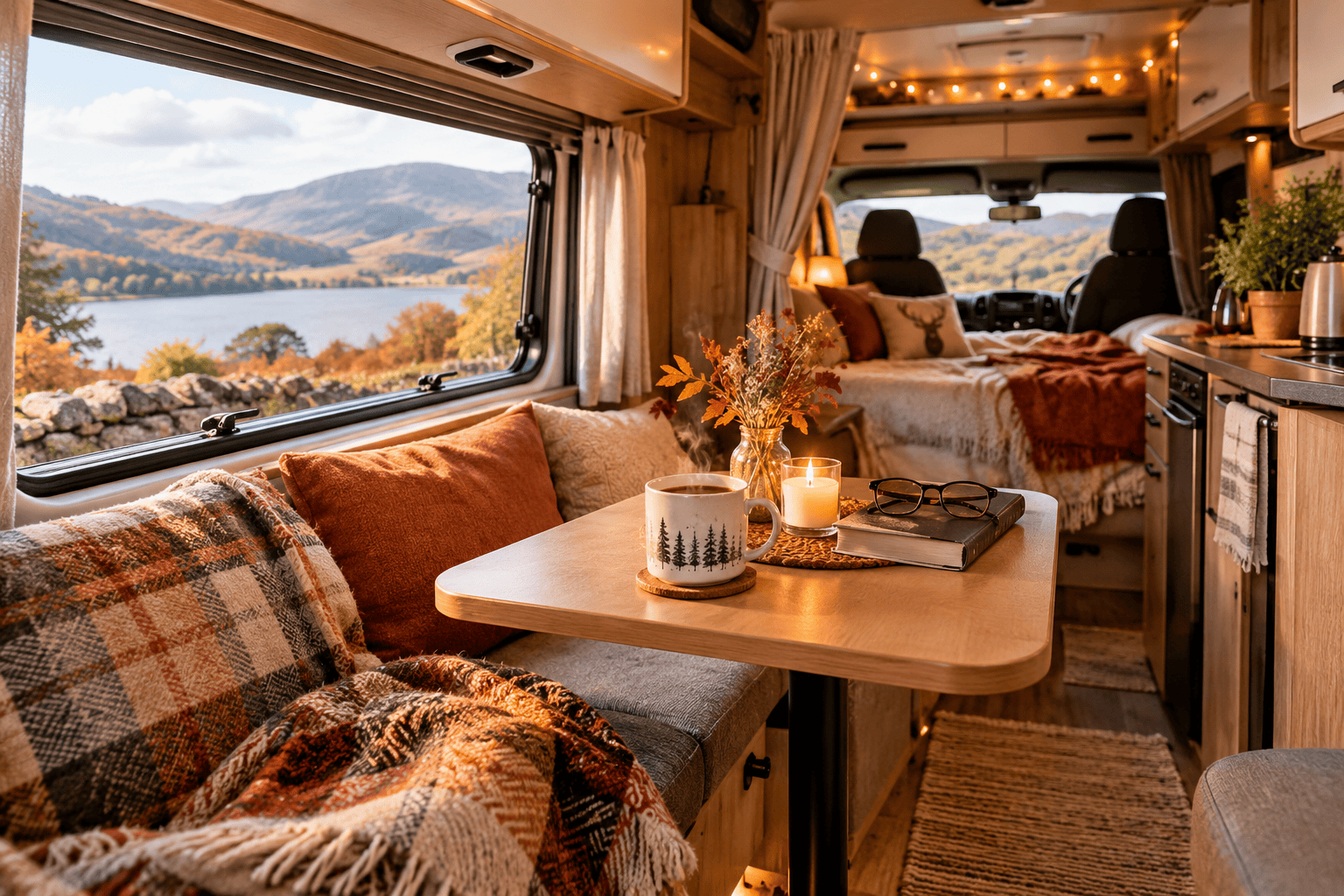
For example, a couple exploring the Lake District could spend the day walking on suitable trails, enjoy a warm meal inside the vehicle and relax without needing to rely entirely on outdoor facilities.
Before travelling, check campsite opening dates, heating systems, water arrangements and the vehicle's winter-use guidance. Not every campsite operates throughout the year, and freezing conditions may affect onboard water systems.
Best UK Destinations for a Romantic Campervan or Motorhome Holiday
The UK has plenty of destinations suitable for couples seeking a peaceful winter break. Your choice of vehicle should reflect the route, road conditions and accommodation facilities available.
1. Lake District, England
The Lake District offers mountain scenery, lakeside walks and traditional villages. Couples can plan a relaxed itinerary around Windermere, Keswick and other accessible locations.
A campervan may suit a short trip with limited luggage, while a motorhome could be more comfortable for a longer stay. Winter weather can change quickly, so check local forecasts and road conditions before travelling.
2. North Wales
North Wales combines coastal scenery, historic towns and countryside attractions. Couples can explore the area around Pwllheli, visit suitable beaches or plan scenic drives through the region.
A compact vehicle may be convenient on narrower roads, but drivers should always check vehicle dimensions and route restrictions. Larger motorhomes need additional care when navigating tight lanes and busy town centres.
3. Scottish Highlands
The Scottish Highlands can offer a memorable setting for a romantic road trip, with dramatic landscapes, peaceful viewpoints and opportunities to explore local communities.
Winter journeys require extra preparation. Short daylight hours, snow, ice and changing weather may affect travel plans. Choose an appropriate vehicle, check the forecast and avoid routes that are unsuitable for the conditions.
4. Yorkshire Dales, England
The Yorkshire Dales is a good option for couples who enjoy walking, rural villages and scenic countryside. A weekend itinerary can include short walks, local food stops and time to relax at a suitable campsite.
Check seasonal opening times and facilities before travelling, especially if your visit falls during the colder months.
Also Read:https://www.jepsonsribblevalleymotorhomehire.co.uk/10-best-places-to-visit-in-the-uk-in-november-2024/
Understanding Rental Costs in the UK
Rental costs are an important part of choosing between a campervan and a motorhome. Although campervans often have lower hire rates, the final price depends on several factors.
These include vehicle size, travel dates, rental duration, availability, insurance arrangements and the equipment included in the booking.
As an illustrative planning guide, smaller campervans may cost around £50–£100 per night during quieter periods, while larger motorhomes may cost approximately £70–£150 or more per night. Premium vehicles and peak-season bookings can cost considerably more. These are broad estimates, not live quotations or guaranteed market prices.
What Additional Costs Should You Consider?
The advertised rental rate is only one part of your holiday budget.
Consider the following expenses before making a decision:
-
Fuel: Larger vehicles can use more fuel, depending on their engine, weight, route and driving conditions.
-
Campsite fees: Overnight pitches and facilities may cost extra.
-
Insurance and excess: Check what cover is included and how much you could be liable to pay following an incident.
-
Security deposit: Understand the deposit amount and the conditions for its return.
-
Mileage limits: Some rental agreements include mileage allowances or charge for additional miles.
-
Equipment: Bedding, kitchen equipment, outdoor furniture and other extras may not always be included.
-
Cleaning and return conditions: Check whether cleaning fees or specific return requirements apply.
-
Winter preparation: Appropriate equipment and suitable campsite facilities may affect your overall spending.
Comparing the complete cost of a trip is more useful than looking at the nightly hire price alone.
How to Reduce Campervan and Motorhome Rental Costs
A few practical decisions can help you plan a more affordable UK holiday.
Travel outside peak periods. If your dates are flexible, compare prices for quieter weekdays and off-peak periods. Winter can offer lower rental rates for some vehicles, although availability and seasonal operating arrangements vary.
Choose the right size. A couple may not need a large family motorhome, while a family should avoid choosing a vehicle that does not provide sufficient sleeping space.
Compare what is included. A rental with a slightly higher headline price may represent better value if it includes useful equipment, suitable insurance and a generous mileage allowance.
Plan a realistic route. Group nearby attractions together to avoid unnecessary driving and fuel expenses.
Check the full booking terms. Understand cancellation rules, deposits, insurance excesses, additional-driver charges and collection arrangements before paying.
Booking early can also help you compare available vehicles, particularly around school holidays and popular travel dates.
Safety and Practical Advice for UK Winter Travel
Winter road trips require more planning than summer holidays. Before departure, check the weather forecast, inspect the vehicle's tyres and lights, and familiarise yourself with the heating and ventilation systems.
Pack warm clothing, suitable footwear, a torch, essential food and water, and a charged mobile phone. Allow extra time for journeys and avoid driving in conditions that feel unsafe.
You should also confirm that your driving licence covers the vehicle you intend to hire. UK licence requirements can depend on the vehicle's maximum authorised mass and the driver's circumstances. Check the official government guidance before booking.
Choose campsites that are open during your travel dates and confirm access to toilets, showers, electricity and other facilities you may need. Follow the rental provider's instructions for heating, gas, electrical equipment and water systems.
Good preparation helps make a winter holiday more comfortable and reduces the risk of unexpected problems.
Campervan or Motorhome: Which Should You Choose?
The best vehicle depends on your priorities.
Choose a campervan if you prefer a compact vehicle, want to keep rental costs manageable and plan to spend most of your time exploring outdoors. It can be an excellent option for couples, short breaks and flexible road trips.
Choose a motorhome if you want more interior space, greater storage capacity and additional facilities for cooking, sleeping and relaxing. It may be a better fit for families, longer journeys and winter holidays when comfortable indoor living matters more.
Before booking, consider how many people will travel, how much luggage you need, which facilities are essential and how confident you feel driving a larger vehicle.
Jepsons Holidays encourages travellers to plan around their actual needs rather than simply choosing the smallest or most luxurious option. A well-matched vehicle can help make a UK holiday more comfortable, practical and enjoyable.
Frequently Asked Questions
1. Are campervans cheaper to hire than motorhomes?
Campervans often have lower rental rates because they are generally smaller. However, prices vary according to season, vehicle specification, availability and booking conditions.
2. Is a campervan suitable for a winter romantic getaway?
Yes, provided the vehicle is suitable for cold-weather travel and has appropriate heating, insulation and sleeping arrangements. Couples should also check campsite facilities and seasonal road conditions.
3. Is a motorhome more comfortable in winter?
A motorhome may provide more indoor living space and facilities, but comfort depends on the specific model, heating system, insulation and water arrangements. Check the vehicle's winter suitability before booking.
4. How much does it cost to rent a campervan in the UK?
Costs vary considerably. As a broad guide, some smaller campervans may cost around £50–£100 per night during quieter periods, with higher prices possible during busy dates. Always compare current quotations and additional charges.
5. What should couples pack for a winter motorhome holiday?
Pack warm layers, waterproof clothing, sturdy footwear, personal toiletries, any required bedding and essential food. Confirm which equipment is supplied by the rental company before departure.
6. Do I need a special licence to drive a motorhome in the UK?
Not necessarily. The licence required depends on the vehicle's maximum authorised mass and your circumstances. Check the latest requirements on GOV.UK before selecting a rental vehicle.
7. Which UK destinations are good for winter road trips?
The Lake District, North Wales, Yorkshire Dales and parts of Scotland can all be considered. Check local weather, road conditions, campsite availability and daylight hours before travelling.
Conclusion
Choosing between campervans and motorhomes comes down to comfort, cost, vehicle size and the type of holiday you want. A campervan can suit couples looking for a simple, flexible escape, while a motorhome can provide additional space and facilities for longer journeys or colder weather.
By comparing rental costs, checking winter suitability and planning a realistic route, you can make a more informed decision for your next UK adventure. Whether you are exploring lakeside scenery, visiting Welsh coastal towns or travelling through the countryside, the right vehicle can help you enjoy a memorable break.
For travellers planning their next road trip, Jepsons Holidays is a useful starting point for researching motorhome options and preparing for a UK holiday that fits their needs.

