

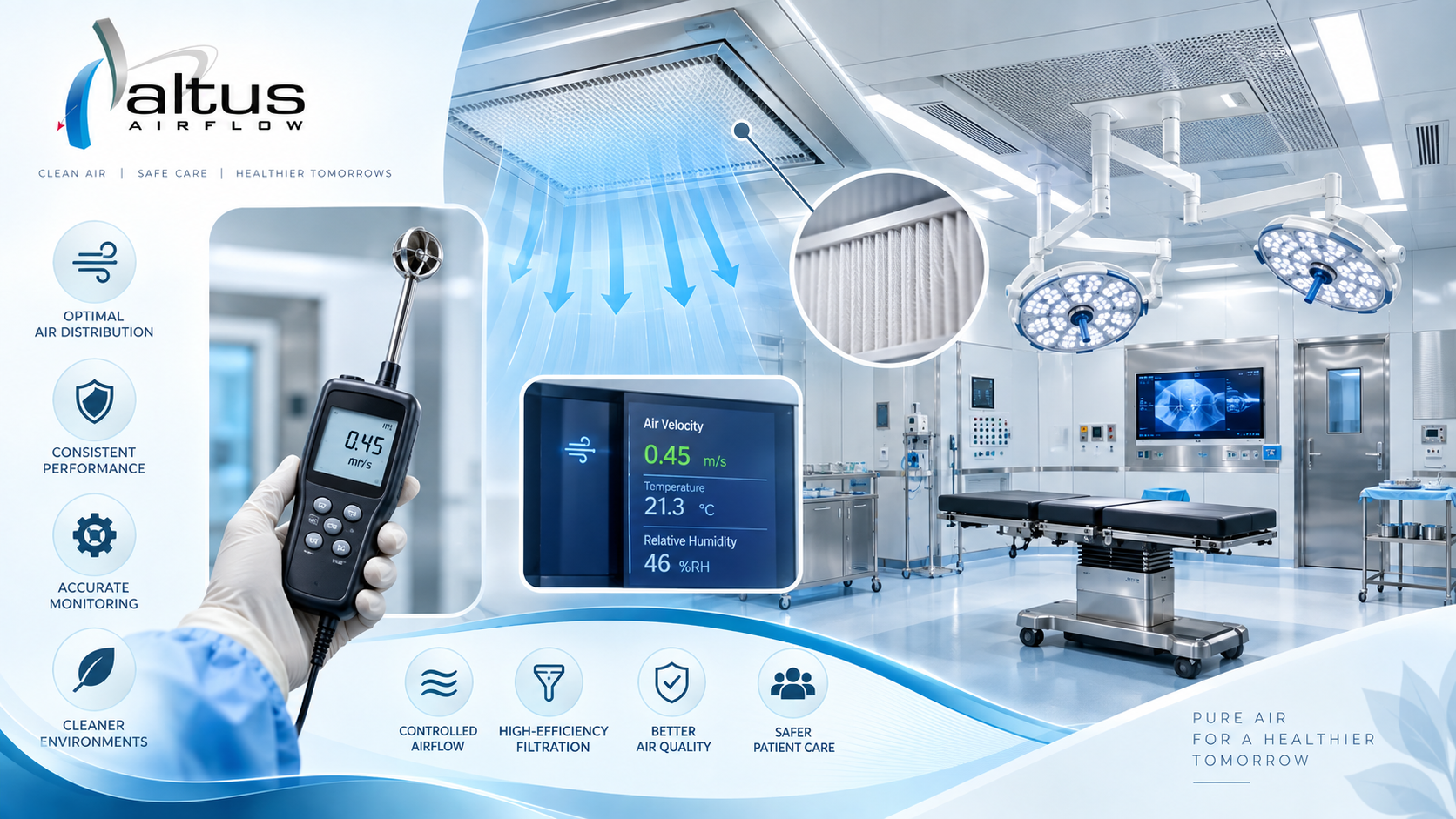
How Can HEPA Module and Laminar Airflow Systems Help Maintain Controlled Air Quality In Critical Environments?

Introduction
Maintaining controlled air quality is essential in environments where airborne particles can affect sensitive processes, equipment, and the quality of work. Healthcare facilities, IVF laboratories, pharmaceutical areas, and research environments require carefully planned ventilation and filtration systems to support their operational requirements. HEPA Module and Laminar Airflow systems can help control airborne particulate contamination when designed, installed, and maintained according to the needs of the facility.
HEPA filtration removes a high proportion of airborne particles, while laminar airflow arrangements are designed to deliver air in a controlled, generally unidirectional pattern across a specified area. When these components are properly integrated with the HVAC system, they can contribute to a cleaner and more predictable indoor environment. Their effectiveness depends on suitable equipment selection, correct installation, airflow management, and regular performance verification.
1. Understanding HEPA Filtration
High-Efficiency Particulate Air (HEPA) filters are designed to capture airborne particles through a combination of filtration mechanisms. They are commonly used in applications where controlling particulate contamination is important.
The filter's efficiency, classification, dimensions, and operating conditions should match the requirements of the intended application. Selecting an appropriate filter involves reviewing the required air cleanliness, the characteristics of the room, and the specifications of the complete filtration assembly.
HEPA filters are only one part of an air quality management system. Their performance also depends on proper sealing, compatible housings, suitable airflow, and correct maintenance. If air bypasses the filter through gaps or damaged seals, the overall effectiveness of the installed system may be compromised.
2. How Laminar Airflow Supports Controlled Environments
Laminar airflow systems are designed to provide air movement in a consistent direction across a designated area. Depending on the application, the airflow arrangement may be horizontal or vertical.
The objective is to establish a predictable airflow pattern that helps reduce unwanted particle accumulation or movement within the protected zone. The design must account for room dimensions, equipment placement, supply air distribution, and return air locations.
Airflow patterns can be affected by obstacles, temperature differences, personnel movement, and the placement of equipment. Therefore, the system should be designed around the actual use of the space rather than relying only on the performance specifications of individual components.
Properly planned airflow distribution can support contamination-control objectives in suitable laboratory and healthcare applications.
3. Supporting Air Quality in IVF Laboratories
IVF laboratories require controlled environmental conditions because sensitive laboratory procedures and materials may be affected by airborne contamination and environmental fluctuations.
A suitable filtration and ventilation arrangement can help manage airborne particles and support the laboratory's environmental control strategy. The specific configuration should be determined by the laboratory's activities, equipment, room layout, and applicable requirements.
Important considerations include filter integrity, airflow distribution, temperature stability, humidity control, and monitoring procedures. Equipment should be positioned so that it does not unnecessarily obstruct the intended airflow pattern.
Routine inspection and appropriate testing are also important. The laboratory team should follow an established maintenance schedule and verify that the system continues to meet its specified performance criteria.
4. Reducing Airborne Particle Contamination in Healthcare Facilities
Operating theatres and other controlled healthcare spaces require ventilation systems that support their intended cleanliness and infection-prevention objectives.
HEPA filtration can help reduce airborne particulate levels, while appropriately designed airflow arrangements can influence how air moves through a room. However, filtration and laminar airflow alone do not guarantee the prevention of surgical-site infections or eliminate every contamination risk.
Overall performance depends on multiple factors, including room pressure relationships, air change requirements, personnel practices, cleaning procedures, equipment positioning, and the design of the complete HVAC system.
Hospitals should establish appropriate engineering specifications and verify system performance through commissioning and periodic assessments. This integrated approach helps ensure that filtration equipment contributes effectively to the wider infection-prevention strategy.
5. Choosing the Right Filter and Module Configuration
Every controlled environment has different technical requirements. The filter and module configuration should be selected after evaluating the intended use of the room and the performance requirements established for the project.
Key factors include:
-
Required filtration efficiency and filter classification.
-
Airflow volume and expected operating resistance.
-
Module dimensions and available installation space.
-
Compatibility with the fan and housing assembly.
-
Required airflow distribution across the protected zone.
-
Accessibility for inspection and filter replacement.
-
Applicable testing and documentation requirements.
The design team should review manufacturer specifications and confirm that all components work together as a complete system. Selecting equipment solely on the basis of a filter's efficiency rating may overlook important factors such as pressure drop, air distribution, or installation compatibility.
6. Maintaining Correct Airflow Distribution
Even a suitable filtration system may not perform as intended if airflow is uneven or obstructed. The placement of lights, laboratory equipment, ceiling fixtures, furniture, and other objects can affect local air movement.
Engineers should consider these factors during the design stage and verify the installed airflow pattern during commissioning where required.
Air velocity measurements at specified points can help assess distribution. Airflow visualisation may also be useful for identifying turbulence, recirculation, or unexpected movement in the protected area.
If a problem is identified, the team should investigate its cause and make adjustments according to the approved design. Verification after corrective work helps confirm whether the required airflow conditions have been achieved.
7. Importance of Installation Quality and Sealing
Correct installation is essential for achieving the intended performance of a HEPA filtration system. Filter housings, mounting arrangements, gaskets, and connections must be compatible with the selected equipment.
Installation inspections should confirm that filters are seated correctly, seals are properly fitted, and the assembly has no visible defects that could affect its operation.
Where required, filter integrity testing should be performed using a suitable method to identify leakage through the filter media or around installation interfaces. The results should be evaluated against the relevant acceptance criteria.
Qualified personnel should complete installation and testing in accordance with manufacturer instructions and project specifications. Any identified deficiencies should be corrected and verified before the system is accepted for operation.
8. Regular Maintenance and Performance Monitoring
Routine maintenance helps identify developing problems before they significantly affect system performance. A structured maintenance programme should include inspection, monitoring, filter replacement planning, and appropriate performance testing.
Depending on the system, maintenance activities may include:
-
Checking differential pressure across filters.
-
Inspecting housings, seals, and visible components.
-
Reviewing airflow readings and system alarms.
-
Examining filters for damage or unusual loading.
-
Cleaning accessible surfaces according to approved procedures.
-
Recording inspections, repairs, and replacement activities.
Differential pressure can indicate changes in filter resistance, but it does not independently confirm filter integrity or air cleanliness. Additional testing may be necessary based on the application and the facility's requirements.
Maintaining clear records allows facility managers to identify trends and plan maintenance activities more effectively.
9. Verifying System Performance
Performance verification confirms whether the installed filtration and airflow arrangement meets the approved design requirements. The tests required depend on the type of facility, the intended application, and relevant standards.
Verification may include airflow measurements, filter integrity testing, room pressure checks, and environmental monitoring. Particle measurements may also be required where specified.
Testing should use suitable, calibrated instruments and documented procedures. Results should be compared with established acceptance criteria, and any deviations should be investigated.
A complete commissioning record provides useful information for future inspections and helps the facility establish a baseline for ongoing performance monitoring.
Conclusion
HEPA filtration and controlled airflow arrangements play important roles in managing airborne particles in healthcare facilities, IVF laboratories, and other critical environments. Their effectiveness depends on selecting compatible equipment, maintaining proper airflow distribution, ensuring correct installation, and verifying performance through appropriate testing.
Altus Airflow supports controlled-environment projects with filtration and airflow-related solutions designed around specific facility requirements. Careful planning, coordinated installation, and regular maintenance help facilities work towards consistent environmental control and reliable system operation.
Frequently Asked Questions
1. How can HEPA Module and Laminar Airflow systems help maintain controlled air quality?
HEPA Module and Laminar Airflow systems help manage airborne particulate contamination by combining high-efficiency filtration with a planned airflow pattern. Their performance depends on appropriate filter selection, proper installation, effective sealing, suitable airflow distribution, and regular maintenance. These systems should be designed and tested according to the requirements of the specific environment.
2. Where are HEPA filtration and laminar airflow systems commonly used?
They are used in suitable healthcare spaces, IVF laboratories, pharmaceutical environments, research laboratories, and other areas where controlled airborne particle levels are important.
3. Does laminar airflow eliminate all airborne contamination?
No. Laminar airflow can help manage air movement in a designated area, but it does not eliminate every contamination risk. System design, filtration, room conditions, personnel practices, and maintenance all influence performance.
4. How often should HEPA filters be inspected?
Inspection and replacement frequency depend on operating conditions, differential-pressure trends, manufacturer recommendations, and the facility's maintenance plan. Filter integrity testing should be performed when required by the applicable procedures and standards.
5. How can a facility verify that its HEPA filtration system is working correctly?
Verification may include filter integrity testing, airflow measurements, differential-pressure checks, and particle monitoring where applicable. Qualified personnel should compare the results with the approved design specifications and acceptance criteria.

