

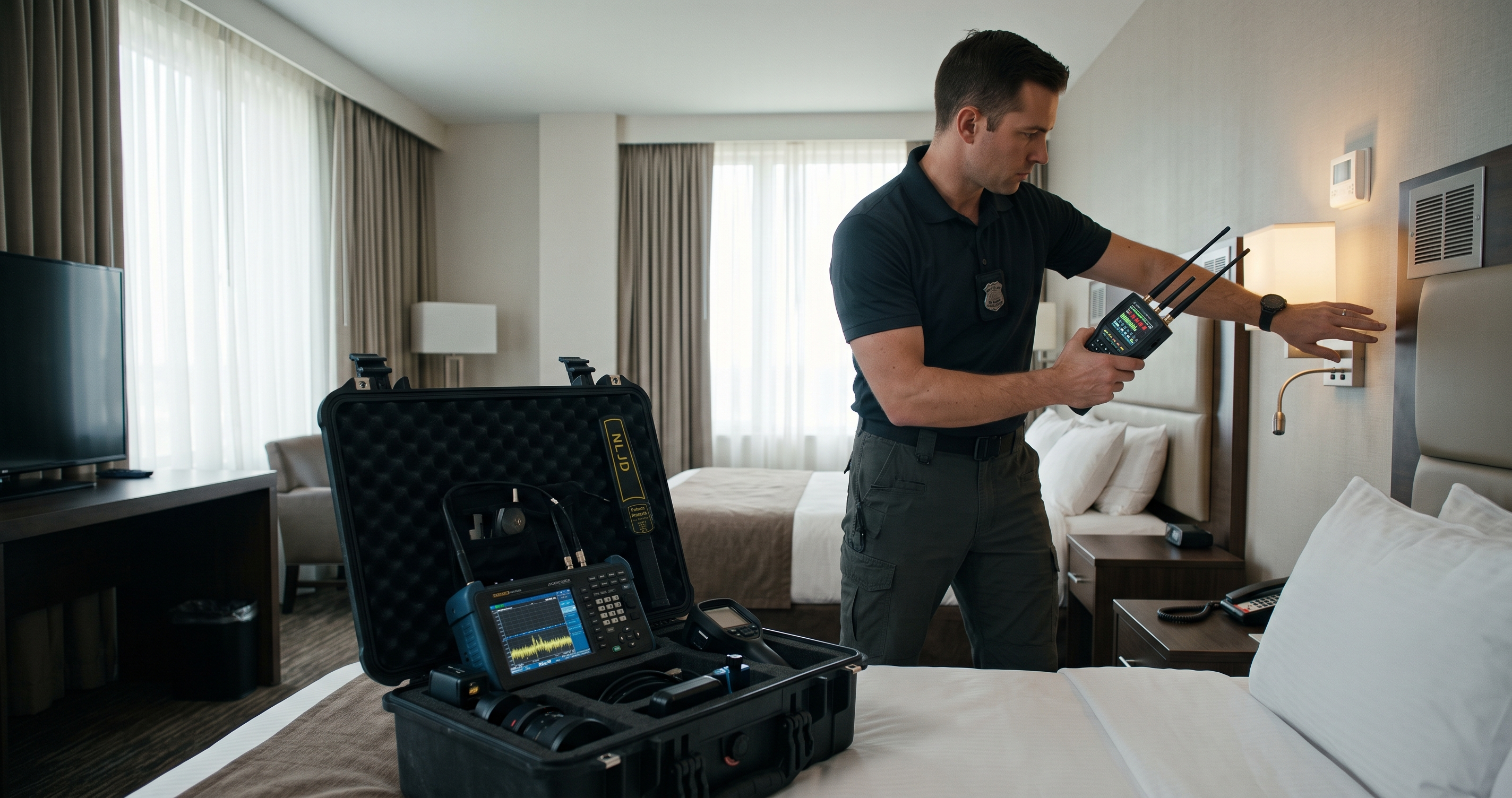

Guest privacy is a fundamental concern for hotels, business travellers, and hospitality professionals. With growing awareness of covert surveillance risks, protecting private conversations and personal activities has become an important part of modern security planning. Hotel room bug sweepers are professional detection services or specialised tools used to identify potential hidden cameras, unauthorised listening devices, and other forms of covert surveillance in hotel rooms and related private spaces.
Unlike conventional room inspections, professional technical surveillance countermeasures (TSCM) assessments focus on identifying electronic surveillance risks that may not be visible during a routine housekeeping check. Hidden devices can potentially be concealed within ordinary objects, electronic equipment, or room fixtures. However, not every unusual object or electronic signal indicates surveillance, which is why inspections should be conducted by trained professionals using appropriate equipment and investigative methods.
For hotel operators, corporate security teams, and travellers with heightened privacy concerns, understanding how these inspections work can help them make informed decisions. A structured approach can also support incident response, protect sensitive information, and reinforce confidence in the privacy of accommodation spaces.
What Are Hotel Room Bug Sweepers?
The term hotel room bug sweepers generally refers to professionals or specialised services that inspect hotel rooms for potential covert surveillance devices. In the security industry, this work is commonly associated with TSCM, which stands for technical surveillance countermeasures.
A TSCM inspection involves assessing a location for signs of unauthorised monitoring. Depending on the scope of the engagement, the inspection may cover radio-frequency emissions, suspicious electronic equipment, physical signs of tampering, and other indicators that warrant further investigation.
The objective is not simply to find unfamiliar objects. Instead, a professional assessment is designed to determine whether potential surveillance equipment or security vulnerabilities are present and whether additional investigation is justified.
Why Are Hotel Rooms Potential Privacy Risks?
Hotel rooms are temporary private spaces where guests may discuss confidential business matters, handle sensitive documents, or conduct personal activities. People generally expect these activities to remain private.
Several factors can make hotel security assessments important:
-
Frequent occupancy changes: Rooms are used by different guests and accessed by authorised staff for cleaning and maintenance.
-
Sensitive business discussions: Executives and travelling professionals may discuss confidential commercial information.
-
Temporary environments: Guests often have limited knowledge of a property's equipment, maintenance history, and security procedures.
-
Electronic connectivity: Wi-Fi networks and connected devices can complicate the assessment of unusual electronic activity.
-
Reputational concerns: A credible privacy incident can affect guest confidence and a hotel's reputation.
These factors do not mean that hotel rooms are routinely monitored. They demonstrate why privacy concerns should be assessed carefully and supported by evidence rather than assumptions.
How Do Hotel Room Bug Sweepers Detect Potential Surveillance Devices?
Professional detection services use a combination of technical equipment, physical inspection, and analytical procedures. The methods selected depend on the location, the suspected threat, and the inspection's objectives.
No single detection method can identify every possible surveillance device under all conditions. For this reason, comprehensive assessments often combine several complementary techniques.
Radio-Frequency Detection
Some covert cameras and listening devices transmit information wirelessly. Radio-frequency (RF) detection equipment can help identify signals that may require further examination.
During an inspection, a qualified technician may assess the electromagnetic environment and investigate unusual transmissions that appear relevant to the security concern.
However, RF activity can also originate from legitimate equipment, including Wi-Fi access points, mobile phones, Bluetooth devices, and wireless hotel systems. Consequently, a detected signal should not automatically be interpreted as evidence of surveillance.
The findings must be evaluated in context, with legitimate sources distinguished from suspicious activity wherever possible.
Physical and Visual Inspection
Technical equipment is only one part of a professional assessment. Physical inspections may be used to identify unfamiliar equipment, signs of tampering, or objects that do not appear consistent with the room's normal configuration.
Depending on the agreed scope, attention may be given to electronic equipment, furnishings, fixtures, and other areas where unauthorised modifications could have been made.
The inspection should be conducted systematically, without damaging hotel property or unnecessarily disrupting guests.
Detection of Optical Devices
Some covert cameras rely on optical components that may be detectable through specialised inspection techniques. Certain tools can assist with identifying possible camera lenses or reflective optical surfaces.
Nevertheless, reflections can also be produced by ordinary materials, decorative objects, and legitimate electronic equipment. Optical detection should therefore be treated as one investigative method rather than definitive proof that a camera is present.
Where a suspicious object is identified, additional examination may be required to establish its purpose and determine whether it represents a genuine privacy risk.
Inspection of Electronic Equipment
Some surveillance devices may be integrated into ordinary electronic products or installed in equipment that has been modified without authorisation.
A professional inspection may assess suspicious equipment, visible connections, unexpected modifications, and other indicators relevant to the suspected threat.
Specialists should distinguish between legitimate hotel technology and equipment that requires further investigation. This helps reduce false alarms and ensures that findings are based on reasonable technical evidence.
When Should Hotels Consider Professional Bug Sweeping Services?
Hotels may consider professional surveillance detection when a specific security concern arises or when a broader privacy assurance programme is required.
The need for an inspection should be evaluated according to the circumstances rather than based on general fears about hidden devices.
After a Credible Privacy Concern
A guest complaint, suspicious discovery, or report of unauthorised recording may justify a more detailed assessment.
In these situations, hotel management should follow an established incident response process. The affected area may need to be secured while the concern is evaluated by qualified security professionals.
Potential evidence should be preserved, and any suspected device should be handled in accordance with applicable laws and professional guidance.
Before High-Profile Guest Arrivals
Some accommodation providers host government representatives, corporate executives, public figures, or individuals with heightened security requirements.
Where justified by a risk assessment, hotel room bug sweepers may be engaged to inspect designated rooms before occupancy. Similar arrangements may be considered for private meeting spaces and executive accommodation.
The scope should be documented in advance so that the client understands what will be examined and what limitations may apply.
During Corporate Travel Security Planning
Businesses that regularly send employees overseas may have privacy requirements that extend beyond transport and accommodation arrangements.
A corporate travel security programme can include hotel selection criteria, confidential meeting procedures, device security, and specialist inspections when warranted by the threat assessment.
This approach allows resources to be directed towards locations and situations where a documented risk justifies additional protection.
What Should You Expect During a Professional TSCM Inspection?
A credible inspection should follow a defined process, with the scope, methods, and reporting requirements established before work begins.
Although procedures vary between providers, several stages are commonly involved.
1. Initial Risk Assessment
The inspection usually begins with a discussion about the location, the reason for the assessment, and any known concerns.
The technician may ask about the room's use, previous incidents, relevant access arrangements, and the type of information that requires protection.
This information helps determine the appropriate inspection scope and equipment.
2. Technical and Physical Examination
The agreed areas are assessed using suitable detection methods. Technical observations may be recorded, and suspicious findings may be examined further where appropriate.
The inspection should be performed in a controlled and methodical manner. Legitimate equipment and environmental conditions must be considered before a finding is classified as suspicious.
3. Assessment of Findings
Potential concerns are evaluated to determine whether they indicate a credible surveillance risk.
Not every anomaly will require corrective action. Some findings may be explained by normal electronic activity, standard hotel equipment, or harmless physical features.
Where a concern cannot be resolved during the initial inspection, additional technical examination may be recommended.
4. Reporting and Recommendations
A professional service should provide a clear explanation of the work completed and its findings.
Depending on the agreement, the report may include:
-
The areas and systems covered by the inspection.
-
The general methods used.
-
Relevant findings and their assessed significance.
-
Any limitations that affected the assessment.
-
Recommended corrective or investigative actions.
A written report helps clients understand what was examined and supports follow-up decisions. It should not imply that every conceivable surveillance device has been ruled out if the inspection had limitations.
How Can You Choose Reliable Hotel Room Bug Sweepers?
Selecting an appropriate service provider is important because surveillance detection requires technical knowledge, sound judgement, and careful handling of sensitive information.
The quality of an inspection depends on more than the number of devices used or the equipment advertised by a provider.
Review Technical Experience
Look for providers with relevant experience in TSCM, electronic surveillance detection, and security assessments.
Ask whether the team has experience with hospitality environments and whether its inspection methods are appropriate for the concerns you need to address.
Professional training, relevant qualifications, and documented procedures can help demonstrate competence. However, credentials should be assessed alongside practical experience and the provider's ability to explain its methodology.
Ask About Equipment and Inspection Methods
A reliable provider should be able to explain the general categories of equipment and methods used during an assessment.
The service should be appropriate for the suspected threat rather than relying on a single handheld detector for every situation.
Before booking, establish whether the inspection includes physical examination, RF analysis, optical detection, or other relevant methods. Confirm any exclusions so that the expected level of coverage is clear.
Check Confidentiality and Reporting Practices
Security inspections may involve sensitive business information, personal concerns, or details about hotel operations.
The provider should explain how inspection records are stored, who can access the findings, and how confidential information will be handled.
Written terms should also clarify the reporting format, inspection duration, areas covered, and procedures for escalating credible concerns.
Be Cautious of Guaranteed Results
No responsible inspection can guarantee that every possible surveillance device will be detected in every circumstance.
Some devices may be inactive, may not transmit during the inspection, or may fall outside the assessment's technical scope.
A trustworthy provider will explain these limitations clearly and avoid unsupported claims. Transparent reporting is more valuable than an absolute guarantee that cannot be substantiated.
Hotel Room Bug Sweepers and Guest Privacy Responsibilities
Privacy protection is a shared responsibility involving hotel management, security professionals, employees, and guests.
Hotels should maintain clear procedures for handling privacy complaints and suspicious discoveries. These procedures should be proportionate, documented, and consistent with local laws.
Establish Clear Incident Response Procedures
When a potential surveillance device is reported, staff should know whom to notify and how the concern will be escalated.
An appropriate response may involve securing the affected area, documenting the initial report, contacting qualified specialists, and consulting legal or law enforcement authorities when warranted.
Unauthorised removal or alteration of suspected equipment may compromise evidence. The response should therefore be guided by the circumstances and relevant professional advice.
Protect Guest Information
Technical inspections should be conducted with respect for guest privacy and property rights.
Access should be authorised, inspection activities should remain within the agreed scope, and confidential information should not be collected unnecessarily.
These safeguards help ensure that a service intended to protect privacy does not create additional privacy concerns.
Maintain Realistic Security Expectations
A completed inspection provides information about the conditions observed within a particular scope and period. It cannot guarantee that a location will remain free of surveillance indefinitely.
Hotels can strengthen their approach through staff awareness, access controls, equipment maintenance, incident reporting, and periodic risk reviews.
Where a specific threat has been identified, follow-up assessments may be appropriate based on the recommendations of qualified security professionals.
Final Thought
Hotel room privacy deserves careful attention, particularly when guests are handling confidential information or facing specific security concerns. Hotel room bug sweepers provide a specialised approach to identifying potential hidden cameras, listening devices, and other covert surveillance risks through technical analysis and physical inspection. For hotels, corporate security teams, and travellers with heightened privacy requirements, choosing a qualified TSCM provider can support informed decisions and more effective incident management. The strongest approach combines professional inspections with clear reporting, realistic expectations, and consistent privacy procedures. By relying on evidence-based assessments rather than assumptions, accommodation providers and security-conscious travellers can take practical steps towards protecting sensitive information and maintaining confidence in private spaces.

