


A Practical Guide to Choosing Industrial Ventilation Equipment
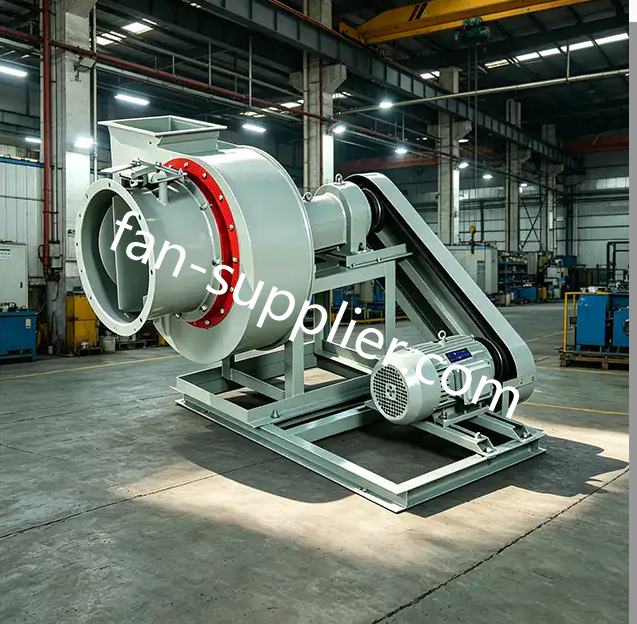
In industrial facilities, effective air movement contributes to equipment operation, workplace comfort, and the management of heat generated by machinery and production processes. When evaluating a CE Certified Industrial Fan, businesses need to understand how its construction, motor system, airflow characteristics, and installation requirements relate to the conditions inside their facilities. A suitable fan is not defined by appearance alone; it must work effectively within the ventilation system and meet the relevant requirements for its intended environment. Reviewing these factors early can help purchasing teams avoid mismatches between equipment capabilities and operational needs.
Material selection influences how industrial fans respond to continuous use and environmental exposure. Fan housings may be manufactured from steel, aluminum, or other suitable materials according to structural requirements, weight considerations, and the surrounding atmosphere. Impellers require appropriate mechanical strength and resistance to fatigue, while protective coatings can help limit deterioration in environments where moisture or corrosive substances are present. Bearings, seals, fasteners, and electrical insulation also affect service life. These components must work together under operating conditions that may include vibration, dust accumulation, and changing temperatures. In specialized environments, material suitability should be considered alongside the equipment's overall protective design. Buyers should request clear information about construction and intended use rather than assuming that a particular housing material guarantees reliability.
A practical purchasing process begins with identifying the problem the fan needs to solve. Some facilities need general air circulation to reduce stagnant areas, while others require localized extraction, equipment cooling, or airflow through a ducted system. The physical layout, location of heat sources, air inlets and outlets, and resistance created by filters or ducts can influence equipment selection. Buyers should also consider the installation surface, access for servicing, electrical arrangements, and interaction with existing ventilation equipment. Environmental conditions matter as well: dust, moisture, corrosive substances, and potentially hazardous atmospheres can require different equipment characteristics. Sharing these details with a supplier helps narrow the available options and makes technical discussions more useful than selecting a fan based on general descriptions alone.
The fan's functional design determines how it moves air through a facility or ventilation network. Axial designs generally move air along the direction of the rotating shaft, making them useful for many direct air-circulation applications. Centrifugal designs redirect air through an impeller and housing, which may suit installations involving ductwork or greater system resistance. The motor provides the mechanical drive, while the impeller shape, blade arrangement, and housing geometry influence the resulting airflow. Protective guards help reduce access to moving parts, and mounting structures support secure installation. These elements must be compatible with the wider system because a fan that performs well in isolation may not deliver the desired result when connected to unsuitable ductwork or placed where airflow is obstructed.
Engineering quality also depends on how components are assembled and checked. Proper alignment helps limit unnecessary vibration, while secure electrical connections and suitable motor protection support safe operation. Balancing the rotating assembly can help reduce mechanical disturbance, and careful inspection can identify damage or irregularities before equipment enters service. For installations requiring specialized protection, the motor, enclosure, wiring arrangements, and other relevant components must be suitable for the stated environment. Where combustible dust or flammable gases may occur, ordinary ventilation equipment should not be assumed safe. The equipment selection must follow the area's classification and applicable safety requirements, with installation and servicing handled by qualified personnel. Documentation should clearly identify the product's intended application and any conditions that affect its safe use.
User experience in an industrial setting is closely connected to the ease of installation, inspection, and routine maintenance. Accessible service points allow technicians to check bearings, guards, fasteners, and electrical connections without unnecessary disruption. A practical mounting arrangement can simplify integration into existing equipment layouts, while clear installation instructions help maintenance teams understand the required orientation and connection process. Noise and vibration also influence the working environment, so these factors should be considered alongside airflow needs. During operation, staff should remain alert to unusual sounds, excessive vibration, damaged guards, or unexpected changes in airflow. Maintenance schedules based on the manufacturer's guidance help teams identify wear and contamination before these issues interrupt normal facility activities.
Industrial fan design must also account for the visual and physical character of the installation. A compact housing may fit a restricted equipment area, while a different configuration may be more suitable for open mounting or integration with ventilation ducts. The placement of access panels, mounting brackets, cable entries, and protective guards can affect both appearance and serviceability. Finishes should suit the surrounding environment, particularly where equipment is exposed to moisture, dust, or regular cleaning. A tidy, clearly organized installation can also make it easier for personnel to identify equipment and perform inspections. Nevertheless, visual consistency should never replace appropriate engineering, verified safety suitability, or access for maintenance.
Zhejiang Shenli Explosion proof Electromechanical Co., Ltd. operates in the industrial fan and explosion-proof electromechanical equipment sector. Businesses planning a ventilation project can discuss the working environment, airflow objectives, installation arrangement, maintenance practices, and applicable safety requirements with the company. For installations where hazardous atmospheres may be present, it is particularly important to confirm that the proposed equipment and its supporting documentation match the specific application. Further information about the company's products and industrial ventilation solutions is available at https://www.fan-supplier.com.
Categories
- Artificial Intelligence (AI)
- Technology
- Business
- Education
- Science
- Lifestyle
- Healthcare
- Entertainment
- Politics
- Environment
- Travel
- Finance
- Automobile
- News
- Art
- Causes
- Crafts
- career
- Dance
- Drinks
- Film
- Fitness
- Food
- Games
- Gardening
- Health
- Home
- Literature
- Music
- Networking
- Other
- Party
- Religion
- Shopping
- Sports
- Theater
- Wellness
Read More
The Smart Agriculture Solution Market is becoming an essential part of modern agriculture as farmers seek innovative ways to increase productivity while maintaining environmental sustainability. Rapid technological advancements have introduced intelligent farming systems that simplify complex agricultural operations and improve overall farm performance. As per Market Research Future, the market...

The Portable Ultrasound Instrument Market is playing an increasingly important role in modern healthcare by enabling fast, accurate, and non-invasive diagnostic imaging wherever patient care is needed. Portable ultrasound instruments have evolved from bulky imaging systems into compact, lightweight, and highly sophisticated devices that can be used in hospitals, emergency departments,...
The first rate Hot-Dip Galvanizing market report is a magnificent source that gives CAGR values with varieties during the estimate time of 2025-2034 for the market. The review incorporates market drivers and restrictions by utilizing SWOT investigation, alongside their effect on the interest over the conjecture period. This worldwide statistical surveying report enriches with a significant...

The planar solid oxide fuel cell market is expanding rapidly as governments, utilities, and industrial users invest in advanced fuel cell technologies to improve energy efficiency and reduce carbon emissions. Innovations in ceramic materials, electrolyte design, electrode performance, stack architecture, and system integration are improving durability, efficiency, and operational flexibility....
The Distribution Transformer Market size is expected to reach US$ 38.72 Billion by 2033 from US$ 23.85 Billion in 2025. The market is estimated to record a CAGR of 6.24% from 2026 to 2033. For senior management, Distribution Transformer Market is primarily a portfolio-allocation question. The strategic issue is where network modernization and industrial automation create defensible positions,...
