


Large Language Models are transforming how people write content, answer questions, generate ideas, and solve problems. These models power many modern AI applications, including chatbots, virtual assistants, and AI-powered writing tools. One important concept behind their capabilities is the number of parameters they contain. Understanding parameters and model size helps you learn how AI models process information and generate responses. If you want to build a strong foundation in generative AI, consider enrolling in a Gen AI Course in Bangalore at FITA Academy to explore how modern AI models work.
What Are Parameters in Large Language Models?
Parameters are internal numerical values that a model learns during training. They help the model identify patterns in language, understand relationships between words, and generate meaningful responses.
You can think of parameters as adjustable settings inside an AI system. During training, the model updates these values by learning from large amounts of text and other data. These adjustments help it predict suitable words and produce relevant outputs.
For example, when a model learns from sentences about weather, it may recognize that words such as rain, clouds, and temperature often appear in related contexts. Parameters help the model capture these patterns without storing every sentence as a fixed rule.
What Does Model Size Mean?
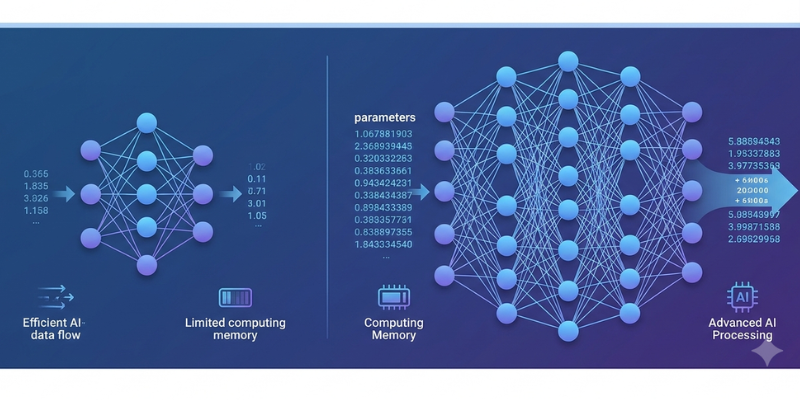
Model size refers to the scale of a language model. It is often described by the number of parameters the model contains. Models may have millions, billions, or even hundreds of billions of parameters.
A model with 7 billion parameters is commonly called a 7B model, while a model with 70 billion parameters is called a 70B model. These numbers provide a simple way to compare the scale of different models.
However, a larger model is not automatically better for every task. Performance also depends on training data, model architecture, training methods, and how well the model is adapted to a particular purpose.
How Do Parameters Affect AI Performance?
Parameters help a language model learn complex relationships in its training data. Models with more parameters can often represent more detailed patterns, which may improve their ability to handle difficult questions, follow instructions, and generate natural-sounding text.
However, adding parameters alone does not guarantee better results. A smaller model trained on high-quality data may perform better than a larger model trained on poor-quality data.
The task also matters. A compact model may be sufficient for classifying customer feedback or answering simple questions. More complex tasks may benefit from a larger model with stronger reasoning and language capabilities.
The Relationship Between Model Size and Memory
Model size directly affects the computing resources needed to run an AI model. Parameters must be stored in memory during inference, and their numerical precision influences how much memory they require.
For example, a model with 7 billion parameters stored at 16-bit precision requires approximately 14 GB of memory just for its parameter weights. Additional memory is needed for other operations, including the context being processed.
Larger models generally require more memory, computing power, and energy. They may also cost more to operate. Techniques such as quantization can reduce memory requirements by representing parameters with fewer bits, although this may affect accuracy in some situations.
Small Language Models vs Large Language Models
Small and large language models serve different needs. Small models are often faster, less expensive to run, and easier to deploy on devices with limited computing resources.
Large models can offer stronger performance across a wider range of tasks, particularly when those tasks require broad knowledge or complex language understanding. However, they may need specialized hardware and greater operational budgets.
Selecting the appropriate model relies on your specific application, the needed accuracy, the speed of response, privacy considerations, and the resources at your disposal. The goal is to find a model that delivers the required results without unnecessary complexity.
Why Understanding Parameters Matters
Understanding parameters and model size provides valuable insight into how generative AI systems are built and deployed. It helps developers compare models, estimate hardware requirements, and make informed decisions when selecting AI solutions.
Parameters are only one part of the picture. Training quality, architecture, data, inference settings, and evaluation methods also influence how well a model performs. Learning these concepts together makes it easier to understand modern AI technologies and their practical applications.
Parameters and model size are fundamental concepts in Large Language Models. Parameters represent learned numerical values, while model size describes the scale of a model, often through its parameter count. While bigger models may provide enhanced functionalities, the optimal selection is determined by the specific task, available resources, and anticipated performance. If you want to strengthen your technical knowledge and explore practical AI applications, take an Artificial Intelligence Course in Bangalore to develop a deeper understanding of AI fundamentals and machine learning concepts.
Also check: How Large Language Models Power Generative AI?

