

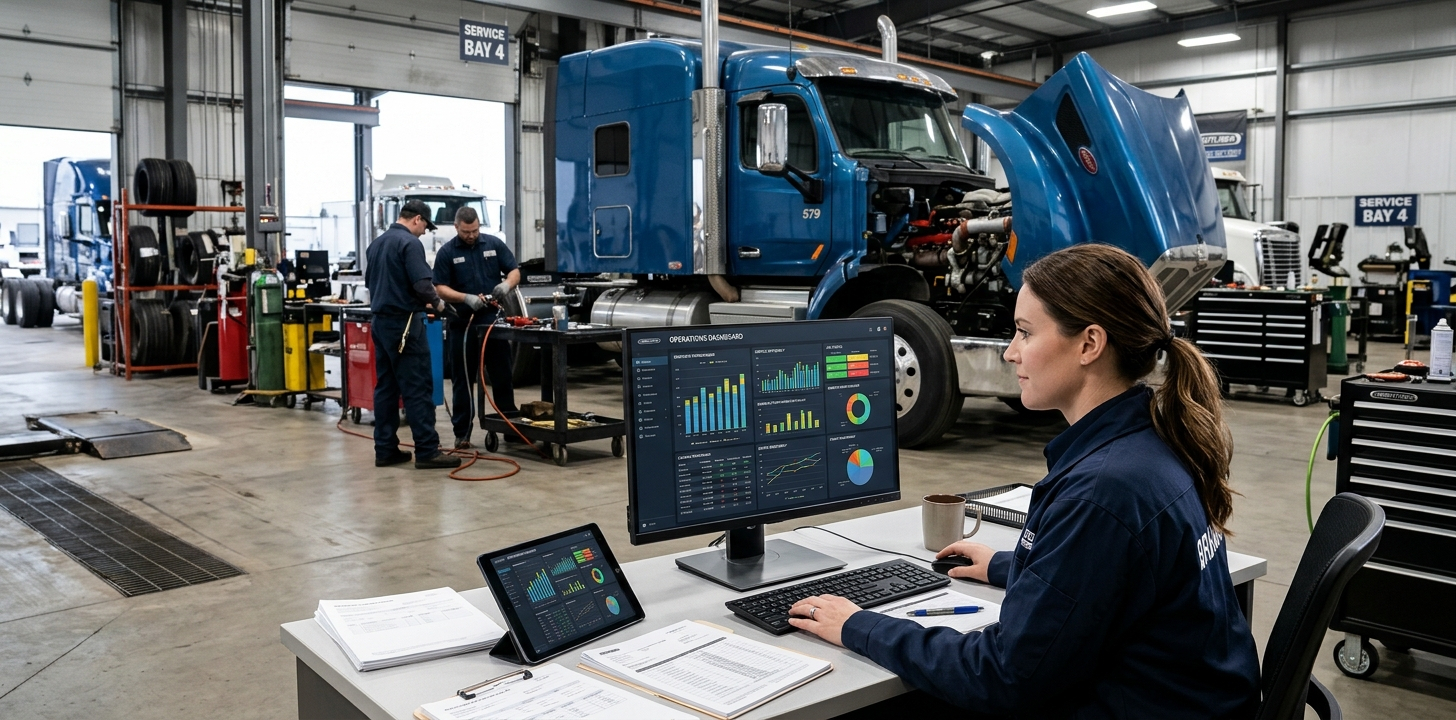

Running a repair shop involves more than completing service jobs and keeping technicians busy. Managers also need to understand how work progresses, where time is being spent, which costs are changing, and whether daily operations are producing the expected results. These answers often exist within work orders, labor entries, parts records, invoices, and scheduling information. The challenge is turning those separate details into a clear picture of overall performance.
When information is scattered across spreadsheets, paper documents, and disconnected systems, it can take considerable effort to identify patterns. A manager might notice that jobs are taking longer than expected without knowing whether the cause is parts availability, inaccurate estimates, scheduling conflicts, or the complexity of the repairs. Reviewing individual records may explain one situation, but understanding recurring trends requires a more connected approach.
Repair shop management reporting software can help organize operational information into reports that are easier to review and interpret. Rather than relying entirely on manual calculations or scattered records, managers can use structured information to investigate performance, improve planning, and make more informed decisions.
For Fullbay, which focuses on software for heavy-duty repair shops, the connection between everyday service activity and useful business information is an important part of modern shop management. Better reporting begins with reliable records and continues with the ability to turn those records into practical insights.
Why Performance Reporting Matters in Repair Operations
Every completed repair creates information that can help managers understand how the business operates. Work orders document the services performed, technician records capture labor activity, parts records show material usage, and invoices provide details about charges. When these elements are reviewed together, they can explain much more than any single record can reveal.
Consider a repair that requires significantly more time than originally estimated. Looking only at the final invoice may not explain what happened. The additional time could reflect a complicated diagnosis, an unexpected repair requirement, a delay in receiving components, or an estimating process that needs improvement. Comparing the relevant records gives managers a better starting point for investigating the difference.
Performance reporting also helps prevent decisions based on isolated experiences. One delayed job does not necessarily indicate a scheduling problem, and one unusually profitable repair does not establish a consistent trend. Reviewing information across multiple jobs and suitable time periods helps managers distinguish individual exceptions from patterns that deserve attention.
The objective is not to measure everything simply because the information is available. It is to identify which measures support the shop's operational priorities and provide enough context to guide the next decision.
Connect the Information Behind Every Job
Reliable reporting depends on how well a shop connects its records. If work orders, technician time entries, parts usage, and invoices cannot be linked consistently, managers may struggle to understand the complete history of a repair.
A practical first step is to establish consistent identifiers and recordkeeping procedures. Each job should have a clear reference that connects its relevant documents and entries. Customer details, vehicle information, repair descriptions, and job statuses should also follow consistent conventions wherever possible.
This structure makes it easier to investigate questions such as whether certain repair types regularly exceed their estimates or whether particular jobs frequently wait for parts. It also reduces the need to search through multiple files to reconstruct what happened.
Three record categories deserve particular attention:
-
Work order and job-status information: These records show what work has been requested, what stage each job has reached, and whether outstanding approvals or additional services are affecting progress.
-
Labor and parts information: Technician time entries and component usage help explain the resources required to complete a repair and provide context for comparing actual results with estimates.
-
Financial and invoice records: Charges, adjustments, and related transaction details help managers understand how completed work is reflected in financial results.
Connecting these records creates a stronger foundation for meaningful reporting. However, consistency remains essential. Missing labor entries, duplicate work orders, and incomplete job statuses can distort results, even when a reporting system presents the information clearly.
Choose Performance Measures That Answer Useful Questions
A report is most valuable when it answers a specific management question. Total completed jobs, for example, can indicate how much work has moved through the shop, but the number alone does not reveal how complex those jobs were or how much time they required.
Managers should therefore select measures that reflect the questions they need to investigate. Workflow reports may help identify accumulating work. Labor comparisons can highlight differences between estimated and recorded hours. Parts information may reveal recurring supply issues, while financial reports can help explain changes in charges or adjustments.
Repair shop management reporting software can support these comparisons when the underlying information is recorded consistently and the available reporting functions match the shop's needs.
The following table illustrates how common performance measures can be connected to practical management questions.
| Reporting category | Example measure | What managers can investigate |
|---|---|---|
| Workload | Open jobs by status | Where work is accumulating and which jobs need attention |
| Completion | Elapsed time from job opening to completion | Whether repair timelines are changing |
| Labor | Estimated versus recorded hours | Which jobs require closer review of estimates or procedures |
| Parts | Parts usage by work order | Whether material requirements are recorded consistently |
| Financial activity | Charges and adjustments by job | What may be influencing the final billed amount |
| Record quality | Missing or incomplete job details | Where documentation procedures need improvement |
These measures should not be treated as universal performance targets. Each shop needs to establish definitions that reflect its own processes. For example, elapsed repair time may include waiting periods, while active labor time measures a different part of the job. Comparing the two without understanding their definitions could lead to misleading conclusions.
Managers should also consider job complexity and workload conditions before drawing conclusions. A longer repair may be entirely reasonable if it involves an unusual fault or additional work approved during service.
Turn Reports Into Practical Operational Improvements
Reports become useful when managers act on what they reveal. Reviewing a dashboard without investigating unusual results or making follow-up decisions adds little value. A consistent reporting routine can help connect observations with specific operational changes.
Improve scheduling and job visibility
A report showing open jobs by stage can help managers identify where work is waiting. If several repairs remain pending because of approvals or unavailable components, the shop can investigate those delays and adjust its planning.
This does not mean every job should be completed as quickly as possible regardless of circumstances. Repairs vary in complexity, and some require additional diagnostic work. The goal is to understand the reasons behind delays and make realistic decisions about workload, priorities, and communication.
Review labor estimates and actual performance
Comparing estimated labor with recorded hours can reveal patterns worth investigating. If similar repairs regularly take longer than expected, managers may need to review estimating assumptions, diagnostic procedures, technician support, or the way additional work is documented.
The report should be used as a starting point for investigation rather than as an automatic judgment of individual performance. Differences may reflect job complexity, missing information, or circumstances outside a technician's control.
Understand parts-related delays and costs
Parts records can help managers identify recurring shortages, purchasing concerns, or inconsistencies in job documentation. When component usage is linked to work orders, it becomes easier to understand which repairs required particular materials and whether the recorded information supports the final job record.
Any purchasing decision should account for factors such as supplier lead times, component availability, and the consequences of a shortage. Historical usage can inform planning, but it should not replace professional judgment.
Compare financial and operational results
Financial information is more informative when reviewed alongside the activity that produced it. A change in billed revenue may reflect a different number of completed jobs, a shift in repair complexity, changes in pricing, or adjustments made during invoicing.
Looking at these factors together helps managers investigate the reasons behind a change instead of assuming that one figure explains the entire result.
What to Look for in Reporting Software
Selecting a reporting platform requires more than comparing the number of dashboards or available charts. The system should make relevant information easier to maintain, connect, and interpret within the shop's existing workflow.
Repair shop management reporting software should be evaluated according to the practical questions the business needs to answer. Managers should consider whether work orders, labor details, parts information, and financial records can be brought together in useful reports. They should also examine how easily staff can find information, filter results, and investigate individual transactions behind an overall figure.
Other considerations include:
-
Data consistency: The system should support clear recordkeeping practices and make incomplete or inconsistent information easier to identify.
-
Report flexibility: Managers should be able to review relevant categories and time periods without rebuilding every report manually.
-
Ease of use: Staff should be able to enter and locate information without adding unnecessary administrative complexity.
-
Access and accountability: Appropriate permissions and clear procedures can help ensure that records are maintained and reviewed responsibly.
-
Fit with daily operations: Reporting functions should support actual service workflows rather than forcing the shop into processes that do not suit its needs.
Fullbay is a relevant option to explore when evaluating software designed for heavy-duty repair operations. Shops should review the platform's available features against their own reporting requirements and confirm which functions meet their needs. Demonstrations using realistic work orders and reporting scenarios can help reveal whether a system provides the necessary visibility.
The best solution is not necessarily the one with the most features. It is the one that helps the business access dependable information and use it to improve decisions.
Establish a Consistent Reporting Routine
Even well-designed reports can lose their value if nobody reviews them consistently. A practical routine gives managers an opportunity to identify changes, investigate unusual results, and check whether earlier improvements are working.
The review schedule should reflect the purpose of each report. Active job status may require frequent attention, while broader financial or operational patterns may be more meaningful when compared across suitable periods. Managers should avoid changing definitions from one review to the next, because inconsistent measurement makes comparisons less reliable.
Each review should also lead to a clear next step when an issue is identified. If several jobs are delayed by missing parts, for example, the manager can investigate purchasing procedures and monitor whether the same issue continues. If labor overruns appear repeatedly, the next step may involve reviewing estimates or repair documentation.
Documentation matters here as well. Recording what was observed, which action was taken, and what happened afterward helps the shop determine whether a change produced the intended outcome. It also prevents teams from repeatedly investigating the same issue without building on previous findings.
Most importantly, managers should communicate the purpose of reporting to staff. Accurate records are easier to maintain when employees understand how the information supports scheduling, service documentation, cost review, and customer updates. Reporting should be treated as a shared operational tool, not simply an administrative requirement.
Conclusion
Clear performance insights begin with reliable information. When work orders, labor entries, parts records, and financial details remain disconnected, managers may spend too much time reconstructing individual jobs and too little time understanding the patterns that influence operations.
Connecting these records makes it easier to investigate delays, compare estimates with actual results, review parts usage, and understand financial changes. The greatest benefit comes when reports answer practical questions and lead to specific actions that can be reviewed over time.
For shops considering digital tools, Fullbay provides a relevant starting point for exploring software designed for heavy-duty repair operations. The right approach is to evaluate how well a platform supports accurate records, connected information, and the reports needed for everyday management.
With consistent data practices and a regular review process, repair shops can move beyond collecting information and use it to develop a clearer, more useful understanding of performance.
Frequently Asked Questions
1. What is repair shop performance reporting?
Repair shop performance reporting involves organizing operational and financial information into reports that help managers understand workload, job progress, labor usage, parts activity, and other relevant measures. Its purpose is to support informed decisions rather than simply display numbers.
2. Which metrics should a repair shop monitor?
Useful measures may include open work orders, job completion times, estimated versus recorded labor, parts usage, invoice adjustments, and record completeness. The most appropriate metrics depend on the shop's processes and management priorities.
3. How can connected records improve repair shop decisions?
Connected records allow managers to compare information from different stages of a job. This can make it easier to investigate delays, understand cost differences, improve estimates, and identify recurring issues that might otherwise remain hidden.
4. What should a shop consider when choosing reporting software?
Important considerations include the ability to connect relevant records, report flexibility, ease of use, data quality controls, appropriate access permissions, and compatibility with existing workflows. Evaluating realistic examples can help establish whether a platform meets the shop's needs.
5. How often should performance reports be reviewed?
The frequency depends on the purpose of each report. Managers may review active job statuses frequently and assess broader operational trends at regular intervals. Consistent definitions and follow-up actions are essential for making those reviews useful.

