

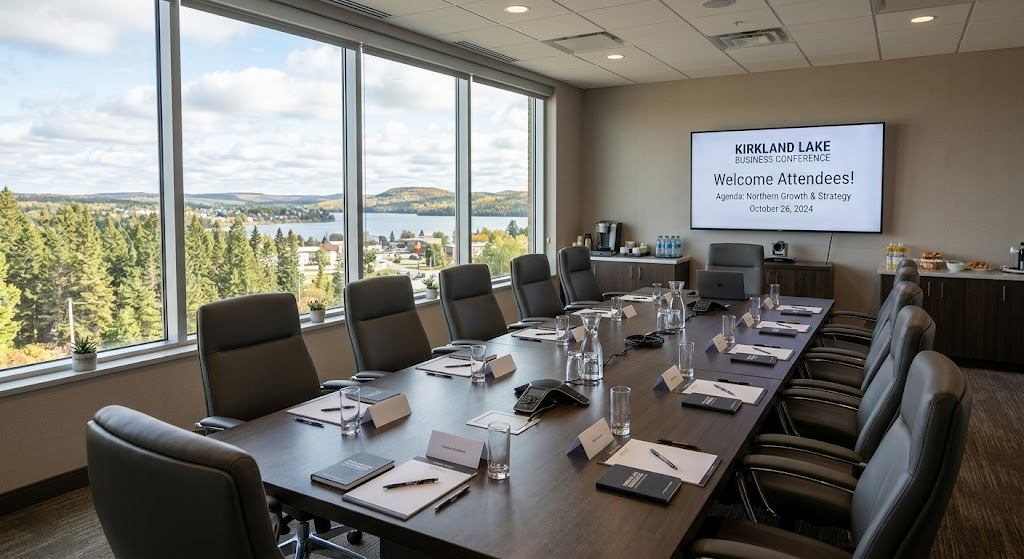
Hotel Meeting Rooms in Kirkland Lake: A Practical Guide to Planning Business Events

Finding the right space for a business meeting shouldn’t be complicated, but anyone who has tried to book hotel meeting rooms in Kirkland Lake on short notice knows it can take more effort than expected. Whether you’re organizing a quarterly sales review, a client presentation, a training session, or a small conference, the venue you choose shapes how the event is received. This guide walks through what to look for, what to ask, and how to plan a business event in Kirkland Lake that runs smoothly from start to finish.
Why Hotel Meeting Rooms Work Well for Business Events
Hotels offer a practical middle ground between a formal conference centre and a makeshift office space. A good hotel meeting space in Ontario typically comes with built-in advantages: on-site parking, catering options, nearby accommodations for out-of-town attendees, and staff who are used to handling last-minute requests. For a town like Kirkland Lake, where dedicated event venues are limited, hotels often serve as the default and frequently the best option for professional gatherings.
The appeal isn’t just convenience. Hotels are designed for hospitality, which means attendees are more likely to be comfortable, well-fed, and able to focus on the actual purpose of the meeting rather than logistics.
What to Look for in a Business Meeting Venue
Not every meeting room is suited to every type of event. Before booking, it helps to assess a venue against a few core criteria.
Room Size and Layout Flexibility
A venue advertised as a “meeting room” can mean very different things. Some spaces seat eight people around a boardroom table; others can be reconfigured into theatre-style seating for fifty. When evaluating business meeting venues in Kirkland Lake, ask about:
- Maximum and minimum capacity
- Available seating arrangements (boardroom, classroom, theatre, U-shape)
- Whether walls or dividers can adjust the space for different group sizes
- Ceiling height and natural light, which affect comfort during longer sessions
Technology and Connectivity
A professional meeting depends on reliable technology. Confirm the room includes a stable Wi-Fi connection, a projector or large display screen, a conference phone or video-conferencing setup if remote attendees are joining, and sufficient power outlets for laptops and devices. In smaller markets, not every venue invests equally in AV equipment, so it’s worth asking specific questions rather than assuming a “business centre” label covers everything you need.
Catering and Refreshments
Food and beverage service can make or break the experience of a full-day meeting. Many hotels offer tiered catering packages, from simple coffee and pastries to full working lunches. If dietary restrictions are a factor for your group, confirm in advance that the kitchen can accommodate them.
Small Conference Venues in Northern Ontario: What Makes the Region Different
Northern Ontario presents a different set of considerations than booking a venue in a major city. Travel distances between communities are longer, so attendees often arrive the night before and need accommodation on-site. Seasonal weather, particularly in winter, can affect travel plans and makes it worth confirming backup arrangements for delayed arrivals.
Small conference venues in Northern Ontario also tend to offer more personalized service than their big-city counterparts, simply because they host fewer events and can give each booking closer attention. This can be a genuine advantage: direct communication with on-site coordinators, more flexibility on room setup, and a willingness to accommodate custom requests that larger properties might decline.
At the same time, availability can be tighter. Smaller markets have fewer venues overall, so popular dates especially during mining industry conferences, municipal events, or regional trade gatherings can book up early.
Planning Your Event: A Practical Checklist
Once you’ve identified a shortlist of venues, a structured planning approach helps avoid last-minute surprises.
- Confirm your attendee count early. Room capacity and catering quantities both depend on an accurate headcount, even if it’s an estimate.
- Book technology needs in writing. Verbal assurances about AV equipment can get lost between booking and event day — get specifics confirmed by email.
- Ask about cancellation and rescheduling policies. Business schedules shift, and knowing the flexibility of your contract protects you from unnecessary costs.
- Visit the space if possible. Photos online can be outdated or taken with wide-angle lenses that misrepresent actual room size.
- Coordinate accommodation blocks for travelling attendees. If your event draws people from outside the area, reserving a room block at the same hotel simplifies logistics for everyone.
- Clarify parking and accessibility. Confirm whether parking is free, how many spaces are available, and whether the venue meets accessibility requirements for all attendees.
Choosing Between a Hotel and a Standalone Venue
For most business events in Kirkland Lake, a hotel meeting room offers more practical value than a standalone conference venue. The combination of meeting space, catering, and guest accommodations under one roof reduces coordination work significantly. Standalone venues can sometimes offer lower rental rates, but they often require outsourcing catering, AV equipment, and overnight stays separately which adds complexity and, frequently, additional cost.
That said, the right choice depends on your event’s specific needs. A half-day internal meeting for a local team may not need overnight accommodations at all, while a two-day regional training session almost certainly will.
Final Thoughts
Planning a successful business event in Kirkland Lake comes down to matching the venue to the actual needs of your meeting room size, technology, catering, and accessibility for attendees travelling from elsewhere in Northern Ontario. Hotels remain a strong default choice because they consolidate so many logistical pieces into a single booking. Starting your search early, asking detailed questions about AV and catering, and confirming cancellation policies will put you in a strong position to run an event that reflects well on your organization.
Frequently Asked Questions
Q1: What size meeting room do I need for a group of 20 people?
A: A boardroom-style setup for 20 people typically requires a room with at least 400–500 square feet, though theatre-style seating can fit more people into a smaller footprint. Always confirm the exact square footage and seating configuration with the venue, since capacity estimates vary by layout.
Q2: Do hotel meeting rooms in Kirkland Lake include Wi-Fi and AV equipment?
A: Most hotels offer Wi-Fi and basic AV equipment such as projectors or screens, but availability and quality vary by property. It’s best to request written confirmation of exactly what’s included before finalizing a booking, especially if video conferencing is required.
Q3: How far in advance should I book a business meeting venue in Northern Ontario?
A: Because small conference venues in Northern Ontario are limited in number, booking at least four to six weeks ahead is recommended for standard meetings, and even earlier for events during peak seasons or when regional conferences are scheduled nearby.

