

Cloud Based Accounting Practice Management Software: A Guide for Modern Accountancy Firms

Managing an accounting practice involves more than preparing accounts and submitting tax returns. Accountants and bookkeepers must also manage client information, allocate work, monitor deadlines, respond to enquiries and coordinate tasks across their teams.
As a practice grows, spreadsheets, email folders and disconnected applications can make these responsibilities harder to manage. Cloud based accounting practice management software offers a way to organise daily operations, improve collaboration and give teams better visibility of their work.
Understanding how these systems operate can help accountancy firms choose tools that suit their workflows and support long-term growth.
What Is Cloud Based Accounting Practice Management Software?
Cloud based accounting practice management software is a digital system that helps accountants organise clients, manage workflows, track deadlines and coordinate practice operations through an internet-connected platform.
Unlike software that relies entirely on a single office computer, cloud-based systems can allow authorised team members to access information from different locations, subject to the provider's access controls and service availability.
These platforms may include features such as:
-
Client and contact management
-
Task allocation and workflow tracking
-
Deadline monitoring and reminders
-
Document management
-
Client communication tools
-
Staff workload monitoring
-
Reporting and practice performance analytics
It is important to distinguish practice management software from accounting software. Accounting applications typically focus on financial transactions, bookkeeping and accounts preparation. Practice management platforms focus on the work involved in delivering accounting services to clients. Some businesses use both types of software together.
Why Are Accounting Firms Moving Towards Cloud-Based Systems?
Traditional practice management methods can become difficult to maintain when a firm manages hundreds of clients and multiple service deadlines.
A task recorded in a spreadsheet might not appear in a colleague's calendar. An important email could remain unanswered in an individual inbox. A manager might have to contact several employees to understand the progress of a client assignment.
Cloud-based systems can bring operational information into a shared workspace, making it easier for authorised staff to see task ownership, progress and upcoming deadlines.
The main benefit is not simply moving information online. It is establishing a consistent process for managing work across the practice.
How Does Practice Management Software Improve Workflow Organisation?
Accounting firms regularly complete recurring tasks, including bookkeeping reviews, VAT returns, payroll processing, year-end accounts and tax return preparation.
Without standardised workflows, employees may rely on personal reminders or previous emails to determine what needs to happen next.
Practice management software can help firms create repeatable workflows with defined stages, responsibilities and due dates.
For example, a client accounts workflow might include:
-
Requesting financial records from the client.
-
Checking whether the required documents have arrived.
-
Allocating the preparation work to an employee.
-
Reviewing the completed accounts.
-
Requesting corrections where necessary.
-
Completing the assignment and recording its status.
A consistent workflow helps reduce uncertainty and makes it easier for managers to identify delayed tasks before deadlines become urgent.
Manage Client Information in One Place
Client information can become scattered across email conversations, spreadsheets, document folders and individual employees' notes.
A central client management system can help authorised team members find relevant contact details, service information, task histories and outstanding actions without searching through several separate locations.
This can be particularly useful when an employee is absent or a client relationship is transferred to another member of the team.
However, centralising information also creates responsibilities around confidentiality and security. Firms should use appropriate access permissions, secure authentication, data backups and retention policies to protect client information.
Improve Communication Between Accountants and Clients
Clear communication is essential to delivering accounting services efficiently. Clients need to know which documents are required, when information should be provided and whether additional action is necessary.
Email remains useful, but managing every client interaction through separate inboxes can make it difficult to maintain a complete picture of outstanding requests.
Client communication and portal features can help firms organise document requests, share relevant information and track follow-up actions.
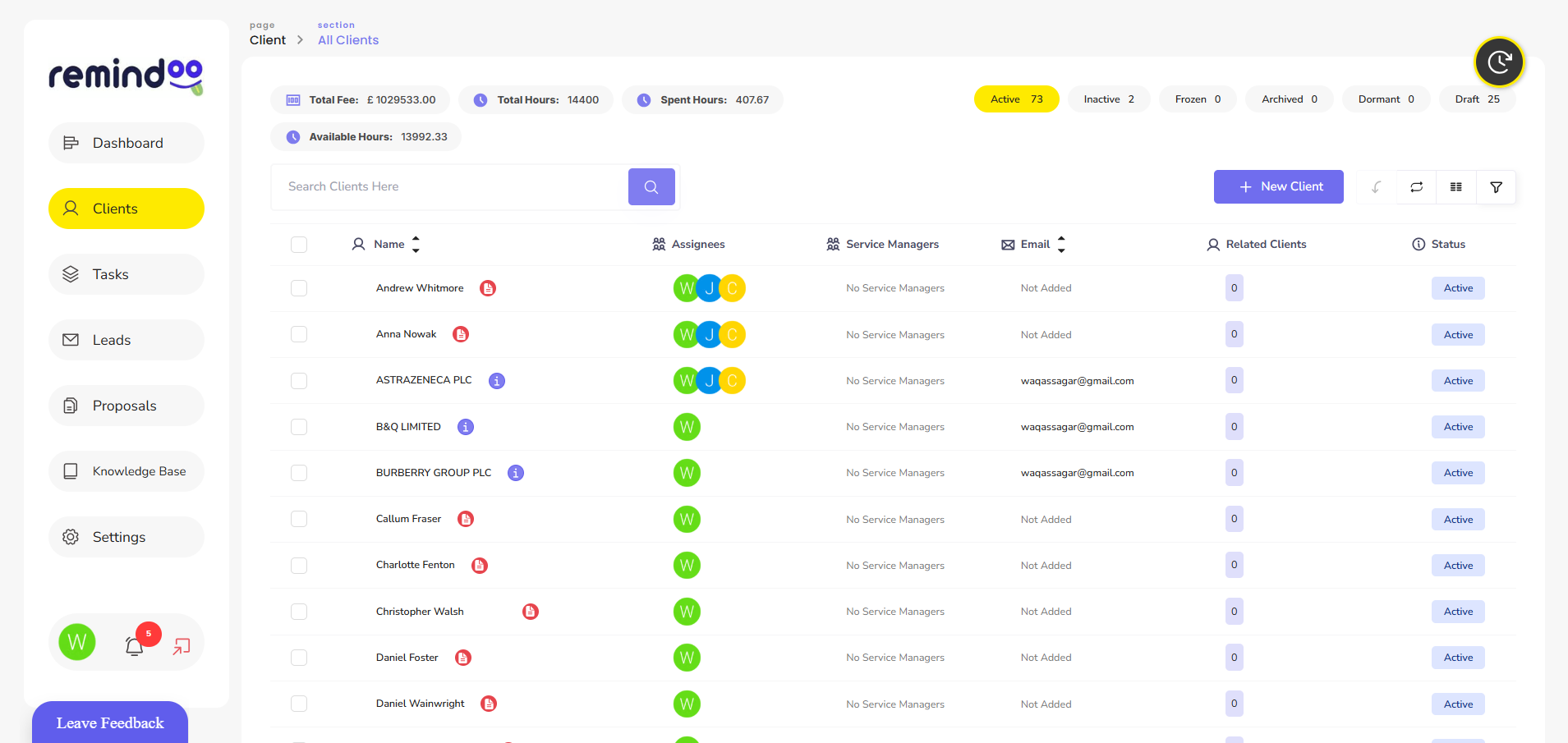
Remindoo is an example of an accounting practice management platform that focuses on practice operations, including client management, workflows, reminders and communication-related processes.
When evaluating a platform, firms should check which communication features are included and whether they fit existing client service procedures.
Keep Track of Accounting Deadlines
Accounting practices work with multiple statutory and internal deadlines. These may include VAT return dates, payroll submissions, Self Assessment deadlines, Corporation Tax obligations and annual accounts filing dates.
Missing a deadline can create additional work and may expose a client to penalties or other consequences, depending on the requirement.
Cloud based accounting practice management software can help firms record important dates, assign responsibility and generate reminders before work becomes overdue.
An effective deadline management process should include more than a calendar entry. Each important deadline should have a responsible team member, a clear task status and enough time allocated for preparation and review.
Automated reminders can support this process, but staff should still verify deadlines and check that work has been completed correctly.
Support Digital Record-Keeping and Compliance Workflows
Digital record-keeping has become an important consideration for UK accounting practices. Firms need to understand which software their clients use, what information must be retained and how relevant records move between systems.
HMRC's guidance on creating digital records for Making Tax Digital for Income Tax explains the requirements for creating and storing digital records and digitally linking records when more than one software product is used.
Practice management software can complement these processes by helping accountants allocate compliance work, monitor client readiness and track outstanding information. However, a practice management platform should not automatically be assumed to satisfy HMRC's software requirements. Firms must verify that the software used for the relevant tax process is compatible with the applicable requirements.
Improve Team Collaboration and Workload Management
Managers need a clear understanding of how work is distributed across the practice. Without visibility of team workloads, one employee may become overloaded while another has capacity to take on additional tasks.
A practice management platform can help managers review assigned work, identify overdue tasks and assess progress across different clients or service areas.
This information can support better decisions about task allocation, staff capacity and recruitment.
For example, if several employees are approaching their busiest period for Self Assessment work, managers can review existing assignments and redistribute suitable tasks before workloads become unmanageable.
The quality of this information depends on consistent use. Employees need to update task statuses accurately for dashboards and reports to reflect actual progress.
What Should Firms Consider When Choosing Cloud Software?
Choosing a platform requires more than comparing feature lists. Accounting firms should consider their existing processes, the size of their team and the types of services they provide.
Important factors include:
Ease of use: Employees should be able to understand the interface and complete routine tasks without unnecessary complexity.
Workflow flexibility: The platform should accommodate recurring work, different service types and the firm's review procedures.
Integration: Check whether the system connects with existing accounting applications, document storage tools, email systems and other software where required.
Security and permissions: Review authentication options, user permissions, data protection arrangements, backup policies and the provider's approach to security incidents.
Reporting: Determine whether managers can monitor workload, task completion, deadlines and operational performance.
Scalability: Consider whether the platform can support additional clients, employees and workflows as the practice grows.
Support and implementation: Assess the onboarding process, training resources and support available when problems arise.
A short trial using representative client workflows can help a firm identify practical limitations before committing to a new system.
How Remindoo Fits Into Accounting Practice Management
Remindoo is a practice management platform for UK accountants and bookkeepers. Its focus is on helping practices organise client-related work, manage tasks and coordinate operational processes.
Features such as client management, workflow tools, reminders, analytics and client communication processes can support firms looking to improve the visibility of day-to-day work.
For example, a practice could use workflow management to organise recurring compliance assignments, allocate responsibilities and monitor progress. Deadline reminders can help staff keep upcoming obligations visible, while reporting can give managers a clearer view of outstanding work.
The suitability of any platform depends on the firm's needs, existing software and implementation approach. Practices should assess whether its available features match their specific processes before adopting it.
Common Mistakes to Avoid When Adopting Cloud Practice Management Software
Even a capable system may deliver limited benefits if it is introduced without clear processes.
Common mistakes include:
-
Moving disorganised processes online: Existing inefficiencies can remain if workflows are not reviewed before implementation.
-
Failing to assign ownership: Every important task should have a clearly defined person responsible for progressing it.
-
Ignoring staff training: Employees need to understand how and when to update records and task statuses.
-
Using too many disconnected applications: Excessive switching between systems can create duplicate work and inconsistent information.
-
Over-relying on automation: Automated reminders and workflows still require human oversight, particularly where deadlines or tax information are concerned.
-
Neglecting security: Firms should regularly review user access and follow appropriate procedures for handling confidential information.
Planning the implementation, standardising workflows and reviewing adoption regularly can help practices gain more value from their investment.
Conclusion
Cloud based accounting practice management software can help accounting firms organise client information, coordinate workflows, monitor deadlines and improve team collaboration. Its greatest value comes from creating consistent processes and making operational information easier to access.
Before choosing a platform, firms should evaluate usability, integration, security, reporting and scalability. They should also distinguish practice management capabilities from the accounting and tax software needed to complete regulated tasks.
For practices seeking a more structured way to manage daily operations, platforms such as Remindoo provide an option to explore. The right system, supported by clear procedures and appropriate staff training, can help an accounting firm manage its workload more effectively and prepare for sustainable growth.

