

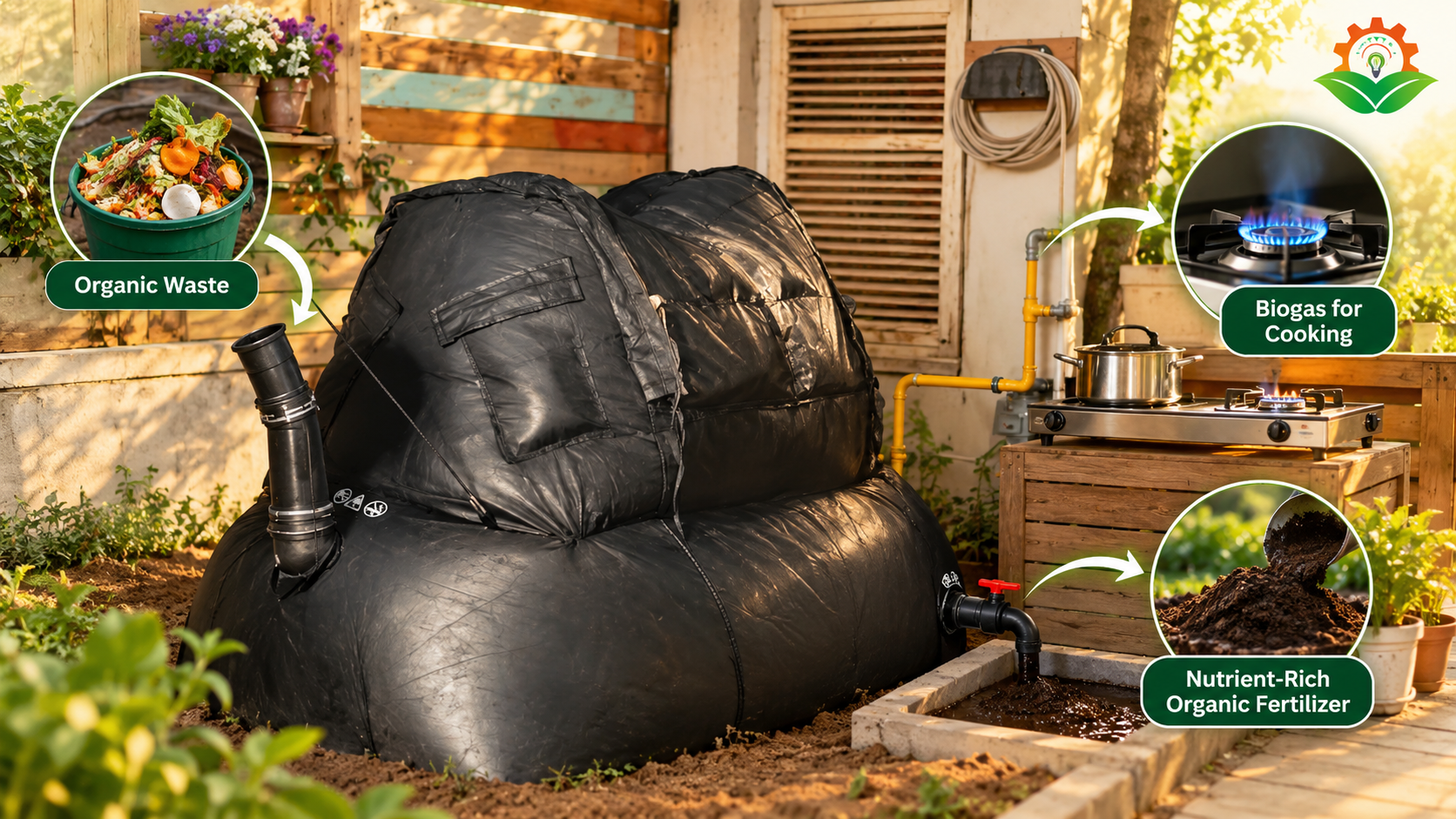

A dairy farmer often wonders what to do with the daily accumulation of cattle manure, while a rural household struggles to dispose of kitchen waste without attracting pests or increasing landfill waste. Instead of treating these materials as waste, they can become valuable resources in a biogas plant. By converting biodegradable waste into clean fuel and organic fertilizer, a biogas plant helps reduce LPG consumption, improve sanitation, and support sustainable farming.
Through anaerobic digestion, organic waste is transformed into methane-rich biogas and nutrient-rich bio-slurry. However, the quality and type of feedstock directly influence gas production, making it essential to understand which materials are suitable and which should be avoided.
How a Biogas Plant Converts Waste into Energy
A biogas plant is a sealed anaerobic digestion system where microorganisms break down biodegradable organic matter in the absence of oxygen.
As bacteria digest the waste, methane-rich biogas is produced and stored for cooking, heating, or electricity generation. The remaining digested material becomes bio-slurry, a valuable organic fertilizer rich in nutrients that improve soil health.
A properly engineered biogas plant design ensures efficient microbial activity, adequate hydraulic retention time, and stable gas production throughout the year.
Types of Waste Suitable for a Biogas Plant
The best feedstock contains biodegradable organic matter with sufficient moisture and balanced nutrient content.
Best Feedstock for Maximum Gas Production
Common materials used in a biogas plant include:
- Cow dung
- Buffalo manure
- Poultry litter
- Goat and sheep manure
- Kitchen waste
- Fruit and vegetable waste
- Leftover cooked food
- Food processing waste
- Agricultural residues after suitable preparation
- Crop residues with appropriate moisture
- Sugar industry organic waste
- Dairy processing waste
Animal manure remains one of the most reliable feedstocks because it contains beneficial microorganisms that support anaerobic digestion.
Kitchen waste generally produces higher methane yields but should be added in controlled quantities to maintain microbial balance.
Waste Materials That Should Not Be Used
Not all waste is suitable for anaerobic digestion.
Avoid adding:
- Plastics
- Glass
- Metal
- Stones
- Rubber
- Chemicals
- Detergents
- Paint residues
- Medical waste
- Synthetic fabrics
- Large quantities of oils and grease
These materials either fail to decompose or interfere with bacterial activity, reducing gas production and potentially damaging the system.
Feedstock Preparation for Efficient Digestion
Proper preparation improves digestion efficiency and methane production.
Recommended practices include:
- Chopping fibrous crop residues
- Removing non-biodegradable contaminants
- Mixing dry materials with water
- Maintaining consistent moisture content
- Feeding the digester daily with similar quantities
Consistent feeding allows microorganisms to remain active and prevents sudden drops in gas production.
Digester Design and Gas Production Efficiency
Feedstock alone cannot guarantee high gas output.
Proper biogas plant systems depend on engineering factors such as:
- Digester capacity
- Hydraulic retention time
- Temperature management
- Gas storage volume
- Mixing efficiency
- Pressure regulation
- Leak-proof construction
An appropriately sized digester ensures that organic waste remains inside long enough for complete microbial digestion.
Gas is then stored safely and delivered through pipelines to cooking stoves, water heaters, or small biogas-powered generators.
Sizing the Plant According to Waste Availability
Selecting the right digester size begins with estimating daily feedstock generation.
Important considerations include:
- Quantity of kitchen waste
- Number of livestock
- Daily manure production
- Family size
- Cooking energy demand
- Future expansion plans
A biogas plant for home should match the available organic waste rather than projected fuel consumption alone.
Proper sizing improves gas production while avoiding unnecessary investment.
Bio-Slurry: Turning Waste into Organic Fertilizer
Bio-slurry is one of the most valuable outputs of anaerobic digestion.
Unlike untreated manure, digested slurry contains stabilized organic matter along with essential nutrients such as nitrogen, phosphorus, and potassium.
Farmers can use bio-slurry to improve soil fertility, enhance crop productivity, and reduce dependence on chemical fertilizers.
Proper slurry management also supports cleaner farm operations and sustainable nutrient recycling.
Maintenance for Consistent Feedstock Performance
Reliable gas production requires disciplined operation.
Routine maintenance should include:
- Consistent daily feeding
- Cleaning feed inlet channels
- Inspecting gas pipelines
- Removing moisture from gas lines
- Checking valves and regulators
- Monitoring slurry discharge
- Inspecting the digester structure
Preventive maintenance protects bacterial health and maintains long-term gas production.
Key Features of Modern Biogas Plant Systems
High-quality systems offer several operational benefits:
- Continuous gas generation
- Compact installation footprint
- Effective odor control
- Durable corrosion-resistant construction
- Reliable weather and temperature resilience
- Low daily maintenance
- Easy-to-operate design
- Scalable capacity
- Long operational service life
These features allow biogas plant systems to operate efficiently across different climates and applications.
Applications Across Different Sectors
Biogas technology supports a wide range of users, including:
- Rural households
- Dairy and livestock farms
- Agricultural cooperatives
- Educational institutions
- Hostels
- Small hotels
- Farmstays
- Housing societies
- Rural electrification projects
- Community waste management facilities
Both commercial installations and domestic biogas digester for homes and farms help transform biodegradable waste into valuable renewable energy.
Cost and Investment Factors
The total biogas plant price depends on several technical considerations.
Major cost factors include:
- Daily feedstock quantity and type
- Digester size
- Tank material
- Gas storage capacity
- Pipeline installation
- Site preparation
- Integration with cooking appliances or generators
- Annual maintenance contracts
- Expected long-term payback period
Although feedstock itself is often freely available, proper engineering significantly influences overall lifecycle costs.
Buyer's Guide: Choosing the Right Manufacturer
Selecting experienced biogas plant manufacturers in India is essential for long-term reliability.
Before making an investment, evaluate:
- Industry experience
- Digester engineering expertise
- Manufacturing quality
- Material standards
- Customization capability
- Professional installation
- Technical support
- After-sales maintenance services
- Documentation and subsidy assistance
- Proven project track record
Working with a trusted Sigma Power Tech manufacturer and service provider ensures professionally engineered solutions, quality construction, and dependable technical support. A well-designed Sigma Power Tech biogas plant maximizes feedstock utilization while delivering reliable gas production and long service life.
Common Mistakes to Avoid
Many performance problems arise from improper feedstock management.
Common mistakes include:
- Undersizing or oversizing the digester
- Inconsistent daily feedstock input
- Feeding unsuitable waste materials
- Poor site planning
- Ignoring bio-slurry utilization
- Delaying preventive maintenance
- Improper gas pipeline installation
- Neglecting seasonal temperature effects on digestion
Proper planning and disciplined operation ensure efficient waste conversion and stable methane production.
Conclusion
A biogas plant can process a wide variety of biodegradable waste, including kitchen scraps, animal manure, agricultural residues, and food processing waste, provided the feedstock is properly prepared and consistently supplied. Correct waste selection, balanced feeding, and professional engineering are essential for achieving reliable gas production and long-term operational efficiency.
Rather than focusing only on the initial biogas plant price, invest in quality biogas plant design, experienced technical support, and routine maintenance. A professionally engineered biogas plant transforms organic waste into renewable energy, nutrient-rich fertilizer, and sustainable waste-to-energy infrastructure, delivering long-term fuel savings and environmental benefits for homes, farms, and industries alike.

