

AI as a Service Market Platform: Advancing Cloud Intelligence and Enterprise Automation Through 2035

Market Overview: Evolution of AIaaS Platforms
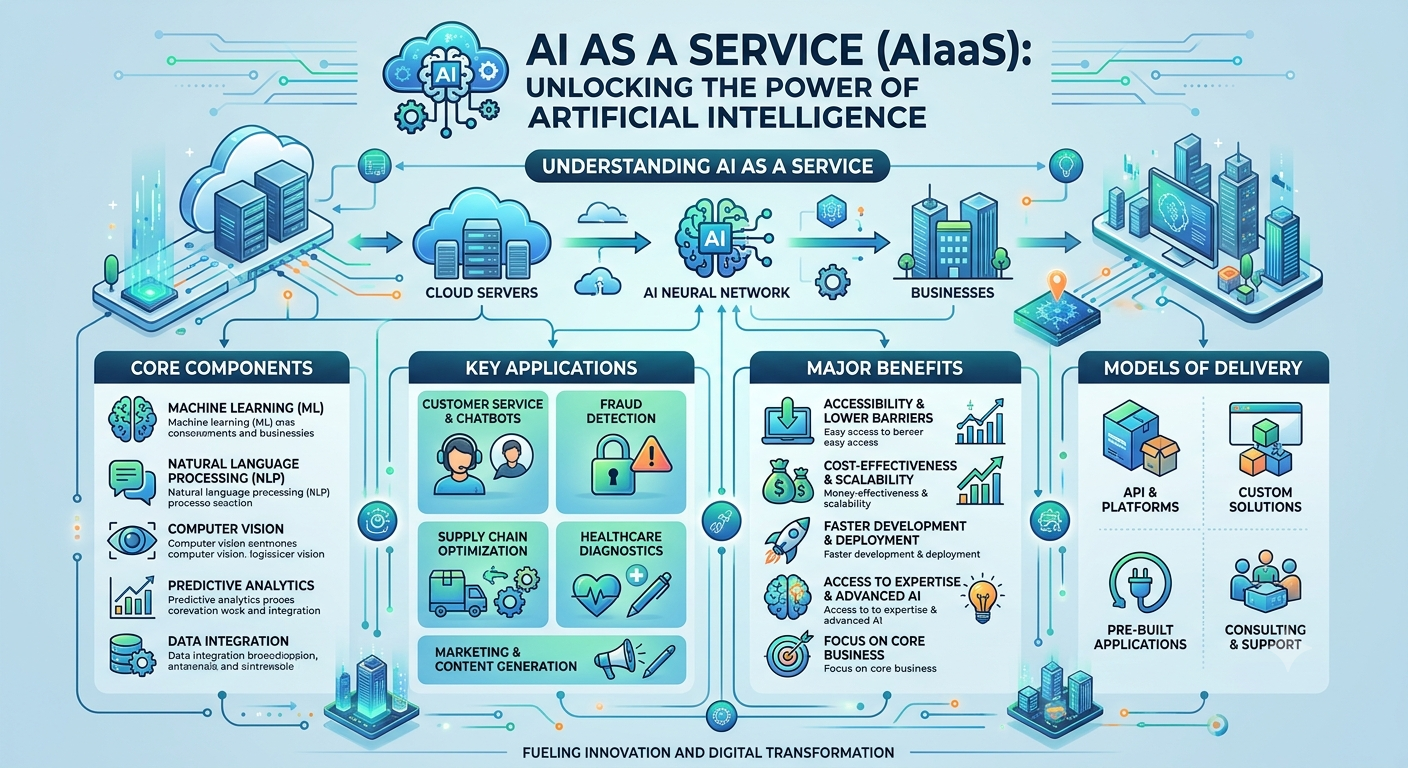
The AI as a Service Market Platform ecosystem is expanding as organizations increasingly seek accessible environments for developing and deploying artificial intelligence applications. AIaaS platforms provide cloud-based tools, computing resources, pre-trained models, and development frameworks that simplify the implementation of intelligent technologies. These platforms support machine learning, natural language processing, computer vision, speech recognition, and predictive analytics. Businesses can utilize these capabilities without maintaining extensive infrastructure or developing every AI component independently. Enterprises across banking, healthcare, retail, manufacturing, and telecommunications are adopting AI platforms to improve productivity and support data-driven decisions. Cloud-based delivery models offer scalability, subscription flexibility, and convenient access to advanced computing resources. Platform selection depends on integration capabilities, model performance, security, pricing, usability, and technical support. Developers are continuously enhancing their environments through automated machine learning, generative AI tools, and simplified development interfaces. These improvements are making artificial intelligence more accessible to organizations with different technical capabilities and operational requirements, supporting the evolution of the AIaaS platform ecosystem through 2035.
Market Drivers: Demand for Scalable AI Infrastructure
The increasing demand for scalable AI infrastructure is supporting platform adoption across industries. Organizations require computing environments capable of processing large datasets and supporting complex machine learning applications. Cloud-based AI platforms provide flexible resources that can be adjusted according to changing workloads and business requirements. Enterprises can use these platforms for predictive analytics, customer segmentation, fraud detection, image recognition, and automated workflows. Small and medium-sized businesses benefit from reduced infrastructure investments and subscription-based access. Developers also value platforms that provide pre-trained models, development tools, testing environments, and deployment support. The increasing availability of enterprise data is creating additional demand for integrated analytics and machine learning capabilities. Businesses are also prioritizing platforms that can connect with existing databases, enterprise applications, and cloud storage systems. These requirements are encouraging technology providers to improve platform usability, reliability, and scalability. The growing importance of artificial intelligence in business operations is expected to strengthen demand for advanced AI development environments.
Market Opportunities: Generative AI and Low-Code Development
Generative AI is creating significant opportunities for AI platform providers. Organizations are increasingly exploring conversational applications, automated content generation, coding assistance, and intelligent knowledge management. Platforms offering pre-trained generative models and customization tools can help businesses develop applications more efficiently. Low-code and no-code development environments are another important opportunity because they reduce dependence on specialized programming expertise. Businesses can utilize simplified interfaces to build predictive models and automate workflows. Integration with enterprise resource planning, customer relationship management, and data analytics systems can further improve platform value. Providers may also develop industry-specific environments for financial services, healthcare, manufacturing, retail, and logistics. Additional opportunities exist in AI model monitoring, data preparation, governance, and security management. Flexible pricing structures can support adoption among startups and smaller enterprises. Companies that offer accessible development tools, reliable infrastructure, and comprehensive technical support may strengthen their competitive positioning as demand for enterprise AI platforms increases.
Market Trends: Integrated and Intelligent Development Environments
AIaaS platforms are evolving through greater automation, integration, and intelligent development capabilities. Automated machine learning is simplifying model creation and reducing manual configuration. Generative AI tools are supporting application development, conversational interfaces, and content-related workflows. Cloud-native architectures are improving scalability and deployment flexibility. Another important trend involves the integration of AI platforms with Internet of Things environments, allowing organizations to analyze real-time operational data. Businesses are also prioritizing platform security, data governance, model monitoring, and explainability. Integration with existing enterprise software is becoming essential because organizations prefer connected digital workflows. Providers are introducing specialized tools for developers, data scientists, and business users. Competition is increasingly based on platform functionality, model performance, pricing, interoperability, and customer support. These trends are encouraging providers to create comprehensive environments that support the entire AI development lifecycle, from data preparation and model training to deployment and monitoring.
Future Outlook: Platform Innovation Through 2035
The future of AIaaS platforms is expected to be shaped by advancements in generative AI, cloud infrastructure, automated development, and enterprise software integration. Organizations may increasingly adopt platforms that simplify model development and enable intelligent applications across different business functions. Low-code tools could broaden access among smaller businesses and nontechnical employees. Industry-specific AI environments may also become more important as organizations seek solutions designed around specialized operational requirements. However, data privacy, cybersecurity, regulatory compliance, and model reliability will remain important considerations. Platform providers will need to prioritize transparent governance, secure infrastructure, and dependable technical support. Integration with existing enterprise systems will continue to influence purchasing decisions. Strategic partnerships with cloud providers and software developers may create additional opportunities. By 2035, AIaaS platforms are expected to remain important foundations for organizations seeking scalable artificial intelligence capabilities and digital innovation.
FAQs
Q1. What is an AIaaS platform?
An AIaaS platform provides cloud-based tools, models, infrastructure, and development environments for building and deploying AI applications.
Q2. Which features are important in AIaaS platforms?
Scalability, pre-trained models, automated machine learning, security, integration, model monitoring, and flexible pricing are important features.
Explore Our Latest Trending Reports!
Europe Application Testing Services Market
Smart Building (Energy Management & Optimization and Safety & Security Enhancement) Market

