

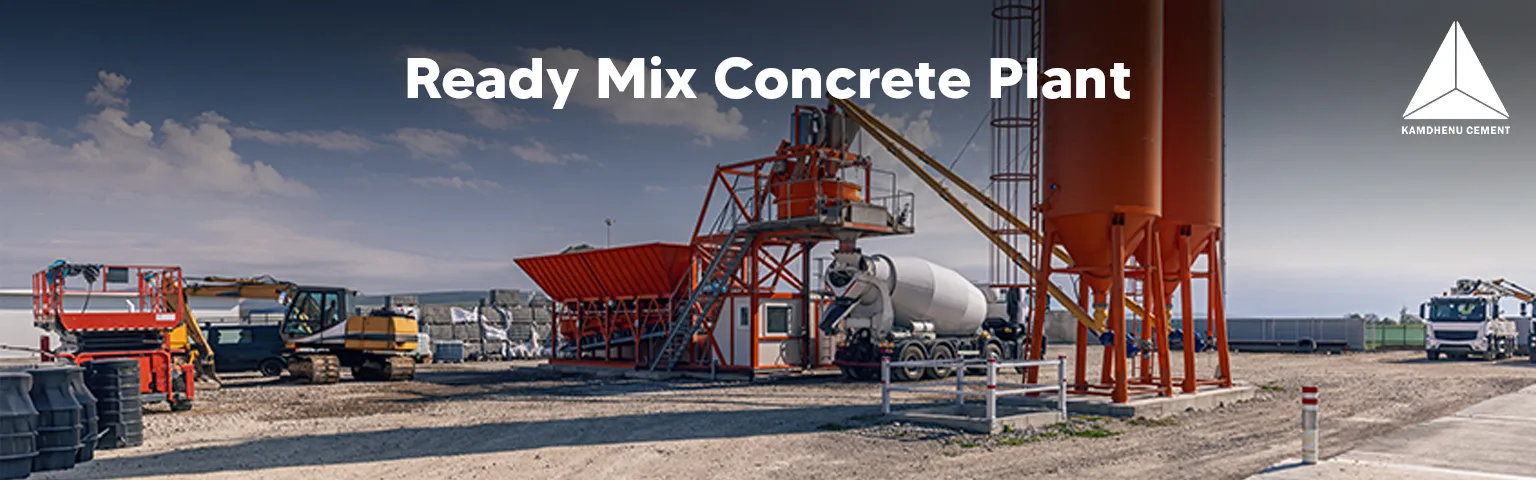
Ready Mix Concrete (RMC): Transforming the Future of the Indian Construction Industry

The Indian construction industry is expanding rapidly with the development of residential buildings, commercial complexes, highways, industrial facilities, and large infrastructure projects. With increasing construction requirements, the demand for reliable and high-quality building materials has also grown. Ready Mix Concrete (RMC) has become an important solution for modern construction because of its consistent quality, convenient transportation, and efficient production process.
Ready-mix concrete is manufactured in specialised batching plants using carefully measured quantities of cement, water, sand, and aggregates. The prepared concrete is transported to construction sites through transit mixer trucks. This method reduces the need for traditional manual mixing and helps construction professionals manage their projects more effectively.
Understanding the Concept of Ready Mix Concrete
Ready Mix Concrete is a professionally prepared concrete mixture designed according to specific construction requirements. Its composition is determined through an appropriate mix design to achieve the desired strength, durability, and workability.
The manufacturing process takes place in a controlled environment where raw materials are measured and mixed using specialised machinery. This approach helps maintain uniformity and supports better quality management.
RMC is suitable for different construction applications, including building foundations, columns, beams, slabs, roads, bridges, and industrial structures.
How Does a Ready Mix Concrete Plant Work?
A ready-mix concrete plant plays an important role in producing concrete for construction projects. The plant uses modern equipment and automated systems to manage different production activities.
Raw Material Storage
The first stage involves storing cement, sand, aggregates, and other approved materials separately. Proper storage helps protect raw materials from contamination and unwanted moisture.
Material Measurement
Each ingredient is measured according to the approved mix design. Accurate measurement is essential for achieving the required concrete properties.
Concrete Mixing
The measured ingredients are transferred into a mixer, where they are combined to produce a uniform concrete mixture.
Quality Inspection
Fresh concrete is checked for properties such as workability and consistency. Additional testing is performed according to project specifications.
Transportation to Construction Sites
After production, Ready Mix Concrete (RMC) is transported in transit mixer trucks to the construction location. Proper scheduling helps ensure timely delivery and suitable concrete conditions.
Key Advantages of Ready Mix Concrete (RMC)
1. Improved Quality Control
One of the biggest advantages of Ready Mix Concrete is controlled production. Accurate batching and established quality-control procedures help maintain consistency.
2. Faster Project Completion
Ready-mix concrete reduces the time required for preparing concrete manually at construction sites. Contractors can plan concrete delivery according to their construction schedules.
3. Reduced Construction Waste
Controlled manufacturing helps reduce unnecessary consumption and wastage of raw materials. It also minimises the need for storing large quantities of materials at the worksite.
4. Better Worksite Organisation
Using ready-mix concrete reduces on-site mixing activities. This can help improve site organisation and create more space for other construction operations.
5. Flexible Concrete Requirements
Different construction projects require different concrete properties. RMC can be designed according to the required grade, workability, and application.
Applications of Ready Mix Concrete in Different Industries
Ready Mix Concrete (RMC) is used across several sectors of the construction industry.
Residential Construction: It is used in independent houses, apartments, residential societies, foundations, columns, and roof slabs.
Commercial Construction: Shopping malls, office buildings, hotels, hospitals, and commercial complexes use concrete according to their structural requirements.
Industrial Construction: Factories, manufacturing units, warehouses, and industrial flooring projects require suitable concrete mixtures.
Infrastructure Development: Roads, highways, bridges, flyovers, and other infrastructure projects use specially designed concrete grades.
Public Construction: Educational institutions, government buildings, transport facilities, and public infrastructure also use ready-mix concrete.
Importance of Selecting the Right Concrete Grade
Choosing the appropriate concrete grade is essential for construction safety and structural performance. Different building components have different strength and workability requirements.
Before ordering Ready Mix Concrete, builders should consult structural engineers and review the approved project specifications.
The selection should consider the following factors:
-
Required compressive strength
-
Type of structural application
-
Environmental conditions
-
Workability requirements
-
Transportation and placement time
-
Applicable construction standards
Selecting the correct mix design helps achieve the intended performance of the structure.
Ready Mix Concrete and Sustainable Construction
Sustainable construction has become an important focus in the modern building industry. Construction companies are increasingly looking for ways to reduce waste, improve resource management, and adopt efficient production methods.
Ready Mix Concrete (RMC) can support these objectives through controlled material measurement, planned production, and reduced on-site mixing activities.
Efficient batching operations can help manage raw materials more responsibly. Manufacturers can also explore energy-efficient equipment, water management systems, and suitable supplementary cementitious materials where permitted by project specifications.
These practices can contribute to more responsible construction processes.
Factors to Consider Before Choosing an RMC Supplier
Selecting a dependable ready-mix concrete supplier is important for successful project execution. Contractors should evaluate suppliers based on their production facilities, technical capabilities, and delivery arrangements.
Important considerations include:
-
Availability of suitable concrete grades.
-
Quality of cement and aggregates.
-
Proper batching and mixing facilities.
-
Quality testing and inspection procedures.
-
Reliable transportation arrangements.
-
Timely delivery and technical support.
-
Ability to fulfil project-specific requirements.
A professional supplier should provide clear information about concrete specifications and follow applicable quality standards.
Future of Ready Mix Concrete in India
India's growing infrastructure and real estate sectors are creating new opportunities for the ready-mix concrete industry. Urban development, road construction, industrial expansion, and housing projects are increasing the need for organised concrete production.
Modern batching equipment, digital production monitoring, improved logistics, and better quality-control systems are helping the industry become more efficient.
As construction requirements continue to evolve, Ready Mix Concrete is expected to remain an important material for residential, commercial, and infrastructure development.
Conclusion
Ready Mix Concrete (RMC) has transformed modern construction by offering controlled manufacturing, convenient transportation, consistent quality, and flexible applications. It is suitable for a wide range of projects, from residential buildings to major infrastructure developments.
Choosing the right concrete grade, selecting a reliable supplier, and following proper placement and curing practices are essential for achieving durable construction results.
For more information about concrete solutions and their applications, explore Ready Mix Concrete (RMC) from Kamdhenu Cement.

