

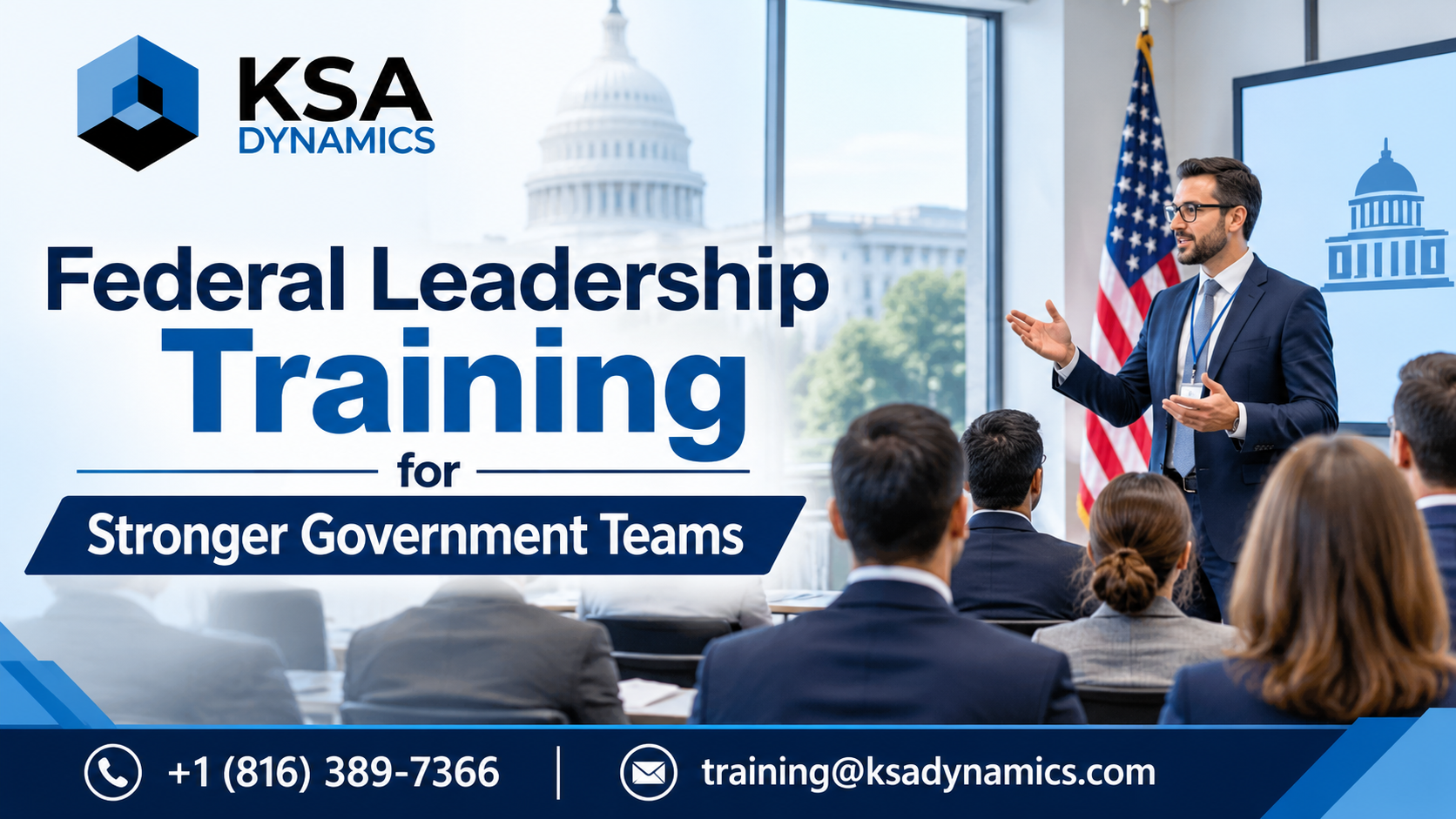
Ask any agency supervisor about their toughest day. Odds are, it wasn't a technical glitch. It was a people problem. A missed deadline, a tense meeting, a team stretched thin. That's why federal leadership training has gone from "nice to have" to daily necessity. Working for the government is serious business. Missions, accountability, and budget constraints all converge at once. More than just having positive intentions will get us out of there. It takes skills, techniques, and language. So let us examine what goes into good programs and how agencies can select good programs.
Why Great Specialists Struggle as First-Time Supervisors
This is an example of a common occurrence in many organizations. An individual becomes very successful on the technical aspects of the job and gets promoted to a managerial position. The only problem is that nobody ever trained them on giving feedback, setting expectations, or handling conflict.
That gap is exactly where good federal training solutions earn their keep. New supervisors are usually expected to get their training done in the first year, followed by a refresher course every three years. Mentoring, performance management, and conflict resolution are among the top priorities. However, a calendar reminder is not a strategy. It is about confidence, not compliance.
Build a Pathway, Not a One-Off Workshop
One session rarely changes a culture. Instead, think in levels, the way strong federal leadership training pathways do. Individual performers need help staying current with technology and priorities. It will be necessary to translate the priority items of the agencies into actions.
Nevertheless, all performers can enjoy a common core. Emotional Intelligence, time management, critical thinking, communication skills, and the ability to build trust form a good basis.
Well-planned federal leadership training also treats learning as a cycle, so people revisit core skills as roles grow.
Skills That Move the Needle in Federal Leadership Training
Not every topic pulls equal weight. Based on what agencies face daily, these areas deserve a seat at the table.
Leading through change and crisis. Priorities change quickly. Leaders need to stay composed, make decisions with incomplete information, and keep their team steady. Crisis leadership courses are designed to help do that.
Trust and accountability. Leaders are judged based on their actions. The ability to explain decisions, take responsibility for the negative, and follow through is important. This means that high-trust behaviors are worthy of vocal rehearsal, and good federal training solutions incorporate that step.
Strategic thinking. Peering beyond symptoms to uncover the underlying causes takes expertise. Formulating an effective recommendation even in light of criticism takes similar proficiency. Start with the decision and support it.
Smart AI use. This one is hot at the moment. The ability to evaluate the product of artificial intelligence and avoid bias is important for the supervisors. Smart federal training solutions also match the tools an agency has actually authorized.
Practice Beats Theory Every Time
Adults learn through experience. Therefore, the best courses rely on mission-oriented scenarios rather than generalized cases. As such, when examples represent practical agency work, learners use more time for application than translation.
This can be facilitated by personalization, which can include a short participant survey and a discussion with the facilitator to adjust course activities in line with a particular team’s practical situation.
Delivery is also important and can be either on-site or live online using a team's current platform. Duration is another adjustable component ranging from a half-an-hour keynote to a multi-day course.
Follow Through After the Session Ends
Training fades fast without a plan. That's why strong federal leadership training includes a feedback survey, certificates of completion, and clear next steps. The assessment shows skills deficiencies before you invest your money. The executive coaching then assists leaders in applying these new skills on a one-to-one basis. Similarly, the follow-up workshops ensure continuity of participants from large-scale training programs.
Questions to Ask Before You Choose a Program
Before choosing federal leadership training, run through a quick checklist:
-
Is this course material consistent with federal truths and your organization’s goals?
-
Is it instructor-led and does it allow enough practice time and Q&A?
-
Is it able to reach everyone, from employees to executives?
-
Does it develop competencies like integrity, efficiency, and productivity?
-
Does it provide enough information about how to contract, and is it flexible for various payment methods?
Yes, if you answered most of these questions positively, then you are good to go.
Conclusion
A great team does not just fall into place. It develops as the result of leaders who receive consistent and tangible support. Federal training solutions that are effective have customized content, hands-on experience, and honest follow-up. Identify the needs, chart a path at all levels, and continue to move through the training process cycle. Follow through, and your team will be prepared for anything.
Ready to Build Your Leadership Pipeline?
Tell us your agency's priorities. KSA Dynamics will help you shape a tailored plan, from single workshops to multi-session series, delivered on-site or virtually. Let's connect and get your team moving.

