

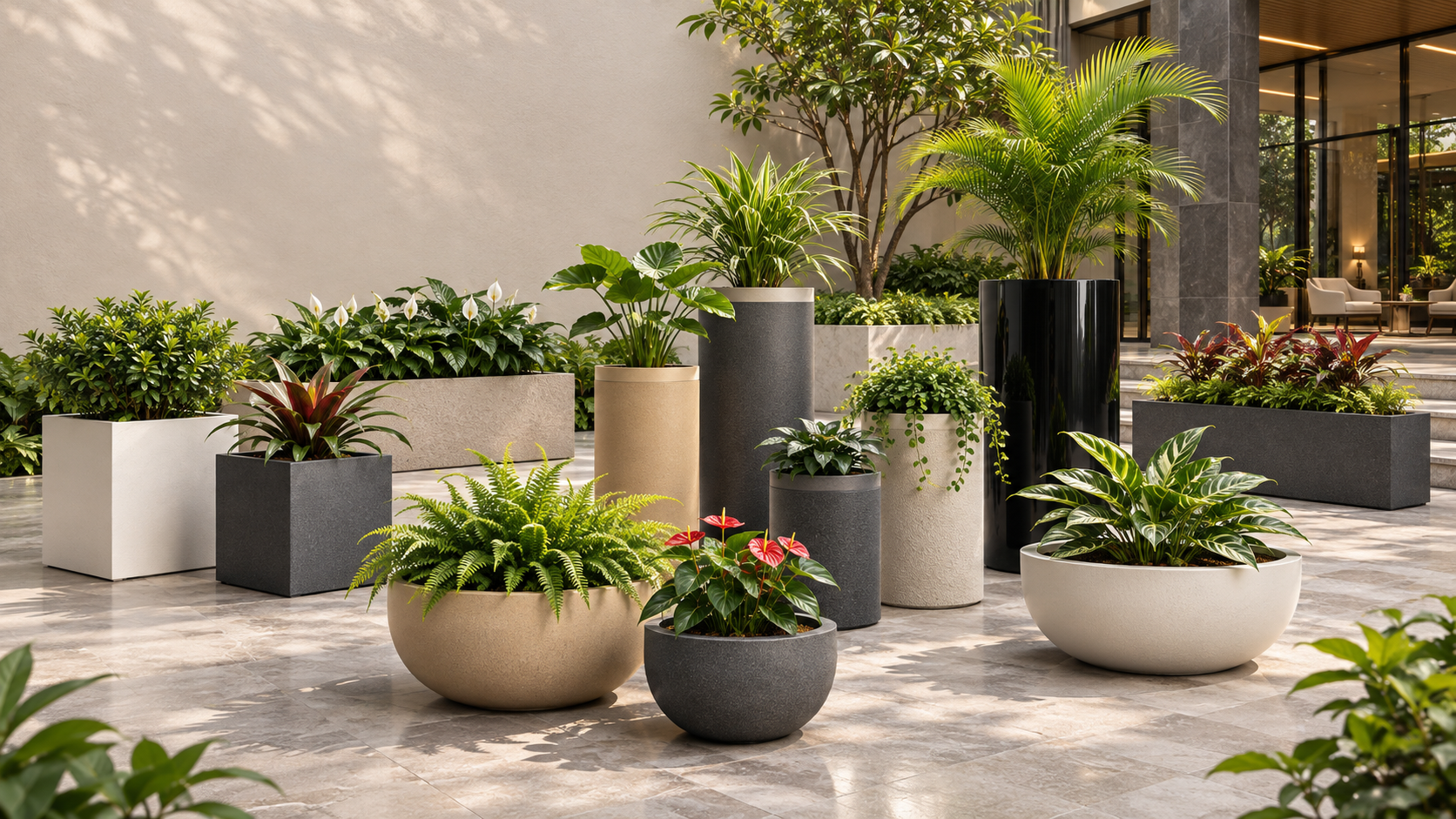
FRP Pot: Transforming Modern Gardening with Durable and Stylish Planter Solutions

Creating an attractive green space requires more than selecting healthy plants. The choice of planter also influences the appearance, functionality and maintenance requirements of a landscape. From residential balconies and luxury hotels to corporate offices and commercial complexes, modern spaces increasingly require planters that combine visual appeal with practical performance. An FRP Pot is becoming a preferred option because of its lightweight construction, versatile designs and durability.
Manufactured using Fiberglass Reinforced Plastic, FRP pots provide a combination of strength and design flexibility. They are available in various shapes, sizes and finishes, making them suitable for different landscaping concepts. For homeowners, architects, interior designers and commercial buyers, these planters offer an effective way to introduce greenery into contemporary environments.
What Makes FRP Pots a Practical Choice?
FRP is a composite material made by combining glass-fibre reinforcement with polymer resin. This construction creates a material that can be moulded into different forms while maintaining useful structural strength.
Traditional planters made from concrete, stone or clay can be heavy and difficult to relocate. FRP pots offer a comparatively lightweight alternative, which makes transportation, installation and repositioning more convenient.
Some notable advantages include:
-
Lightweight structure: Easier handling for residential and commercial installations.
-
Design versatility: Available in round, square, rectangular and customized shapes.
-
Durable construction: Suitable for regular use when manufactured with appropriate materials and workmanship.
-
Easy maintenance: Most finished surfaces can be cleaned using a soft cloth and mild cleaning solution.
-
Colour flexibility: Different colours and finishes can complement contemporary architectural themes.
-
Multiple applications: Suitable for indoor gardens, outdoor landscapes, balconies and commercial entrances.
These features make FRP a practical material for projects where appearance and usability are equally important.
How FRP Pots Enhance Modern Interior and Exterior Spaces
Planters have become an important element of modern architecture and landscape planning. They help introduce natural elements into built environments while improving the visual organization of a space.
In residential interiors, compact FRP pots can be positioned near windows, living room corners and entrance areas. Their different finishes make it easier to coordinate planters with furniture, flooring and decorative elements.
For outdoor applications, larger models can accommodate palms, shrubs and ornamental plants. They can be arranged along pathways, around building entrances or beside outdoor seating areas to create a balanced landscape.
Commercial properties also benefit from coordinated planter designs. Hotels can use decorative pots to enhance reception areas, while offices can incorporate greenery into waiting areas and workspaces. Shopping complexes and restaurants can use larger planters to define walkways and create welcoming surroundings.
Choosing the Right FRP Pot for Your Requirements
Not every planter is suitable for every plant or installation. Selecting the correct product requires attention to dimensions, design, material quality and intended placement.
Consider Plant Requirements
Choose a planter according to the plant's root structure, expected growth and watering needs. The internal dimensions should provide adequate room for healthy root development.
Select Appropriate Shapes and Sizes
Round pots work well for individual ornamental plants, while rectangular planters are useful for boundaries and linear landscaping arrangements. Tall designs can add vertical interest to entrances and corners.
Evaluate Surface Finishes
FRP pots are available in glossy, matte, textured and stone-inspired finishes. Neutral shades such as white, grey, beige and black are popular for contemporary spaces because they complement different architectural styles.
Check Drainage and Installation Requirements
Proper drainage helps prevent excess water accumulation around plant roots. Buyers should confirm drainage-hole arrangements and consider suitable liners or floor protection for indoor installations.
What Should Buyers Expect from Professional FRP Pot Manufacturers?
The quality of a planter depends significantly on the materials and manufacturing processes used during production. Therefore, selecting dependable FRP Pot Manufacturers is essential, especially for bulk purchases and commercial landscaping projects.
A reliable manufacturer should provide clear information about product specifications, customization options and production capabilities.
Before placing an order, buyers should consider the following factors:
-
Raw material quality: Ask about the glass-fibre reinforcement and resin system used in production.
-
Manufacturing consistency: Check whether the products have uniform thickness, smooth finishing and consistent dimensions.
-
Customization facilities: Confirm whether different sizes, colours, shapes and finishes can be produced.
-
Quality inspection: Understand how finished products are checked before dispatch.
-
Bulk supply capacity: Ensure that the manufacturer can meet project quantities and agreed delivery schedules.
-
Product guidance: Prefer manufacturers who can help select appropriate planter designs according to the intended application.
Requesting product samples and reviewing completed installations can also help buyers assess workmanship before committing to a larger order.
FRP Pots Compared with Conventional Planter Materials
Different planter materials serve different purposes. Clay pots offer a traditional appearance but can break during handling. Concrete planters provide substantial weight and stability but may be difficult to move. Metal planters offer a modern appearance but require consideration of corrosion protection and environmental exposure.
FRP pots provide an alternative through their relatively low weight, mouldability and range of decorative finishes. They are particularly useful when projects require coordinated designs, customized dimensions or easier installation.
However, the final choice should always depend on plant requirements, environmental conditions, budget and product specifications.
Frequently Asked Questions
1. Are FRP pots suitable for both indoor and outdoor gardening?
Yes. FRP pots can be used in both environments. Outdoor applications should use products with suitable UV protection and weather-resistant finishing.
2. Do FRP pots require regular maintenance?
They generally require minimal maintenance. Periodic cleaning with mild soap and water helps maintain their appearance.
3. Can FRP pots be manufactured in customized colours?
Yes. Many manufacturers offer customized colours and finishes to match specific landscaping and interior design requirements.
4. Are FRP pots suitable for large plants?
Yes, provided the planter has appropriate dimensions, structural strength, internal volume and drainage arrangements for the selected plant.
5. What factors influence the price of FRP pots?
Price depends on dimensions, design complexity, material quality, surface finish, customization requirements and order quantity.
Conclusion
An FRP Pot offers a useful combination of contemporary aesthetics, lightweight construction and design flexibility for modern gardening and landscaping. From compact indoor arrangements to large commercial installations, these products can accommodate different planting requirements while complementing architectural surroundings.
For buyers, selecting the right design and evaluating manufacturing quality are essential steps towards achieving long-lasting results. By comparing product specifications, customization capabilities and workmanship, homeowners, designers and commercial project managers can make informed purchasing decisions and create attractive green spaces with FRP planters.

