

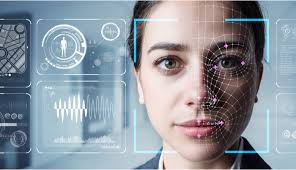
Are you familiar with instances where you look at two pictures and try to guess if the individuals in the pictures have some similar facial features? Fortunately, artificial intelligence makes it easy for users to perform face comparison virtually within seconds. This is made possible through face comparison software that uses sophisticated techniques in analyzing and comparing facial features from two pictures. However, how does this process work, and how reliable is it? Here is how it works.
What Is a Face Comparison App?
Face matching software is an electronic program that compares two faces and determines their similarity in terms of visual characteristics. This application doesn’t fully depend on human observation, but it works by applying computer vision and artificial intelligence technologies to analyze various facial traits. In general, it concentrates on visible traits like face form, eye distance, nose configuration, lip form, and jawline. For instance, when someone needs to determine his/her resemblance to an older photo, he/she may do this with the help of this technology.
At the same time, the similarity of two faces doesn’t prove a biological connection between two people.
How Does AI Compare Facial Features in Photos?
Facial structure analysis can be achieved using many image processing methods in artificial intelligence. The majority of today's systems use certain stages in order to process images and provide comparison results.
Step 1: Face Detection
The first stage is the detection of the face in the given photo. The algorithm detects the face and separates it from the background.
In this way, the system can work with facial features without any distractors such as clothes or scenery.
Step 2: Facial Landmark Detection
Once the face is detected, it is necessary to detect the landmarks. These could be the points near the eyes, nose tip, mouth, and chin.
3. Feature Analysis
The software analyzes features like facial width, spacing of the eyes, shape of the nose, and jaw structure. In some cases, the technology will even provide a numeric representation of the features.
4. Comparison of Similarities
Lastly, the computer program will compare the facial information that has been analyzed and create a score or some other form of comparison.
The score is based on the computer’s perception of the visual similarities. This is not meant to be an indication of whether the individuals are related.
Which Facial Features Does AI Examine?
An AI facial matching app may evaluate several visible characteristics to identify similarities between photographs.
Commonly analyzed features include:
-
Face shape: Whether the face appears oval, round, square, or elongated.
-
Eyes: Eye shape, spacing, and relative positioning.
-
Nose: Nose width, length, and overall structure.
-
Lips: Lip proportions, shape, and distance from other features.
-
Jawline and chin: Facial width, jaw definition, and chin structure.
These characteristics can help explain why two individuals look alike, even when they are not related.
Lighting, camera angles, facial expressions, image quality, and ageing can influence how these features appear in photographs.
How Accurate Are AI Face Comparison Results?
AI facial comparison can identify visual similarities efficiently, but its accuracy depends on the software, image quality, and conditions under which photographs were taken.
For more meaningful comparisons, users should choose clear photographs with:
-
Faces positioned towards the camera.
-
Similar lighting conditions.
-
Minimal filters or editing.
-
Unobstructed facial features.
-
Good image resolution.
A face recognition app may produce different results when comparing a front-facing portrait with a photograph taken from a side angle.
It is also important to distinguish between facial verification and general visual comparison. Some systems are designed to determine whether two images may belong to the same person, while others simply highlight similarities between different faces.
Neither type of visual analysis can establish biological relationships or replace DNA testing.
What Should You Consider Before Choosing a Face Comparison Tool?
Before proceeding with downloading the face recognition app, think about its functionalities, privacy policy, and objectives.
Find out if the application describes how the uploaded photos are kept, processed, and erased. Photos that include faces of people are very private information, and therefore it is important for users to know what happens with their photos if they are saved somewhere or passed to someone else. It is also important to pay attention to how clearly the tool explains comparison results, as there might be a case when the only thing that people receive from using the app is the percent of similarity without clear explanation. People living in Fort Worth, Texas, will find the information from the Face DNA Test helpful.
Conclusion
The face comparison app makes use of artificial intelligence to analyze facial points, measurements, and features in photos. While this software has made the analysis of visual similarity easier, it all relies on the quality of photos, their facial orientation, and the software's capability. What is more, facial similarity does not imply a biological relation. Those who want to learn more about this issue can refer to the Face DNA Test.

