

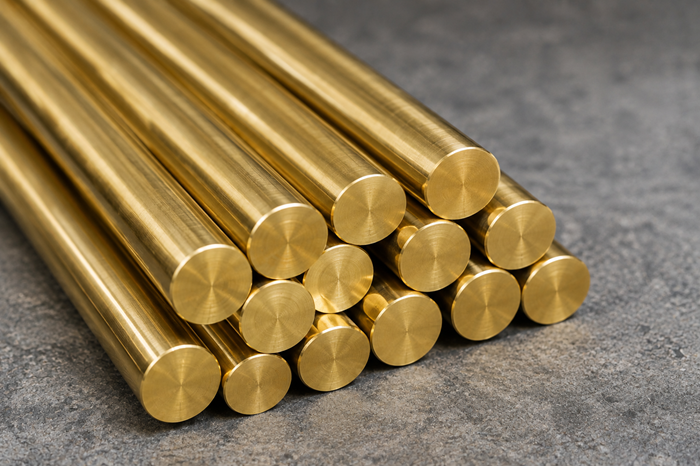

Choosing the right material is an important part of any manufacturing process. The quality of the raw material can influence the final product's strength, appearance, durability and performance. When working with brass, selecting a reliable rod is especially important because even small differences in material composition and manufacturing quality can affect the finished component.
High-quality brass extrusion rods are valued across various industries for their excellent machinability, corrosion resistance and consistent mechanical properties. However, not every brass rod offers the same level of quality. Understanding what to check before purchasing helps manufacturers, engineers and buyers make better decisions and maintain consistent production standards.
Check the Brass Material Composition
One of the first things to consider is the chemical composition of the brass. Brass is primarily made from copper and zinc, but additional elements may be included to improve particular properties. The percentage of each element can influence hardness, strength, machinability and corrosion resistance.
A reliable supplier should be able to provide material composition details through a chemical test report or material certificate. These documents help buyers confirm whether the material matches the required grade and industry specifications. Checking composition is particularly important when the rods are intended for precision engineering or specialised industrial applications.
Examine the Surface Finish Carefully
The surface condition provides useful information about the quality of an extrusion rod. A well-manufactured rod should have a reasonably smooth and uniform finish without visible cracks, deep scratches, excessive marks or unwanted surface defects.
Uneven surfaces can create difficulties during machining and may affect the appearance of finished components. Buyers should inspect the rods under proper lighting and check for irregularities along their length.
A consistent surface finish also makes further processing easier, particularly when the material is used to manufacture decorative fittings, electrical components and precision-engineered parts.
Verify Dimensional Accuracy
Accurate dimensions are essential for maintaining consistency during manufacturing. Before selecting brass rods, check their diameter, length and dimensional tolerances against the required specifications.
A high-quality product should maintain consistent dimensions throughout its length. Variations in thickness or diameter can cause machining difficulties, material wastage and fitting problems in the final assembly.
Using suitable measuring instruments, such as vernier callipers and micrometers, helps verify dimensional accuracy. Manufacturers should also confirm that the supplied material meets the tolerances required for their production processes.
Understand Mechanical Properties
Mechanical properties play an important role in determining how brass performs during different manufacturing operations. Hardness, tensile strength, elongation and workability are useful factors to consider when evaluating material quality.
The right properties depend on the intended application. For example, components requiring extensive machining may need a brass grade with suitable machinability, while applications involving forming operations may require different mechanical characteristics.
Requesting a mechanical test report can help buyers understand whether the material is suitable for their requirements. It also provides additional confidence in the consistency of the supplied products.
Look for Proper Manufacturing Standards
The manufacturing process has a direct influence on the quality of brass rods. Proper temperature control, extrusion pressure and cooling procedures help maintain uniform material properties and dimensional consistency.
A dependable manufacturing process should include regular quality inspections at different production stages. This helps identify surface defects, dimensional variations and material inconsistencies before the products reach customers.
Buyers should also check whether the manufacturer follows recognised industry standards, such as applicable IS, BS or EN specifications, depending on the required brass grade and application.
Review Testing and Quality Documentation
Quality documentation is another important factor when purchasing industrial brass materials. Material test certificates, chemical analysis reports and dimensional inspection records help buyers verify product specifications.
These records are particularly useful for businesses that require consistent raw materials across multiple production batches. Proper documentation also makes it easier to maintain quality control and traceability throughout the manufacturing process.
Before placing an order, ask about available testing facilities and the inspection procedures followed during production.
Consider the Supplier's Experience and Consistency
Selecting a suitable supplier is just as important as checking the material itself. An experienced manufacturer generally has established production processes and a better understanding of different industrial requirements.
Look for suppliers who communicate clearly, provide technical specifications and maintain consistency between batches. Their ability to understand your application and recommend suitable material grades can make the purchasing process more straightforward.
Building a long-term relationship with a reliable supplier can also help maintain product quality and support smoother manufacturing operations.
Make Quality Your Priority
Identifying high-quality brass rods requires attention to several factors, including material composition, surface finish, dimensional accuracy, mechanical properties and manufacturing standards. No single inspection can confirm everything, so it is important to consider these aspects together.
Taking time to verify specifications and review quality documents can help prevent unnecessary production issues. With careful material selection and a reliable manufacturing partner, businesses can maintain consistent product quality and achieve better results in their industrial applications.

