

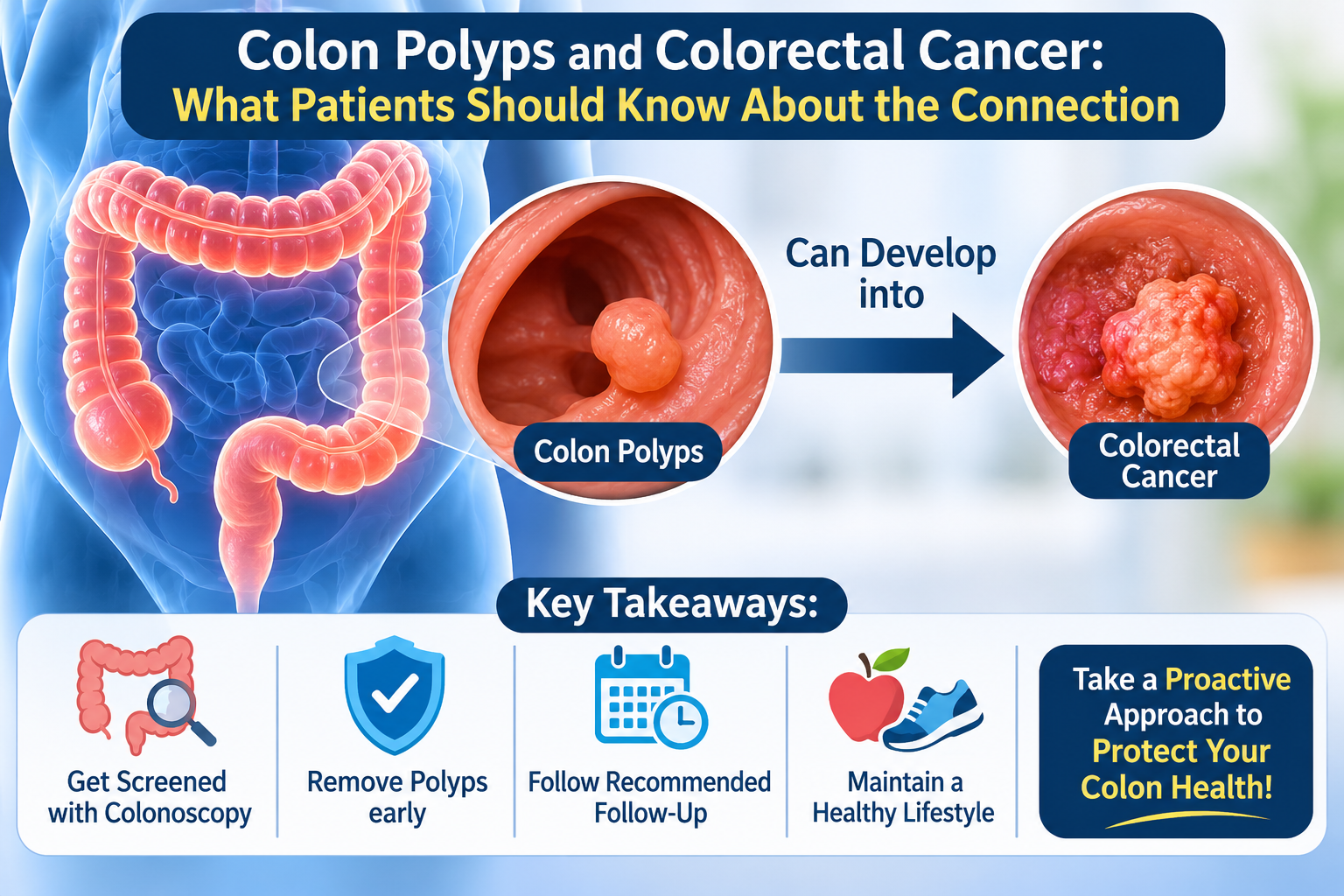
Colon Polyps and Colorectal Cancer: What Patients Should Know About the Connection

Colon health plays an important role in overall well-being, yet many people overlook the importance of regular colorectal cancer screening. One common finding during a colonoscopy is the presence of colon polyps. Although most colon polyps are not cancerous, certain types can develop into colorectal cancer over time if they are not identified and removed.
Understanding the connection between colon polyps and colorectal cancer can help patients make informed decisions about their digestive health. Knowing what happens when Polyps Found During Colonoscopy are detected, how they are treated, and why follow-up screening matters can make a significant difference in long-term health.
What Are Colon Polyps?
Colon polyps are small growths that develop on the inner lining of the colon or rectum. They can vary in size, shape, and type. Some appear flat against the colon wall, while others grow on small stalks.
Many polyps do not cause noticeable symptoms, which is why they are often discovered during routine colonoscopy screening.
There are several types of colon polyps, including:
-
Adenomatous polyps (adenomas): These are considered precancerous because some can develop into colorectal cancer over time.
-
Serrated polyps: Certain serrated polyps, particularly sessile serrated lesions, can also increase colorectal cancer risk.
-
Hyperplastic polyps: These are generally considered low-risk, although their significance depends on their size and location.
Not every polyp becomes cancerous. However, identifying the type of polyp is important for determining the appropriate treatment and follow-up schedule.
What Is the Connection Between Colon Polyps and Colorectal Cancer?
Most colorectal cancers develop gradually from abnormal growths in the colon or rectum. Some adenomatous and serrated polyps can undergo cellular changes over several years, eventually becoming cancerous.
This process is commonly known as the polyp-to-cancer sequence.
The risk of a polyp developing into cancer depends on several factors, including:
-
The size of the polyp
-
The number of polyps detected
-
The type of polyp
-
The cellular changes identified through laboratory testing
-
Personal and family medical history
Larger polyps and those with advanced cellular changes generally require closer medical attention.
The important thing to remember is that finding a polyp does not automatically mean a person has cancer. In many cases, removing precancerous polyps during colonoscopy can help prevent colorectal cancer from developing.
What Happens When Polyps Are Found During Colonoscopy?
When Polyps Found During Colonoscopy are identified, the gastroenterologist evaluates their size, location, and appearance.
In many cases, polyps can be removed during the same procedure through a technique called polypectomy. This minimally invasive approach allows the physician to remove abnormal growths without requiring traditional surgery.
After removal, the tissue is usually sent to a laboratory for pathological examination. This helps determine:
-
Whether the polyp is benign or contains cancerous cells
-
Whether it is an adenoma or another type of polyp
-
Whether precancerous changes are present
-
Whether additional treatment or monitoring is necessary
If a polyp is particularly large or difficult to remove, an advanced endoscopic procedure or, in selected cases, surgery may be recommended.
Are All Colon Polyps Dangerous?
No. Most colon polyps are benign, and many never develop into cancer.
However, some polyps are considered precancerous, meaning they have the potential to become cancerous over time. Adenomas and certain serrated lesions are particularly important because they may contribute to colorectal cancer development.
The size, number, and microscopic characteristics of the polyps help determine the level of concern.
This is why patients should discuss their pathology results with their gastroenterologist rather than assuming that every polyp carries the same risk.
Symptoms That May Be Associated With Colon Polyps
Most people with colon polyps do not experience symptoms. Polyps are frequently discovered during routine screening before they cause noticeable problems.
When symptoms occur, they may include:
-
Blood in the stool or rectal bleeding
-
Changes in bowel habits
-
Persistent constipation or diarrhea
-
Abdominal discomfort
-
Unexplained iron-deficiency anemia
These symptoms can have several possible causes and do not necessarily indicate colon cancer. However, persistent or unexplained symptoms should be evaluated by a healthcare professional.
Why Is Colonoscopy Important for Preventing Colorectal Cancer?
Colonoscopy is an important screening and diagnostic procedure because it allows gastroenterologists to examine the entire colon and identify abnormal growths.
Unlike screening methods that only detect signs of possible disease, colonoscopy can also allow physicians to remove many precancerous polyps during the same procedure.
Regular colorectal cancer screening is especially important because early-stage colorectal cancer and precancerous polyps may not cause symptoms.
For average-risk adults, colorectal cancer screening generally begins at age 45. Individuals with a family history of colorectal cancer, certain medical conditions, or a personal history of polyps may need earlier or more frequent screening.
A gastroenterologist can help determine the most appropriate screening approach based on individual risk factors.
What Happens After Colon Polyps Are Removed?
Polyp removal is an important step in reducing colorectal cancer risk, but follow-up care is equally important.
After removal, the gastroenterologist reviews the pathology report and recommends an appropriate surveillance schedule.
The timing of the next colonoscopy depends on factors such as:
-
The number of polyps removed
-
Their size and type
-
Whether advanced precancerous changes were identified
-
Whether the polyps were completely removed
-
The quality of the bowel preparation
-
Family and personal medical history
For example, current US Multi-Society Task Force recommendations generally suggest a repeat colonoscopy in 7 to 10 years for individuals with one or two small tubular adenomas, assuming a high-quality examination and complete removal. Patients with more numerous or advanced adenomas may need earlier follow-up.
Following the recommended schedule helps detect new polyps and monitor potential changes before they become more serious.
Can Colon Polyps Come Back?
Yes. Even after successful polyp removal, new polyps can develop in the colon over time.
Having a previous history of adenomas or certain serrated polyps may increase the likelihood of developing additional growths.
This does not mean that colorectal cancer will necessarily develop. However, it highlights the importance of attending follow-up colonoscopies and following medical recommendations.
Maintaining a balanced diet, staying physically active, avoiding tobacco, limiting alcohol consumption, and maintaining a healthy weight may also support overall colorectal health.
Take a Proactive Approach to Your Colon Health
Colon polyps are common, and their discovery does not automatically mean cancer is present. However, certain types of polyps can become cancerous if left untreated.
Understanding the relationship between colon polyps and colorectal cancer helps patients recognize the importance of screening, timely polyp removal, pathology testing, and appropriate follow-up care.
If you have questions about Polyps Found During Colonoscopy, polyp removal, or colorectal cancer screening, consult an experienced gastroenterologist to understand your results and discuss the next steps.
Taking preventive action today can help protect your digestive health in the future.

