

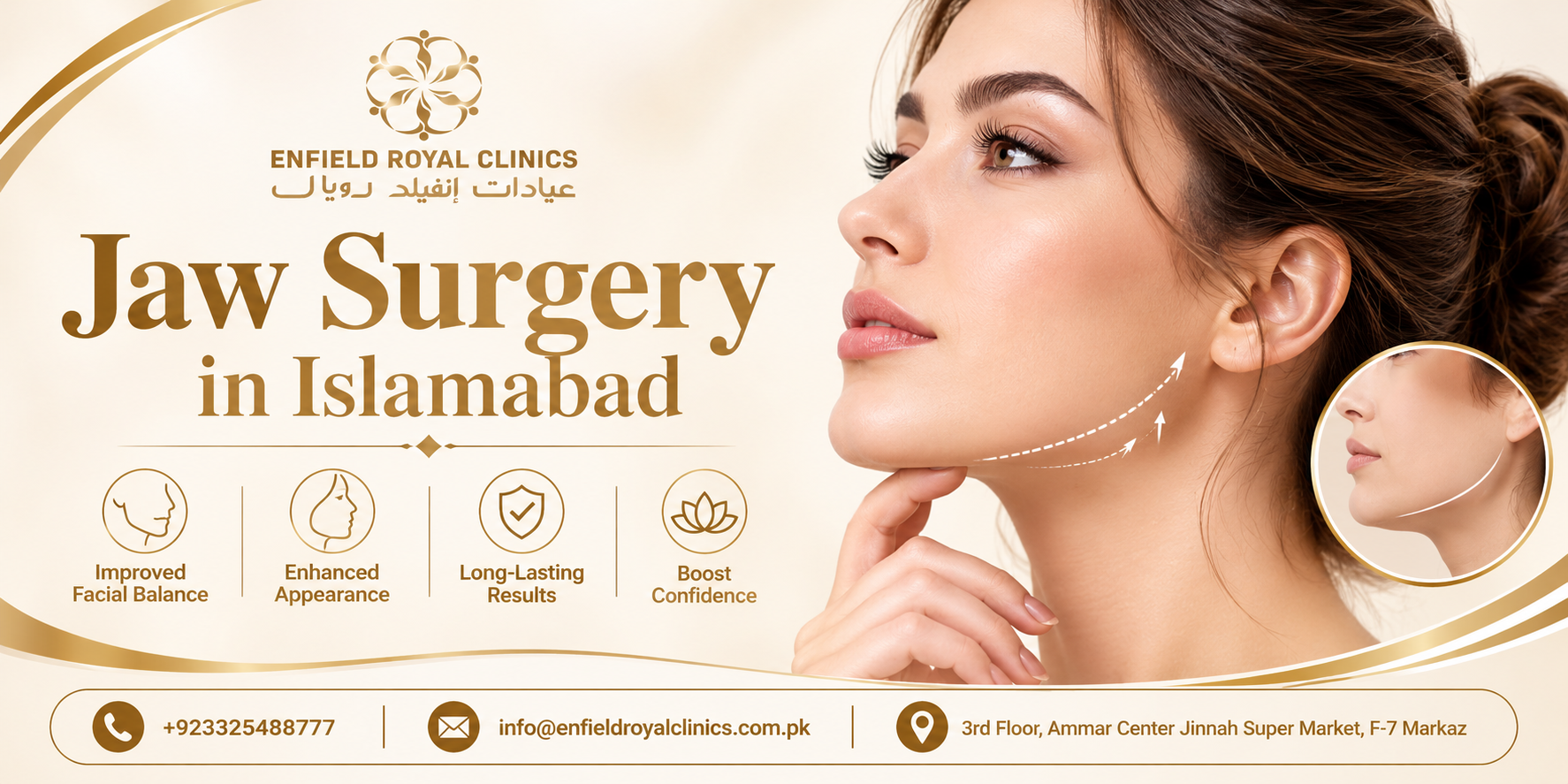

Facial harmony is influenced by the relationship between the jaw, chin, cheeks, nose, and other facial features. When the upper or lower jaw is positioned incorrectly, it can affect more than the appearance of the face. Jaw misalignment may also contribute to bite problems, difficulty chewing, uneven facial proportions, and certain speech or breathing concerns.
Jaw surgery, also known as orthognathic surgery, is a treatment option for people with significant skeletal jaw problems. It involves repositioning the upper jaw, lower jaw, or both to improve their alignment and relationship with the rest of the face. For individuals considering Jaw Surgery in Islamabad, understanding how the procedure can influence facial harmony helps them make informed decisions.
Although jaw surgery can create noticeable improvements in suitable patients, it is not a cosmetic solution for every facial concern. Its main purpose is to correct underlying jaw structure and improve function, while facial balance may improve as a result.
1. Understanding the Connection Between Jaw Alignment and Facial Harmony
The jaw plays an important role in the overall structure of the face. The position of the upper and lower jaws influences the appearance of the chin, lips, cheeks, and lower facial profile.
When both jaws are properly aligned, they support a balanced facial appearance and allow the teeth to meet comfortably. However, differences in jaw growth or position can create noticeable imbalances.
For example, an excessively prominent lower jaw may produce an underbite and a forward-projecting chin. A smaller or recessed lower jaw may make the chin appear less defined and can affect the side profile. Similarly, an uneven upper jaw may contribute to facial asymmetry or an irregular bite.
These structural differences can develop because of genetics, childhood growth patterns, congenital conditions, or previous injuries.
Jaw surgery focuses on correcting the underlying skeletal relationship. By repositioning the jawbones, surgeons may improve facial proportions while also addressing problems that affect everyday activities.
2. How Jaw Surgery Can Improve Facial Proportions
Facial proportions are influenced by the position and shape of different facial structures. When the jawbones are not properly aligned, the lower part of the face may appear too prominent, too recessed, or uneven.
Orthognathic surgery can help improve these proportions by moving the affected jaw into a more suitable position.
Depending on the patient's condition, treatment may help with:
-
A recessed lower jaw: Repositioning the lower jaw may improve chin projection and the side profile.
-
A prominent lower jaw: Surgical correction may reduce excessive forward projection and improve the relationship between the upper and lower jaws.
-
An uneven jaw position: Correcting skeletal differences may improve facial balance.
-
An improperly positioned upper jaw: Repositioning the upper jaw may improve the relationship between the middle and lower parts of the face.
-
An unbalanced bite: Aligning the jawbones can help the teeth meet more appropriately.
The extent of improvement depends on the patient's natural facial structure and the amount of correction required. The goal is not to create a completely different appearance but to achieve a more balanced relationship between facial features.
3. Correcting Facial Asymmetry Through Jaw Surgery
Facial asymmetry occurs when one side of the face differs from the other. Mild differences are common, but significant skeletal asymmetry can affect facial appearance and jaw function.
In some patients, one side of the lower jaw may develop differently from the other. This can cause the chin to appear shifted to one side or create an uneven jawline. Upper jaw abnormalities may also contribute to an irregular smile or tilted bite.
During Jaw Surgery in Islamabad, a detailed assessment helps identify whether facial asymmetry is related to the jawbones, teeth, soft tissues, or a combination of factors.
If the problem is caused by skeletal misalignment, surgical repositioning may help create a more balanced jaw relationship. Depending on the condition, the surgeon may recommend upper jaw surgery, lower jaw surgery, or a combination of both.
However, jaw surgery cannot correct every type of facial asymmetry. Differences caused mainly by soft tissue, muscle development, or other facial structures may require a different treatment approach. A proper diagnosis is therefore essential before selecting a procedure.
4. The Role of Bite Correction in Facial Balance
A healthy bite allows the upper and lower teeth to meet in a functional position. When the jawbones are misaligned, the teeth may not fit together properly, even when they are individually straight.
Common bite conditions associated with skeletal jaw problems include:
-
Overbite: The upper front teeth extend excessively over the lower front teeth.
-
Underbite: The lower teeth sit in front of the upper teeth.
-
Open bite: The upper and lower teeth do not meet in certain areas when the mouth closes.
-
Crossbite: Some upper teeth sit inside the lower teeth.
-
Jaw deviation: The lower jaw shifts away from its intended position.
These conditions may affect chewing, speaking, and the appearance of the smile. In more complex cases, orthodontic treatment alone may not correct the underlying skeletal problem.
Jaw surgery can reposition the jawbones to improve the foundation on which the teeth fit together. Braces or other orthodontic treatment are often used before and after surgery to achieve a more stable bite.
Improving bite alignment may also influence facial balance because the teeth, jawbones, and surrounding facial structures work together.
5. What Happens During Jaw Surgery Planning?
A successful outcome begins with careful assessment and individualized planning. Before recommending surgery, the surgeon examines the patient's facial structure, dental alignment, jaw movement, and overall oral health.
The planning process may include:
Clinical Examination: The surgeon evaluates facial proportions, jaw position, bite alignment, and the patient's functional concerns.
Dental Assessment: The position of the teeth is reviewed to determine whether orthodontic preparation is required.
Medical Imaging: X-rays, dental scans, photographs, or three-dimensional imaging may be used to study the jawbones and surrounding structures.
Treatment Selection: The surgeon determines whether the upper jaw, lower jaw, or both need correction.
Recovery Discussion: Patients receive information about expected healing, dietary changes, follow-up visits, and possible risks.
Different surgical techniques are available depending on the patient's needs. Maxillary osteotomy focuses on the upper jaw, while mandibular osteotomy involves repositioning the lower jaw. Double jaw surgery may be recommended when both jaws require correction.
For people exploring Jaw Surgery in Islamabad, personalized planning is important because facial structures and treatment requirements vary from one individual to another.
6. Functional Benefits Beyond Facial Appearance
Although facial harmony is an important consideration for many patients, jaw surgery is primarily intended to correct skeletal problems and improve function.
Depending on the underlying condition, treatment may help patients experience improvements in:
-
Chewing efficiency and bite stability.
-
Dental alignment and contact between the teeth.
-
Certain speech difficulties related to jaw structure.
-
Jaw positioning and facial balance.
-
Selected breathing problems associated with skeletal jaw abnormalities.
For example, some patients with a significantly recessed lower jaw may have airway-related concerns. In selected cases, repositioning the jaw can help improve airway dimensions. However, jaw surgery is not appropriate for every breathing problem, and conditions such as obstructive sleep apnea require a proper medical assessment.
The functional benefits depend on the diagnosis and surgical approach. Patients should discuss their main concerns with a qualified surgical professional to understand which improvements may realistically be expected.
7. Recovery, Results, and Realistic Expectations
Recovery is an important part of the jaw surgery journey. After the procedure, patients commonly experience swelling, bruising, discomfort, and temporary difficulty with eating or speaking. These effects generally improve gradually.
During the early recovery period, patients may need to follow a liquid or soft-food diet. Good oral hygiene, prescribed medication, rest, and regular follow-up appointments help support healing.
Swelling may take several weeks to settle, while bone healing and final bite adjustments can continue for several months. Some patients also require additional orthodontic treatment after surgery to refine tooth alignment.
It is important to understand that facial changes are not always immediately visible because swelling can temporarily affect the appearance of the face. Final results become clearer as healing progresses.
Jaw surgery also carries possible risks, including infection, bleeding, changes in sensation, problems with bone healing, and the possibility of needing further treatment. The likelihood and nature of complications vary according to the procedure and individual circumstances.
Patients considering Jaw Surgery in Islamabad should have realistic expectations. The procedure may improve facial proportions and jaw function, but perfect symmetry or a specific cosmetic appearance cannot be guaranteed.
Frequently Asked Questions
1. Can jaw surgery improve overall facial harmony?
Yes, jaw surgery may improve facial harmony when an imbalance is caused by the position or development of the jawbones. The results depend on the patient's anatomy and the correction required.
2. Does jaw surgery change the shape of the chin?
It can influence chin appearance because the chin is part of the lower jaw. Repositioning the lower jaw may change chin projection. Separate chin surgery, known as genioplasty, may sometimes be considered.
3. Is jaw surgery performed only for cosmetic reasons?
No. Its primary purpose is to correct skeletal jaw problems and improve functions such as biting and chewing. Improved facial balance may be an additional benefit.
4. How long does it take to see the final results of jaw surgery?
Initial changes are visible after surgery, but swelling can affect the appearance during early recovery. More stable results become apparent as swelling decreases and the jawbones heal over several months.
Conclusion
Jaw surgery can play an important role in improving facial harmony when an imbalance is caused by an underlying skeletal jaw problem. By correcting the position of the upper jaw, lower jaw, or both, the procedure may improve facial proportions, bite alignment, and everyday oral function.
For individuals considering Jaw Surgery in Islamabad, a detailed evaluation is the first step toward understanding whether treatment is suitable. Careful planning, realistic expectations, orthodontic coordination, and proper recovery support all contribute to a well-managed treatment journey.

