


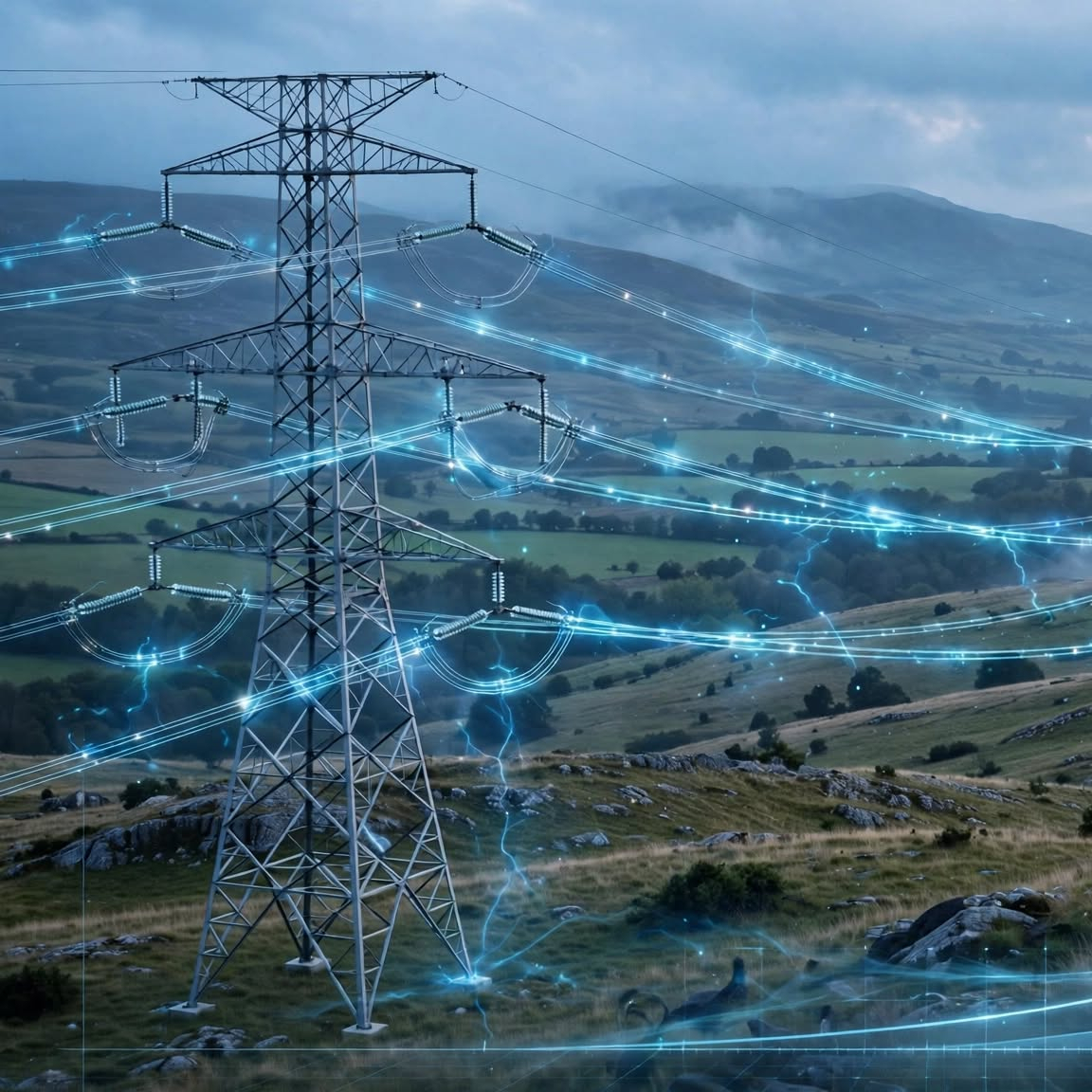
Long-distance power transmission is essential for delivering electricity from generating stations to distribution networks, industrial facilities, and growing urban centers. However, transporting electricity across hundreds of kilometers introduces several technical challenges, particularly when maintaining stable voltage levels at different points along the network.
Unlike short transmission connections, long transmission lines experience significant changes in voltage due to line impedance, reactive power flow, loading conditions, and variations in demand. These factors can affect equipment performance, increase system losses, and create operational difficulties for utilities and grid operators.
Effective transmission line voltage regulation requires a detailed understanding of electrical network behavior and the application of appropriate engineering solutions. By combining accurate system modeling, reactive power compensation, and coordinated control strategies, engineers can maintain reliable voltage performance even across extensive transmission networks.
1. Understanding Voltage Regulation in Long-Distance Transmission
Voltage regulation describes the ability of a transmission system to maintain acceptable voltage levels under changing operating conditions. As electricity travels through a transmission line, its resistance and inductive reactance create voltage drops, particularly when the network carries heavy loads.
The relationship between sending-end voltage and receiving-end voltage depends on several factors, including transmission distance, conductor characteristics, power factor, and the amount of active and reactive power being transferred.
Long transmission lines are especially sensitive to these conditions because their electrical parameters become more significant over greater distances. During peak demand, inductive loads can increase reactive power consumption, causing receiving-end voltage to decrease. During light-load conditions, the opposite behavior may occur, resulting in unexpectedly high voltage levels.
Engineers must therefore evaluate network performance under different loading scenarios rather than relying on a single operating condition. This is a fundamental part of effective power transmission voltage analysis.
2. The Ferranti Effect and Its Impact on Voltage Stability
One of the most important challenges in long-distance transmission is the Ferranti effect. This phenomenon occurs when the receiving-end voltage becomes higher than the sending-end voltage during light-load or no-load operating conditions.
The effect is primarily associated with the distributed capacitance of transmission lines. Long overhead lines and underground cables naturally develop capacitance between conductors and between conductors and ground. This capacitance generates charging current, which interacts with the line's inductive characteristics.
When the transmitted load is low, the capacitive charging current can produce a voltage rise toward the receiving end. If left unmanaged, this condition may expose transformers, insulation systems, switchgear, and other electrical equipment to excessive voltage stress.
Ferranti effect engineering focuses on identifying these conditions through detailed transmission line modeling and implementing appropriate compensation techniques.
Common engineering solutions include:
-
Installing shunt reactors to absorb excess reactive power.
-
Evaluating switching arrangements during low-load periods.
-
Coordinating transformer tap settings with network operating conditions.
-
Performing voltage studies to identify potential overvoltage locations.
Understanding this phenomenon is particularly important when designing new transmission corridors or modifying existing networks with changing generation and demand patterns.
3. Reactive Power Management and Voltage Control
Reactive power plays a major role in maintaining voltage stability throughout transmission networks. Unlike active power, which performs useful electrical work, reactive power supports electric and magnetic fields in network equipment.
When reactive power demand increases, transmission lines may experience additional voltage drops. Insufficient reactive power support can make it difficult to maintain acceptable voltage levels, especially during heavy loading or contingency conditions.
Several technologies are available to improve reactive power management.
Shunt capacitors and reactors help regulate voltage by supplying or absorbing reactive power at selected network locations. Capacitors are commonly used to support voltage during high-demand conditions, while reactors help control excessive voltage during light-load operation.
Static VAR Compensators (SVCs) provide dynamic reactive power support and can respond to changing network conditions.
Static Synchronous Compensators (STATCOMs) offer fast and flexible voltage support, making them useful in networks experiencing rapid variations in load or renewable generation.
Selecting the right compensation technology requires an understanding of network characteristics, operating requirements, equipment ratings, and expected future demand.
4. Advanced Power System Studies for Transmission Networks
Reliable voltage regulation begins with accurate engineering analysis. Before installing compensation equipment or modifying network configurations, engineers need to understand how the transmission system behaves under normal and abnormal operating conditions.
Load flow studies help evaluate voltage profiles, reactive power requirements, line loading, and power losses throughout the network. These studies identify locations where voltage limits may be exceeded and help determine suitable compensation requirements.
Contingency analysis evaluates system performance following the loss of important transmission elements, such as lines, transformers, or generators. This helps engineers understand whether the remaining network can maintain acceptable voltage conditions.
Dynamic and transient stability studies provide additional insight into how the system responds to disturbances, switching events, and sudden changes in generation or demand.
Accurate transmission line models are also essential. Engineers must consider conductor parameters, line length, operating frequency, transformer characteristics, and compensation equipment to obtain meaningful study results.
Through comprehensive power transmission voltage analysis, utilities and project developers can make informed decisions about equipment selection, network reinforcement, and long-term operational strategies.
5. Practical Engineering Strategies for Improving Voltage Regulation
Addressing voltage regulation challenges requires a coordinated approach rather than depending on a single technology. The most effective solutions combine network planning, equipment optimization, and continuous monitoring.
Some practical engineering strategies include:
-
Strategic reactive compensation: Positioning capacitors and reactors at suitable network locations to manage reactive power flow.
-
Transformer tap optimization: Adjusting transformer voltage ratios to maintain appropriate voltage levels across connected networks.
-
Transmission system reinforcement: Evaluating conductor upgrades, additional transmission paths, and improved network configurations where necessary.
-
Dynamic voltage control: Applying SVC and STATCOM technologies where faster reactive power response is required.
-
Operational coordination: Developing switching and voltage control procedures that account for seasonal demand and changing generation patterns.
Engineers should also evaluate the interaction between voltage control equipment and other grid components. Poor coordination can create operational conflicts, unnecessary switching, or additional system disturbances.
A properly designed voltage regulation strategy considers technical performance, equipment limitations, operational flexibility, and overall project economics.
6. Building More Reliable and Resilient Transmission Networks
Modern transmission networks are becoming increasingly complex as electricity demand grows and renewable energy resources become more widely integrated. Solar farms, wind generation facilities, battery energy storage systems, and large industrial loads introduce new operating conditions that can influence voltage performance.
These developments make accurate modeling and proactive voltage management more important than ever.
Engineering teams must consider future loading scenarios, changing power flow patterns, and potential grid expansion when evaluating transmission infrastructure. Solutions that perform effectively under current conditions may require adjustment as generation and demand evolve.
At Keentel Engineering, comprehensive power system engineering and analysis support informed decisions throughout the design and evaluation of electrical infrastructure. Detailed network studies, transmission engineering, and equipment coordination help identify technical challenges before they become operational problems.
Ultimately, reliable voltage regulation is not simply about maintaining a particular voltage level. It is about ensuring that transmission networks can deliver electricity safely, efficiently, and consistently under a wide range of operating conditions.
By combining sound engineering principles with advanced power system studies and appropriate compensation technologies, utilities and project developers can strengthen grid performance and prepare transmission infrastructure for future energy requirements.

