

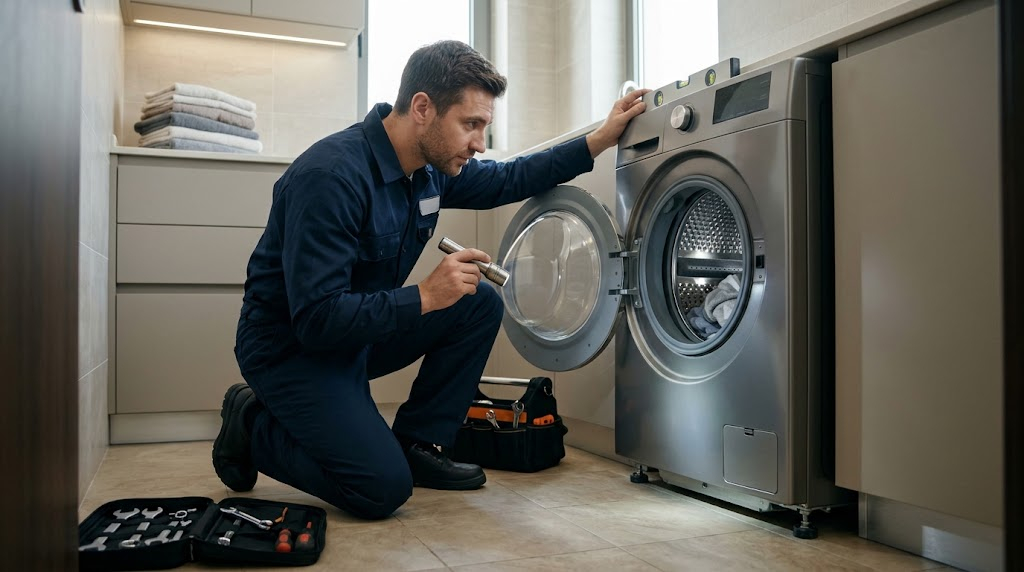

A washing machine that shakes violently or makes loud noises during the spin cycle can disrupt your home and leave you wondering if something is about to break. A little movement is normal, but repeated banging, grinding, or excessive vibration often points to a problem that needs attention. Ignoring these signs may lead to damaged internal components or leaks.
The good news is that some causes are easy to fix. An uneven load, an unlevel machine, or a loose item inside the drum can create unusual movement. Other problems, such as worn bearings or damaged suspension parts, may require a technician. Understanding the cause helps you decide what to check yourself and when to arrange a repair.
An Unbalanced Load Can Make the Washer Shake
One of the most common reasons a washing machine shakes during spinning is an uneven distribution of clothes. Heavy items can gather on one side of the drum, making it difficult for the machine to maintain balance as the spin speed increases.
How to Fix an Uneven Load
Pause the cycle and spread the clothes evenly around the drum. If you are washing a single heavy blanket, towel, or bath mat, add a few similar items if the machine's instructions allow it. Avoid overloading the washer, as tightly packed clothes cannot move freely.
An unbalanced washer load can also happen when you wash too few items, particularly bulky garments that absorb a lot of water. If the shaking stops after you rearrange the clothes, an uneven load was likely the cause.
Worn Bearings May Cause Grinding or Rumbling Sounds
The drum bearings help the washing machine rotate smoothly. Over time, these parts can wear down because of regular use, moisture, or damage to the bearing seal. When this happens, the machine may produce a deep rumbling, grinding, or roaring sound that becomes louder during the spin cycle.
If your washing machine is making unusual noises in Dubai, pay attention to the type of sound and when it occurs. A persistent rumble that gets louder as the drum spins may indicate worn bearings rather than a simple load imbalance. If the noise continues, a professional inspection can help identify the cause and determine whether the bearings need replacement.
Signs of a Bearing Problem
You may hear a rough grinding sound even when the drum is empty. The drum might also feel loose or move excessively when you gently lift it by hand, with the machine switched off. In some cases, rust marks or water around the drum area can indicate a related seal problem.
Washing machine bearing noise usually requires a proper inspection. Bearing replacement can involve dismantling part of the appliance, and the repair process depends on the washer's design. Avoid continuing to run a machine that produces severe grinding sounds, as further use may damage other components.
Damaged Shock Absorbers Can Cause Excessive Vibration
Shock absorbers help control the movement of the washing machine's tub during spinning. If they become worn, loose, or damaged, the tub may bounce more than it should. This can cause the appliance to shake, bang against its cabinet, or move across the floor.
What You Can Check
Look at the washer's position and listen for repeated banging during the spin cycle. If the machine is level and the load is balanced but the vibration continues, the suspension system may need attention. Do not remove panels or reach inside the machine while it is connected to power.
Worn washing machine shock absorbers can make high-speed spinning unstable. A technician can inspect the suspension components and determine whether they need adjustment or replacement. Fixing the problem early can help prevent additional wear to the tub, cabinet, and connected parts.
The Washing Machine May Not Be Level
A washer placed on an uneven floor can rock during the spin cycle, even when its internal components are working properly. Adjustable feet that are not firmly positioned can also allow the appliance to move as the drum rotates at high speed.
How to Check the Machine's Position
Make sure the washer stands on a firm, level surface. Gently press down on opposite corners to see if it rocks. If the appliance has adjustable feet, follow the manufacturer's instructions to level it correctly and tighten any locking nuts if provided.
Also check that the machine has enough clearance around it. If it touches a wall, cabinet, or nearby appliance, the vibration may produce extra banging sounds. Avoid placing the washer on an unstable surface or using improvised supports that could slip during operation.
Loose Objects or Installation Problems Can Create Loud Noises
Coins, keys, buttons, and other small objects can become trapped between the drum and the tub or inside the drain filter. These items may cause clicking, scraping, or rattling sounds as the washer spins. New washing machines can also vibrate severely if transit bolts remain installed after delivery.
Check for Foreign Objects
Switch off and unplug the appliance before checking accessible areas. Look inside the drum for loose objects and inspect the door seal for items caught in its folds. If your model has a user-accessible drain filter, follow the manual's instructions before opening it, as residual water may spill out.
If the washer was recently installed, check the installation guide to confirm that all transit bolts were removed correctly. These bolts secure the drum during transport and must not remain in place during normal operation. Contact the installer if you are unsure how to check them.
Conclusion:
Regular care can reduce unnecessary vibration and help you spot problems early. Distribute laundry evenly, follow the recommended load capacity, keep the machine level, and remove loose items from pockets before washing. Clean accessible filters according to the manufacturer's instructions and pay attention to new or changing sounds.
If your washer continues to shake or make loud noises after these checks, arrange an inspection rather than guessing which component has failed. Identifying the cause early can help restore smoother operation and prevent further damage to your appliance.

