

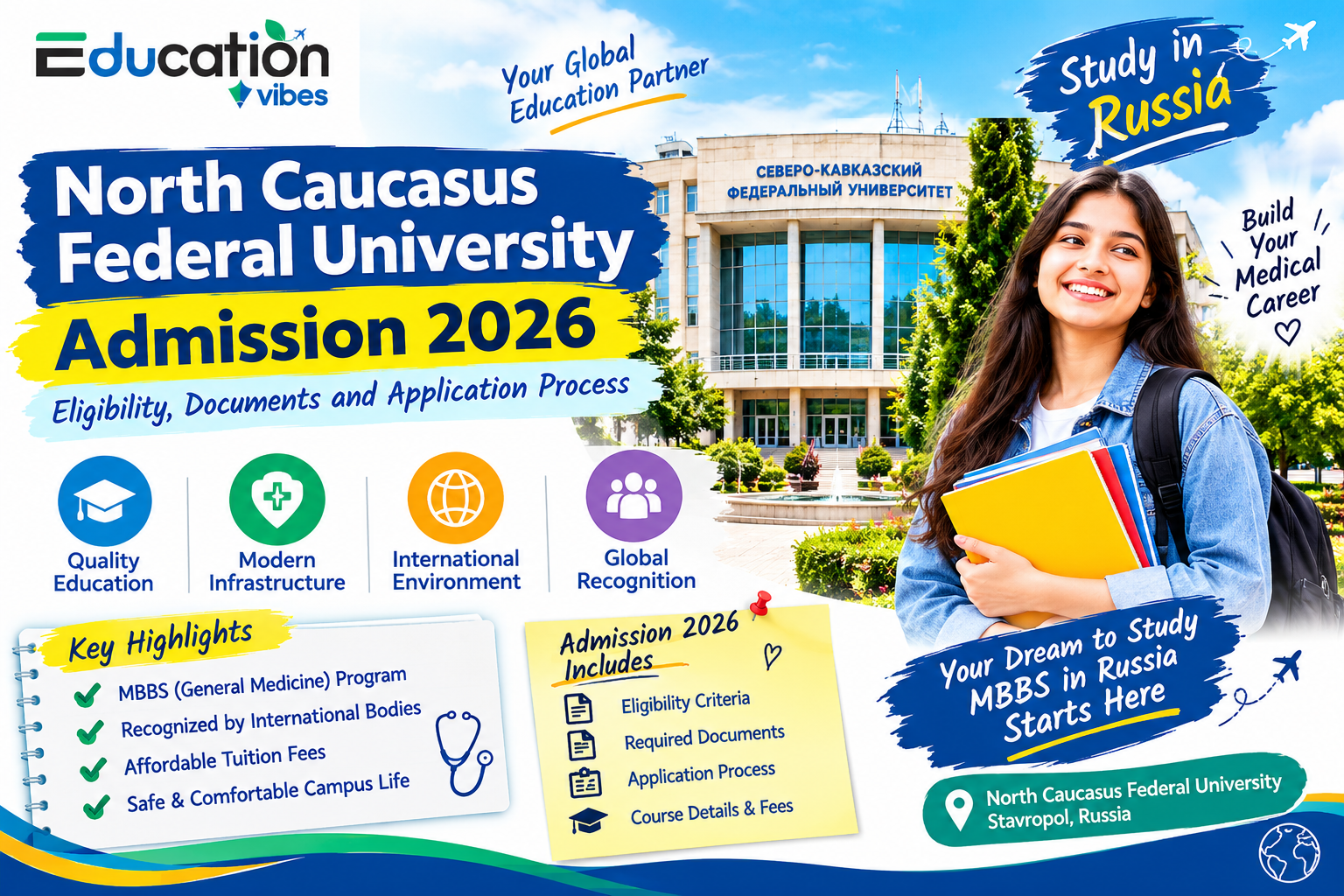

Studying medicine abroad requires careful planning, academic preparation, and an understanding of university admission requirements. Indian students interested in medical education in Russia should research eligibility criteria, application procedures, required documents, tuition fees, and visa formalities before applying. North Caucasus Federal University is located in Stavropol, Russia, and offers educational opportunities for international students interested in medical studies.
Before choosing a university, applicants should evaluate its academic facilities, teaching structure, clinical training, and future career requirements. Understanding the admission process can help students prepare documents correctly and complete important formalities within the required timelines.
1. Understand the University and Its Medical Program
North Caucasus Federal University is a higher education institution located in Stavropol. Students researching medical education should review the university's official information to understand the available programs, curriculum, teaching language, and admission conditions.
The North Caucasus Federal University Ranking is one factor students may consider while comparing universities. However, applicants should not select a medical institution based only on ranking positions. Recognition, clinical exposure, academic facilities, and eligibility for future medical licensing are equally important.
Students should verify the current medical program details directly with the university before submitting an application.
2. Check Eligibility Requirements
Indian students should confirm their academic eligibility before beginning the application process.
Generally, applicants planning medical education abroad need to complete Class 12 with Physics, Chemistry, Biology or Biotechnology, and English from a recognized educational board.
Students should check the following requirements:
-
Completion of Class 12 with required science subjects
-
Minimum academic marks specified by applicable admission rules
-
Qualification in NEET, where required
-
Minimum age requirements
-
Valid passport
-
Medical fitness documentation
Eligibility requirements can depend on the university's current admission policy and applicable Indian regulations.
Applicants should verify NEET-related requirements through official National Medical Commission guidelines before making admission decisions.
3. Research the North Caucasus Federal University Ranking
The North Caucasus Federal University Ranking may help students understand the institution's position in different ranking systems.
However, ranking positions can vary according to the organization, methodology, academic indicators, research performance, and publication year.
Students should check whether a ranking refers to global university performance, national university rankings, subject-specific rankings, or another assessment category.
Applicants should also consider academic reputation, teaching facilities, research opportunities, and clinical training.
The North Caucasus Federal University Ranking should therefore be evaluated alongside practical factors such as curriculum, university facilities, student support, and medical education requirements.
Students should use official ranking publications and reliable sources rather than relying on unsupported promotional claims.
4. Prepare the Required Admission Documents
Document preparation is an important part of the university application process.
Indian applicants should check the official document checklist because requirements may differ according to admission intake and applicant circumstances.
Commonly requested documents include:
-
Class 10 mark sheet and certificate
-
Class 12 mark sheet and certificate
-
Valid passport
-
NEET scorecard, where applicable
-
Passport-size photographs
-
Medical fitness certificate
-
Completed application form
Some documents may require translation, notarization, legalization, or additional verification.
Students should ensure that their names, dates of birth, and other personal information match across academic certificates and passport records.
Keeping digital and printed copies of important documents can make application management easier.
5. Follow the Admission Application Process
The admission process generally begins with researching the program and confirming eligibility.
Students should obtain the latest application instructions from the university's official admission department.
A typical application process includes:
Step 1: Review the medical program and eligibility requirements.
Step 2: Prepare academic certificates, passport details, and other required documents.
Step 3: Submit the application through the university's approved admission channel.
Step 4: Complete any required academic assessment, interview, or additional verification.
Step 5: Review the admission offer and official fee information.
Step 6: Complete the required enrollment formalities.
Applicants should avoid making payments through unverified channels and should carefully review official university instructions.
6. Understand Fees and Financial Planning
Before accepting admission, students should calculate the complete cost of medical education.
Expenses may include tuition fees, hostel accommodation, food, transportation, insurance, visa charges, and personal costs.
Students should request the official fee structure and confirm whether payments are required annually, semester-wise, or according to another schedule.
Families should also prepare a budget for currency exchange and emergency expenses.
Comparing the North Caucasus Federal University Ranking with tuition fees, facilities, and academic opportunities can help applicants evaluate the university more effectively.
However, affordability should not replace checking recognition and licensing requirements.
7. Complete Visa and Travel Formalities
After receiving the necessary admission documentation, students should review the Russian student visa application requirements.
Applicants may need an official invitation, passport, photographs, medical documents, and other paperwork specified by the relevant authorities.
Students should check the latest visa instructions through official Russian diplomatic or immigration sources.
Before traveling, applicants should confirm accommodation arrangements, university reporting procedures, health insurance requirements, and arrival instructions.
They should also keep copies of admission documents, passport details, visa information, and emergency contacts.
8. Prepare for Academic and Student Life
Medical education requires consistent academic preparation and practical learning.
Students should revise basic science subjects, improve English communication, and learn about the local language.
Understanding local language basics can support everyday communication and help students prepare for clinical interactions.
Applicants should also research hostel facilities, transportation, food arrangements, weather conditions, and university student support services.
A clear understanding of academic expectations and daily living arrangements can make the transition to university easier.
Conclusion
The admission process requires students to research eligibility, prepare documents, understand fees, and complete university and visa formalities carefully.
Indian applicants should verify current admission requirements through official university sources and review applicable medical education regulations before applying.
The North Caucasus Federal University Ranking can provide useful comparison information, but students should also evaluate recognition, curriculum, clinical training, facilities, and future licensing eligibility.
With proper preparation and accurate information, students can make informed decisions about medical education and approach the admission process with greater confidence.

