

Ultra High Strength Steel Industry Outlook: High-Performance Materials Support Future Demand

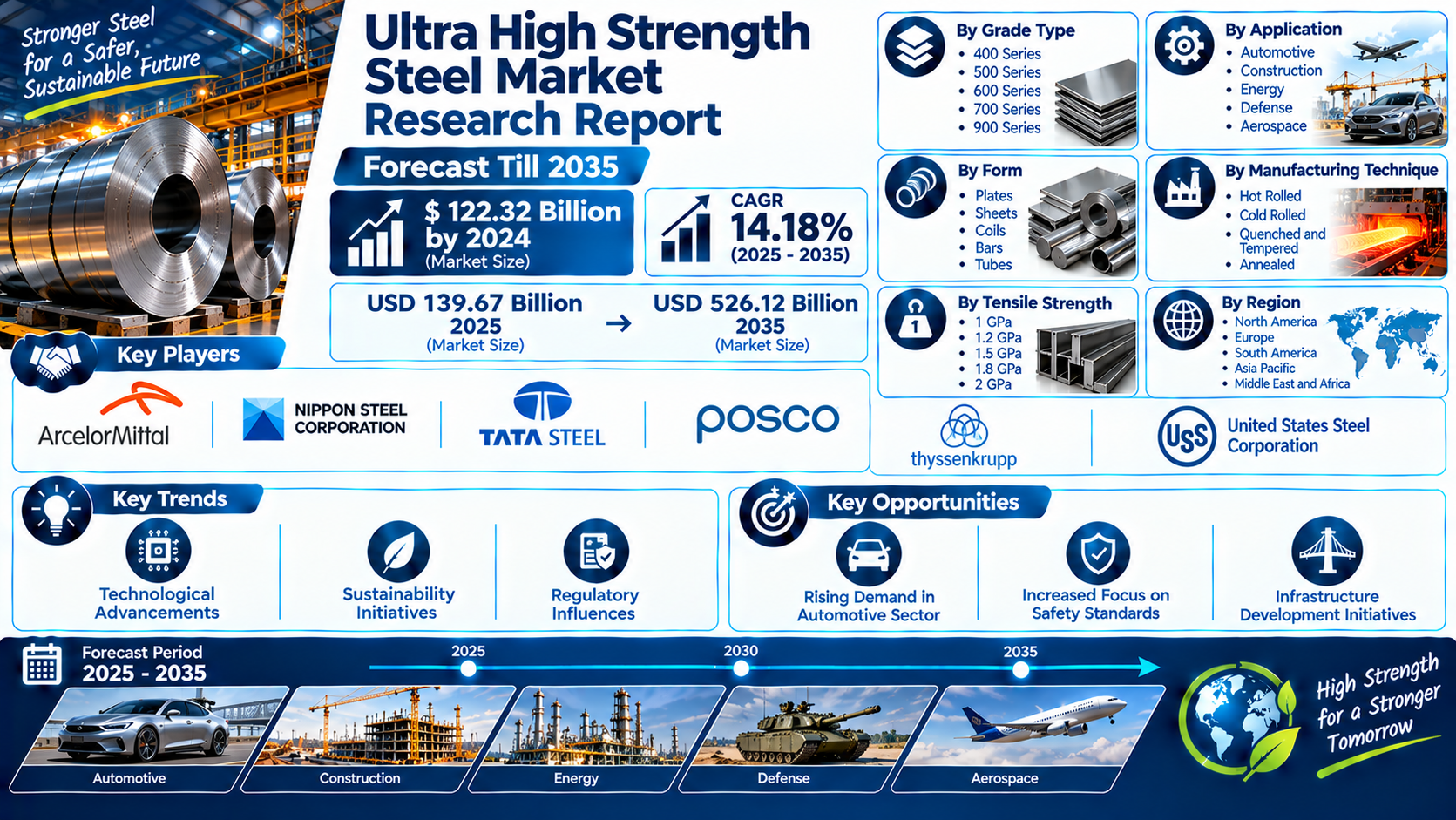
According to Market Research Future® (MRFR), the Ultra High Strength Steel Market is expected to reach USD 526.12 billion by 2035, rising from USD 139.67 billion in 2025. The market is projected to record a CAGR of 14.18% over the 2025–2035 forecast period, following a valuation of USD 122.32 billion in 2024. Its growth prospects are connected with demand for high-performance steel across automotive, construction, energy, defense and aerospace industries, alongside advances in manufacturing and evolving safety requirements.
High-Strength Materials Across Key Industries
Ultra high strength steel is used in applications where material strength is an important consideration. The market's application segmentation includes automotive, construction, energy, defense and aerospace. These sectors have distinct operating environments and engineering requirements, creating demand for different steel grades, forms and production specifications.
Automotive manufacturing is a significant opportunity area. The report identifies rising demand in this sector as a growth opportunity, reflecting the need for materials that can meet vehicle design and structural requirements. The increased focus on safety standards adds another dimension to this demand. Material selection can play a role in meeting component specifications and supporting the design objectives of vehicle manufacturers.
Construction and energy applications provide additional routes for market development. Infrastructure projects may require steel products with specific strength and fabrication characteristics, while energy-related uses can involve different operating conditions and technical requirements. Defense and aerospace applications extend the market into sectors where material specifications can be particularly demanding.
Understanding the Market's Grade and Strength Structure
The grade categories covered in the report are 400 Series, 500 Series, 600 Series, 700 Series and 900 Series. These classifications help organize the market's product offerings and provide a basis for evaluating the range of steel grades supplied to different industries.
Tensile strength is another defining segmentation dimension. The market includes 1 GPa, 1.2 GPa, 1.5 GPa, 1.8 GPa and 2 GPa categories. These strength levels indicate the performance range addressed by the report. Buyers and manufacturers may assess the appropriate category based on the intended application and the relevant engineering specifications.
The distinction between grade type and tensile strength is important. They represent separate dimensions of market segmentation, and a particular product's suitability cannot be determined from either category alone. Application requirements and other material properties also influence selection.
Product Forms Meet Different Fabrication Needs
The market includes plates, sheets, coils, bars and tubes. These forms allow ultra high strength steel to be supplied in formats suited to different fabrication processes and end products. The choice of form depends on component design, production methods and project specifications.
Manufacturing technique further differentiates the market. Hot rolled and cold rolled products are included alongside quenched and tempered and annealed steel. Each technique represents a distinct processing route, and manufacturers select processes according to the required product characteristics. Process control is therefore important to delivering steel that meets customer specifications.
Technological advancements are identified as a key market trend. Continued development in manufacturing can help producers improve their ability to meet changing requirements across the automotive, construction, energy, defense and aerospace sectors. Innovation in processing may also support the production of specialized grades and forms.
Safety Requirements and Infrastructure Investment
The growing focus on safety standards presents an opportunity for ultra high strength steel suppliers. In applications such as automotive manufacturing, material specifications are closely connected with design and safety considerations. Demand for materials that meet relevant performance requirements may encourage further evaluation of high-strength steel products.
Infrastructure development initiatives provide another potential source of demand. Construction projects require materials selected according to structural and project-specific requirements. The use of ultra high strength steel may be relevant where its properties align with the intended application and applicable standards.
Energy infrastructure adds to this opportunity landscape. Investment and development in the sector can create requirements for steel products across different forms and strength categories. The scale and nature of demand will depend on project specifications and the suitability of available products.
Sustainability and Regulation Shape Industry Priorities
Sustainability initiatives are influencing the broader steel industry. Producers may assess manufacturing processes, resource efficiency and environmental considerations as they respond to changing customer and regulatory expectations. The report identifies sustainability as a market trend, indicating that environmental priorities are part of the industry's evolving business environment.
Regulatory influences are also relevant. Requirements relating to product quality, safety and performance can affect manufacturing and procurement decisions. Companies must consider the standards applicable to their target industries and ensure that products meet the necessary specifications. These factors can influence both production investment and the development of new steel offerings.
Regional Coverage and Competitive Landscape
The market's regional segmentation includes North America, Europe, South America, Asia Pacific, and the Middle East and Africa. These regions represent the geographic scope used to assess industry performance and opportunities. Differences in automotive manufacturing, infrastructure investment, energy development and industrial activity may influence demand across regional markets.
The key players identified by the report are ArcelorMittal, Nippon Steel Corporation, Tata Steel, POSCO, Thyssenkrupp AG and United States Steel Corporation. These companies form part of the competitive landscape. Competition may involve manufacturing capabilities, product quality, technical expertise, process innovation and the ability to supply steel products in multiple grades and forms.
Growth Prospects to 2035
The market's forecast increase from USD 139.67 billion in 2025 to USD 526.12 billion in 2035, at a CAGR of 14.18%, indicates substantial projected expansion. The 2024 valuation of USD 122.32 billion provides the earlier market reference.
Automotive demand, a stronger focus on safety standards and infrastructure development are identified opportunities. At the same time, technological advancements, sustainability initiatives and regulatory influences will affect how producers compete and invest. Suppliers that can address demanding application requirements through suitable grades, tensile strengths, product forms and manufacturing techniques will be positioned to serve the market's varied industrial needs through 2035.

