

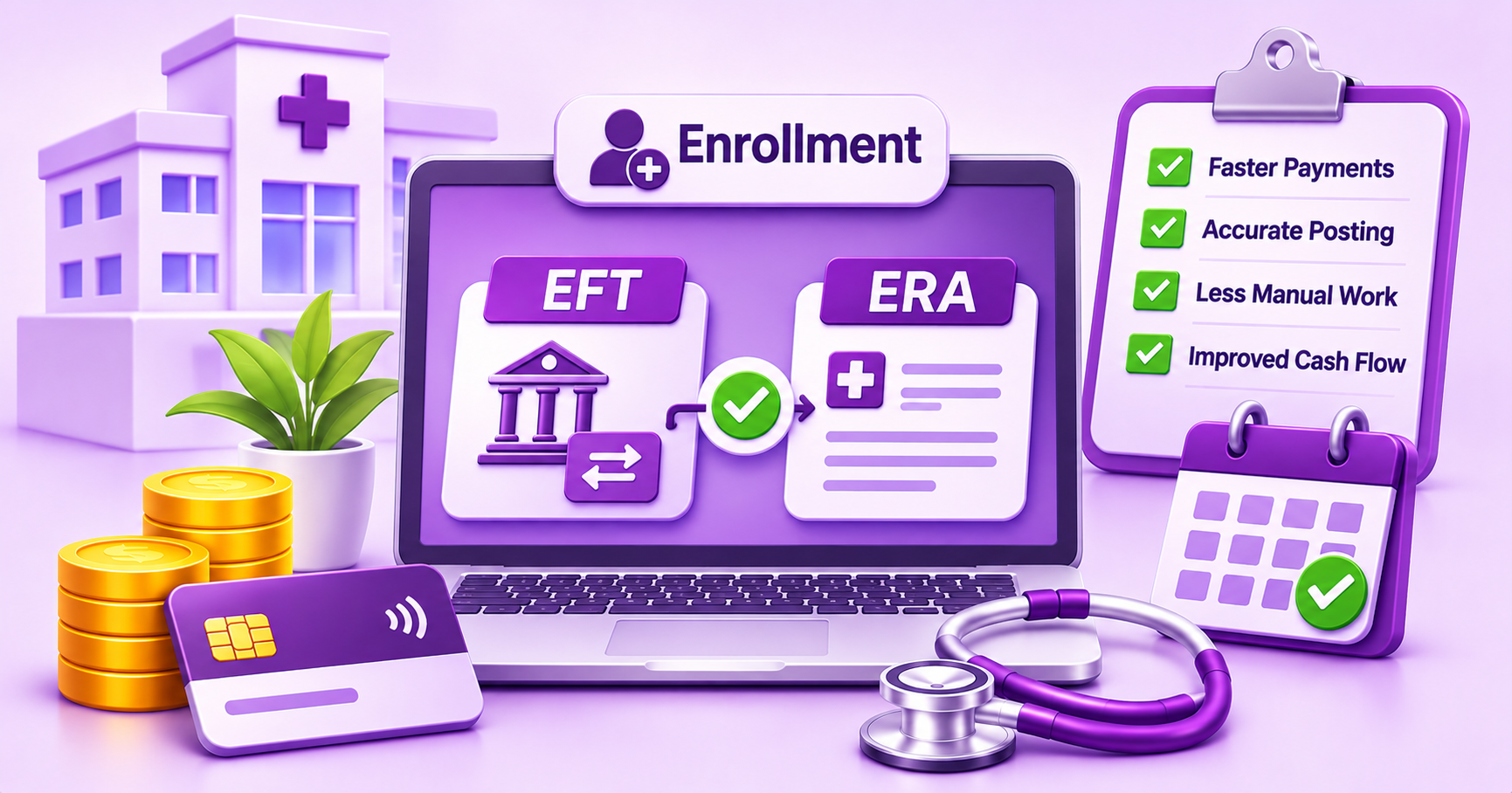

EFT and ERA enrollment can make healthcare payment processing easier by separating two related functions: receiving funds and receiving payment explanations. EFT directs approved payments to a bank account, while ERA provides structured remittance data for billing software. Enrollment errors can leave a practice receiving one without the other. Managers need a payer-specific checklist, careful bank verification, and a test process before relying on automated posting.
Know the difference between EFT and ERA
Electronic funds transfer moves payment to the enrolled bank account. For managers, The strongest control is a documented process that distinguishes an expected difference from a genuine error. For EFT and ERA enrollment, this step gives the team a specific record to check before making a billing decision.
Electronic remittance advice delivers the payer explanation of the claim decision. For a practical review, The useful question is whether each claim has a traceable next step, not whether a report merely shows it as open. The practical test is whether another staff member could repeat the check using the same information.
A practice may receive one without the other if enrollment or configuration is incomplete. During daily review, A staff member should be able to point to the source record behind the decision rather than rely on memory. Keep the outcome with the know the difference between eft and era record so later follow-up does not begin from scratch.
Consider a routine case involving EFT and ERA enrollment: electronic funds transfer moves payment to the enrolled bank
Prepare accurate enrollment information
Confirm legal business name, tax ID, NPI, practice contact, and bank documentation. For a practical review, The useful question is whether each claim has a traceable next step, not whether a report merely shows it as open. For EFT and ERA enrollment, this step gives the team a specific record to check before making a billing decision.
A practice can assign this review internally or coordinate with medical billing services when it needs support with EFT and ERA enrollment, claim follow-up, and the related billing work queue.
Follow each payer’s enrollment channel and verification instructions. During daily review, A staff member should be able to point to the source record behind the decision rather than rely on memory. The practical test is whether another staff member could repeat the check using the same information.
Keep access to the authorized signer rather than submitting unapproved bank changes. In a busy practice, The exception is easier to resolve when the team records the payer, date, account, and exact outstanding question. Keep the outcome with the prepare accurate enrollment information record so later follow-up does not begin from scratch.
Consider a routine case involving EFT and ERA enrollment: confirm legal business
Test the first payments after activation
Watch for confirmation notices and expected effective dates. During daily review, A staff member should be able to point to the source record behind the decision rather than rely on memory. For EFT and ERA enrollment, this step gives the team a specific record to check before making a billing decision.
Compare the first ERA payment reference with the bank deposit. In a busy practice, The exception is easier to resolve when the team records the payer, date, account, and exact outstanding question. The practical test is whether another staff member could repeat the check using the same information.
Flag any payer still sending paper remittances or checks after the expected transition. Before closing a case, A quick check against the original request or remittance can reveal whether the action solved the actual problem. Keep the outcome with the test the first payments after activation record so later follow-up does not begin from scratch.
Consider a routine case involving EFT and ERA enrollment: watch for confirmation
Make posting and reconciliation more reliable
Configure software to import 835 files without overwriting existing claim decisions. In a busy practice, The exception is easier to resolve when the team records the payer, date, account, and exact outstanding question. For EFT and ERA enrollment, this step gives the team a specific record to check before making a billing decision.
Separate payer recoupments and provider-level adjustments from ordinary claim payments. Before closing a case, A quick check against the original request or remittance can reveal whether the action solved the actual problem. The practical test is whether another staff member could repeat the check using the same information.
Review unmatched deposits before closing the daily cash batch. For managers, The strongest control is a documented process that distinguishes an expected difference from a genuine error. Keep the outcome with the make posting and reconciliation more reliable record so later follow-up does not begin from scratch.
Consider a routine case involving EFT and ERA enrollment: configure software to
Maintain enrollment through practice changes
Update payers when bank accounts, tax information, ownership, or billing vendors change. Before closing a case, A quick check against the original request or remittance can reveal whether the action solved the actual problem. For EFT and ERA enrollment, this step gives the team a specific record to check before making a billing decision.
Use dual approval for sensitive bank changes and verify requests through trusted channels. For managers, The strongest control is a documented process that distinguishes an expected difference from a genuine error. The practical test is whether another staff member could repeat the check using the same information.
Keep a payer-by-payer enrollment inventory and review it after system migrations. For a practical review, The useful question is whether each claim has a traceable next step, not whether a report merely shows it as open. Keep the outcome with the maintain enrollment through practice changes record so later follow-up does not begin from scratch.
Consider a routine case involving EFT and ERA enrollment: update payers when
Conclusion
Eft and era enrollment is most useful when staff can explain what was checked, which record supports the decision, and who owns the next action. The practical steps above connect daily billing work to better oversight without assuming that every payer or account follows the same path. Practice managers should start with one recurring exception, test the proposed control on real accounts, and review whether the result is easier to trace. Over time, a clear process for EFT and ERA enrollment can support more accurate reporting, fewer avoidable handoffs, and better conversations with patients and payers.
Frequently Asked Questions (FAQs)
Can a practice enroll in EFT without ERA?
Enrollment arrangements vary by payer, and the two functions may require separate steps. Confirm both statuses before relying on automation.
What information is needed for EFT enrollment?
Payers commonly request verified business, provider, contact, and banking details. Follow the specific payer instructions.
How do staff match an EFT to an ERA?
They compare trace information, payment totals, dates, and payer identifiers. Unmatched transactions need review.
What happens when the practice changes banks?
The payer enrollment must be updated through an authorized process. The practice should monitor payments during the transition.

