

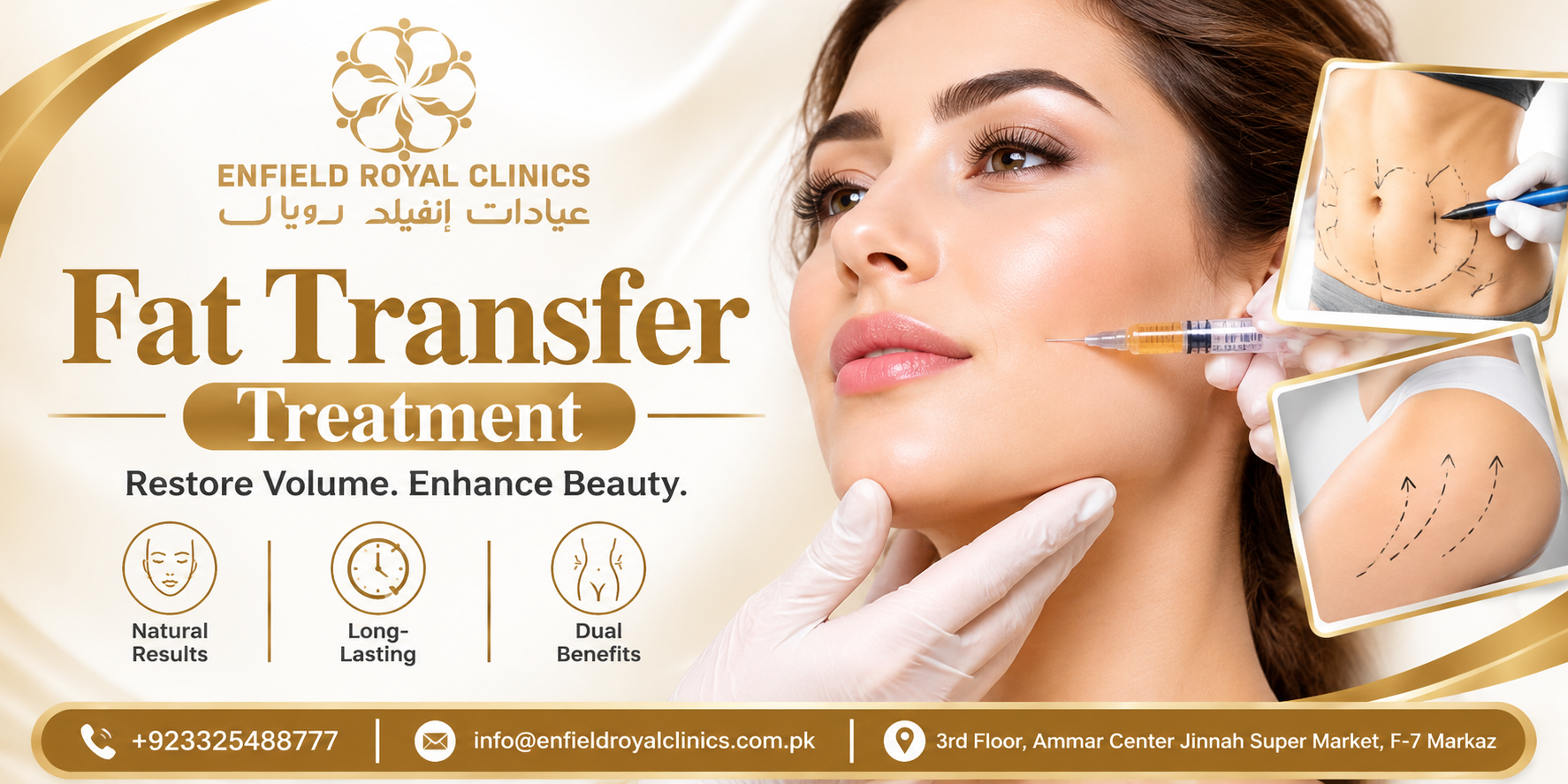

Fat transfer treatment is a popular cosmetic procedure for people who want to restore lost volume, improve body contours, and achieve a more balanced appearance using their own body fat. It offers a way to enhance selected areas without relying on synthetic filling materials. The procedure involves collecting fat from one part of the body, processing it, and carefully transferring it to another area that needs additional volume.
People considering Fat Transfer Treatment in Islamabad often want to know what changes they can realistically expect. The results can include fuller cheeks, improved facial contours, softer-looking hollows, enhanced body curves, and a more balanced appearance. However, the outcome depends on several factors, including the treatment area, available donor fat, surgical technique, and how much transferred fat survives.
Understanding the procedure and its potential results helps patients develop realistic expectations before making a decision.
1. Restoring Facial Volume and Reducing a Hollow Appearance
One of the most common uses of fat transfer is facial rejuvenation. As people age, the face gradually loses natural fat volume. This can make the cheeks appear flatter, the temples look hollow, and the area beneath the eyes appear more sunken.
Fat transfer can restore some of this lost volume by placing purified fat into selected facial areas.
Common improvements may include:
-
Fuller and more defined cheeks.
-
Reduced appearance of hollow temples.
-
Improved volume beneath the eyes in carefully selected candidates.
-
Softer-looking facial folds.
-
Better balance between different facial features.
The aim is not to make the face look dramatically different. Instead, the procedure can help restore volume and create a refreshed appearance while maintaining natural facial proportions.
Results depend on the patient's facial structure, skin condition, and the amount of fat that successfully survives after transfer. Some individuals may need additional treatment to achieve their desired level of fullness.
2. Improving Body Contours and Enhancing Natural Curves
Fat transfer can also improve body shape by moving unwanted fat from one area to another. This approach may be suitable for individuals who want to enhance selected curves while reducing fullness in a donor area.
Common treatment areas include the hips, buttocks, and breasts, depending on the patient's anatomy and suitability.
For example, fat collected from the abdomen or thighs may be processed and transferred to the hips to improve contour and create a smoother transition between the waist and lower body.
Potential body contouring results include:
-
Improved hip fullness.
-
More balanced body proportions.
-
Enhanced buttock volume in suitable candidates.
-
Better definition in selected body areas.
-
A smoother appearance where volume loss or contour irregularities exist.
Fat transfer does not function as a general weight-loss procedure. The amount of fat that can be safely removed and transferred is limited, and the goal is targeted contour improvement rather than major body-size reduction.
Buttock fat grafting requires particular attention to safety. Fat should be injected only into the subcutaneous tissue above the gluteal muscle, never into or beneath the muscle. Real-time ultrasound guidance is an important safety measure for confirming the injection plane because deep injection can cause a potentially fatal fat embolism.
3. Creating Softer and More Natural-Looking Results
Many people prefer cosmetic treatments that enhance their appearance without making noticeable changes to their natural features. Fat transfer can help achieve this goal when the procedure is carefully planned.
Because the treatment uses the patient's own fat, it can provide soft volume that blends with the surrounding tissue. This may be especially useful for people who want to improve facial fullness or body contours without an exaggerated appearance.
Natural-looking results depend on several factors:
-
The correct amount of fat is transferred.
-
Fat is distributed evenly throughout the treatment area.
-
The patient's natural anatomy is considered.
-
The procedure is performed with appropriate technique.
-
Expectations are realistic and based on individual suitability.
Overfilling an area can create an uneven or unnatural appearance. Therefore, careful planning and controlled fat placement are important.
The final result also takes time to develop. Initial swelling can make the treated area look fuller than it will appear after healing. As swelling settles and the body absorbs some of the transferred fat, the shape gradually becomes clearer.
4. How Long Do Fat Transfer Results Last?
Fat transfer can offer long-lasting results, but it does not mean that every transferred fat cell will survive permanently.
After injection, the transferred fat needs to establish a blood supply from the surrounding tissue. Some fat cells successfully integrate into the treatment area, while others are naturally absorbed by the body during the healing process.
The surviving fat may remain for many years. However, the amount retained varies between individuals and cannot be guaranteed.
Several factors can influence how long the results last:
-
Surgical technique: Proper fat collection, processing, and placement can influence fat survival.
-
Treatment area: Different body areas have different tissue characteristics and healing responses.
-
Aftercare: Following recovery instructions helps protect the treated area.
-
Weight stability: Significant weight changes can affect the volume of transferred fat.
-
Individual healing: Blood supply and the body's response influence how much fat remains.
Patients should avoid judging the final outcome immediately after treatment. It may take several months for swelling to settle and the surviving fat volume to stabilize.
5. What Results Can Patients Expect During Recovery?
Recovery plays an important role in the final outcome of fat transfer treatment. Since the procedure involves both fat removal and fat injection, patients may experience changes in two separate areas.
During the first few days, swelling, bruising, tenderness, and mild discomfort are common. The donor area may feel sore, while the treated area may appear swollen or fuller than expected.
Over the following weeks, swelling gradually improves. The transferred fat begins to stabilize, and the appearance of the treated area becomes more predictable.
Patients may notice the following stages:
Early recovery: Swelling, bruising, and tenderness are usually most noticeable during the initial period.
Gradual improvement: The donor and recipient areas begin to feel more comfortable as healing progresses.
Settling of volume: Some transferred fat is absorbed, and the remaining volume becomes more stable.
Long-term appearance: The final result can generally be assessed after several months, depending on the treatment area and individual healing.
Aftercare instructions may include avoiding pressure on the treated area, limiting strenuous activities for a recommended period, wearing compression garments when advised for the donor area, and attending follow-up appointments.
Patients should contact a qualified healthcare professional if they develop fever, spreading redness, worsening pain, or unusual swelling. Chest pain, breathing difficulty, fainting, sudden vision changes, or one-sided weakness require emergency medical attention.
6. Who Can Achieve Good Results With Fat Transfer Treatment?
The procedure can benefit people who have suitable donor fat and want to improve volume or contours in selected areas. However, not everyone is an appropriate candidate.
A suitable candidate generally has enough available fat for collection, good overall health, realistic expectations, and a clear treatment goal.
Fat transfer may be considered by individuals who:
-
Have lost facial volume due to ageing.
-
Want fuller cheeks or improved facial contours.
-
Prefer using their own body fat for enhancement.
-
Want to improve selected body curves.
-
Have sufficient fat in a suitable donor area.
-
Understand the recovery process and possible limitations.
Individuals with certain medical conditions, active infections, significant healing concerns, or insufficient donor fat may need another approach. A thorough assessment is necessary to determine whether the procedure is appropriate.
People should also understand that fat transfer is a surgical procedure, not a guaranteed way to achieve a particular appearance. Results vary, and additional sessions may sometimes be required.
7. How Can Patients Get the Best Possible Results?
Good outcomes begin with careful planning. Before undergoing Fat Transfer Treatment in Islamabad, patients should discuss their expectations, medical history, previous procedures, and desired treatment areas during a detailed consultation.
A proper assessment helps determine how much fat may be available, which areas can be treated, and whether the expected improvement is realistic.
Patients can support their recovery by:
-
Following all pre- and post-procedure instructions.
-
Maintaining a stable and healthy weight.
-
Avoiding smoking, particularly during the healing period.
-
Taking prescribed medication as directed.
-
Avoiding pressure on treated areas when advised.
-
Attending follow-up appointments.
-
Reporting unusual symptoms promptly.
Selecting an appropriately qualified professional with relevant surgical experience is equally important. Patients should ask about the technique, possible complications, expected recovery, and safety measures specific to their chosen treatment area.
For more information visit Enfield royal clinic in islamabad
Frequently Asked Questions (FAQs)
1. What areas can be improved with fat transfer treatment?
Fat transfer can be used to enhance areas such as the cheeks, temples, under-eye region, lips, hips, buttocks, and breasts in suitable candidates. The appropriate areas depend on anatomy, available donor fat, and individual goals.
2. Does fat transfer treatment provide permanent results?
Some transferred fat can survive and remain in the treated area for many years. However, a portion is usually absorbed by the body, so permanent results cannot be guaranteed.
3. How soon can patients see the results of fat transfer?
Initial changes are visible after treatment, but swelling can affect the appearance. The treated area gradually settles over several months as healing progresses and the surviving fat stabilizes.
4. Can fat transfer improve facial ageing signs?
Yes. It may restore volume in areas such as the cheeks and temples, helping soften a hollow appearance associated with age-related fat loss. It does not address every cause of facial ageing, such as significant skin laxity.
5. Is fat transfer treatment suitable for everyone?
No. Suitable candidates generally need enough donor fat, good overall health, and realistic expectations. A professional assessment is necessary to identify possible medical concerns and determine whether the procedure is appropriate.
6. Can patients need another fat transfer session?
Some patients may need an additional session if a significant amount of transferred fat is absorbed or if they want further enhancement. The need for repeat treatment depends on the initial outcome and individual goals.
Conclusion
Fat transfer treatment can achieve several cosmetic improvements, including restored facial volume, fuller cheeks, enhanced body curves, and more balanced contours. Its use of the patient's own fat makes it an appealing option for people seeking natural-looking enhancement and potentially long-lasting results.
However, the outcome depends on fat survival, surgical technique, treatment area, and individual healing. Anyone considering the procedure should understand its benefits, limitations, and risks before deciding whether it matches their aesthetic goals.

